Connectors
EV plug types, explained
Four names, two that matter at home and two that only matter on a road trip. Here is which is which.
By Sawyer V. · Published September 8, 2026
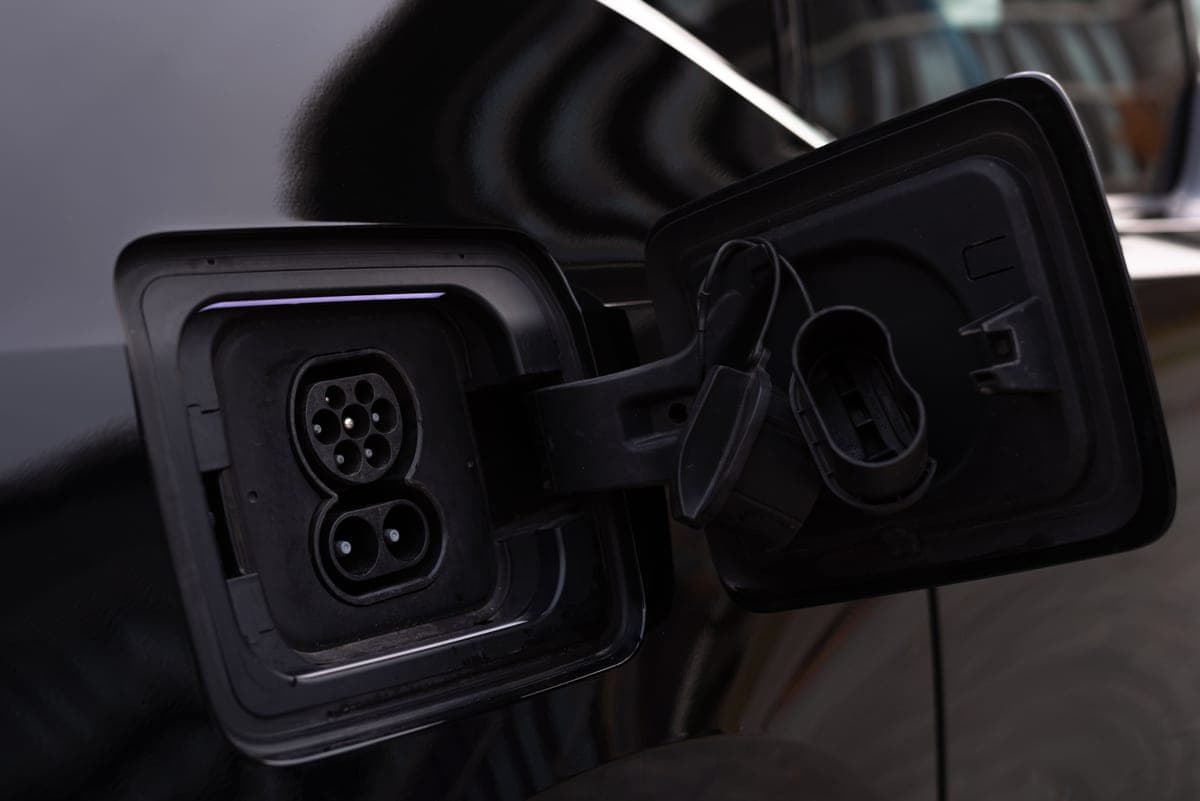
The plug situation looks more complicated than it is, mostly because AC connectors and DC connectors get discussed together as if you had to choose between them. You do not. Your car has both jobs handled, and only one of them concerns your garage.
The two that matter at home
| Connector | What it looks like | Who uses it |
|---|---|---|
| J1772 | Round, five holes, about the size of a fuel nozzle | Nearly every non-Tesla EV in North America. Also the AC section of a CCS port. |
| NACS | Smaller and sleeker, two large pins and three small | Tesla, and a growing number of other manufacturers. |
That is the whole home-charging decision. Match your car, or use an adapter. J1772 cars, NACS cars.
The two that only matter on road trips
| Connector | What it is | Notes |
|---|---|---|
| CCS | A J1772 inlet with two large DC pins added beneath it | The North American DC standard for most non-Tesla EVs. The AC part is J1772, which is why a home charger still fits. |
| NACS (DC) | The same physical connector as NACS AC | One of NACS's real advantages: the same plug handles both AC and DC. |
| CHAdeMO | A large round connector, separate from the AC inlet | Older Japanese standard, largely superseded. Some older Nissan Leafs use it. |
Why CCS confuses everyone
Because it is two connectors in one housing. The top is a J1772 inlet; the bottom two pins are DC only. When you charge at home, you plug into the top. When you fast-charge in public, the station's connector covers the whole thing.
So "my car has CCS" and "my car takes a J1772 home charger" are both true, and the apparent contradiction is why people think they need a special charger. They do not.
The NACS transition, briefly
Published lists confirm that by mid-2026 essentially every major automaker selling EVs in the US had committed to NACS, and native NACS ports are shipping on a growing list of models.
It does not obsolete a J1772 home charger, because cars with NACS ports ship with a J1772 adapter. The transition mainly changes public fast charging, where a native port means no adapter at a Supercharger. NACS explained.
What to buy
- J1772 or CCS car: a J1772 charger. Straightforward.
- NACS car: a J1772 charger plus the included adapter, or a NACS unit if nothing else will use it.
- One of each: a J1772 unit, or the Tesla Universal Wall Connector which handles both natively.
FAQ
Questions people actually ask
What plug does my EV use?
Is CCS the same as J1772?
What is the difference between NACS and CCS?
Do I need a different home charger if my car has NACS?
Sources
Where these numbers come from
- All EVs with a NACS charging port in 2026 — SimpleSwitchPublished list of native-NACS models. Fetched 2026-09-08.
- All the EVs that use Tesla's NACS plug — CarGurusCorroborating published list of NACS adoption. Fetched 2026-09-08.
Read next
Related reading
- NACS home charging, explained without the hypeWhich cars have native NACS ports and what it means for the charger you buy today.
- J1772 home charging: what it is and who needs itWhat J1772 is, which cars use it, and why it remains the most versatile choice.
- EV charging adapters, sorted outWhich charging adapters you need, which came free with the car, and the safety rules.
- EV charging glossaryEvery EV charging term defined in plain English, without circular definitions.
- DC fast charging, explainedWhat DC fast charging is, how fast it is, which plugs it uses, and why it is not a home option.