Adapters
EV charging adapters, sorted out
Half the adapters people buy came free with the car. Here is what you actually need, and the two rules that keep adapters safe.
By Sawyer V. · Published September 8, 2026
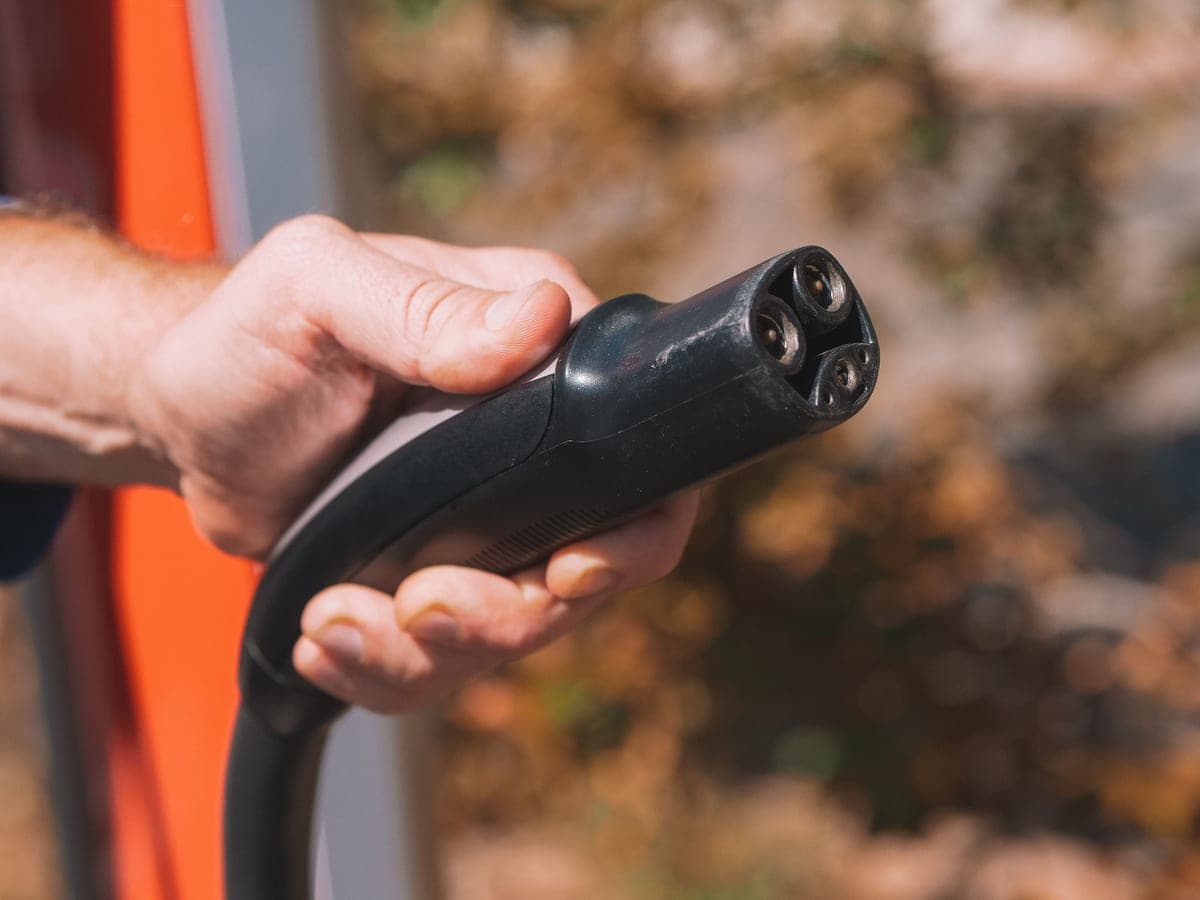
Adapters are where EV charging gets confusing, largely because there are two completely different kinds and they get discussed as if they were one thing.
- Connector adapters change the plug that goes into your car -- J1772 to NACS, and so on.
- Outlet adapters change the plug that goes into the wall -- NEMA 14-50 to 5-15, and so on.
They are unrelated, and mixing up which one you need is the usual reason someone buys the wrong thing.
Connector adapters
| Adapter | What it does | Do you need to buy it? |
|---|---|---|
| J1772 to NACS | Lets a Tesla or NACS-port car use a J1772 charger | No. Teslas ship with one, and NACS-port cars ship with one. |
| NACS to J1772 | Lets a J1772 car use a NACS charger | Sometimes. Needed if your household charger is NACS and one car is J1772. |
| CCS to NACS (DC) | Lets a CCS car use a Tesla Supercharger | Only for public fast charging. Nothing to do with home charging. |
| NACS to CCS (DC) | Lets a NACS car use a CCS fast charger | Only for public fast charging. |
Outlet adapters
These matter for portable chargers, and the useful set is small: NEMA 14-50 for RV and range outlets, NEMA 5-15 for standard household outlets, and NEMA TT-30 if campgrounds appear on your routes. The full field guide covers what each delivers.
The two rules
- Buy adapters made or approved by your charger's or car's manufacturer. An adapter carries the full charging current through two additional contact sets. A poorly made one is a heat source in exactly the place nobody inspects.
- Never chain two adapters together. Each junction adds resistance and a failure point, and stacking them concentrates the risk where you cannot see it. If you need two adapters to reach a socket, you have the wrong charger for that socket.
Living with an adapter daily
It is fine, and it is what a great many households do. Two practical notes: the adapter usually stays clipped to the charger's connector rather than being fitted each time, and it adds a few inches of length and a little weight to the connector end -- which occasionally matters if your cable was already at its limit. Cable length.
If daily adapter handling bothers you and your household has both connector types, the Tesla Universal Wall Connector integrates the adapter into the holster so there is nothing loose.
FAQ
Questions people actually ask
Do I need an adapter to charge my Tesla at home?
Can I use a J1772 to NACS adapter permanently?
Are EV charging adapters safe?
What is the difference between a connector adapter and an outlet adapter?
Sources
Where these numbers come from
- Wall Connector support page — TeslaPublished connector compatibility and the Universal Wall Connector's integrated adapter.
- All EVs with a NACS charging port in 2026 — SimpleSwitchPublished list of native-NACS models by manufacturer and model year. Fetched 2026-09-08.
Read next
Related reading
- GM's charging adapters, sorted outGM's four adapters by part number, which inlet each one needs, the 2027 changeover, and the two that matter for home charging.
- NACS home charging, explained without the hypeWhich cars have native NACS ports and what it means for the charger you buy today.
- J1772 home charging: what it is and who needs itWhat J1772 is, which cars use it, and why it remains the most versatile choice.
- Outlet types for EV charging: a field guideEvery outlet you might charge from, what each delivers, and which adapters to carry.
- EV plug types, explainedJ1772, NACS, CCS and CHAdeMO: which plug your car has and which matters at home.
- The best J1772 adaptersWhich J1772 adapter direction you need, which came free with the car, and the safety rules.
- The best home charger for an Acura ZDXWhy a J1772 charger fits the ZDX at home, and what the NACS adapter is for.
- The best home charger for a Nissan AriyaWhy a J1772 charger fits the Ariya's CCS port, and how it differs from the 2026 Leaf.
- The best NACS to CCS adapters for Tesla SuperchargersWhat to check before buying a Supercharger adapter, why UL 2252 matters, and two options compared.
- Can a non-Tesla use a Tesla charger?Tesla's home chargers and Tesla's Superchargers, for a non-Tesla: what works, and what to buy.
- A2Z Typhoon Pro reviewDual temperature sensors, an interlock and a hard case -- and a UL 2252 certificate A2Z says is pending.
- Lectron Vortex Plus vs A2Z Typhoon ProTwo Supercharger adapters with near-identical ratings; the published UL 2252 certification decides it.