Level 1
Level 1 charging: when the cable in your trunk is enough
Slow, free, and more than sufficient for a surprising number of households. Here is the arithmetic to find out whether yours is one of them.
By Sawyer V. · Published September 8, 2026
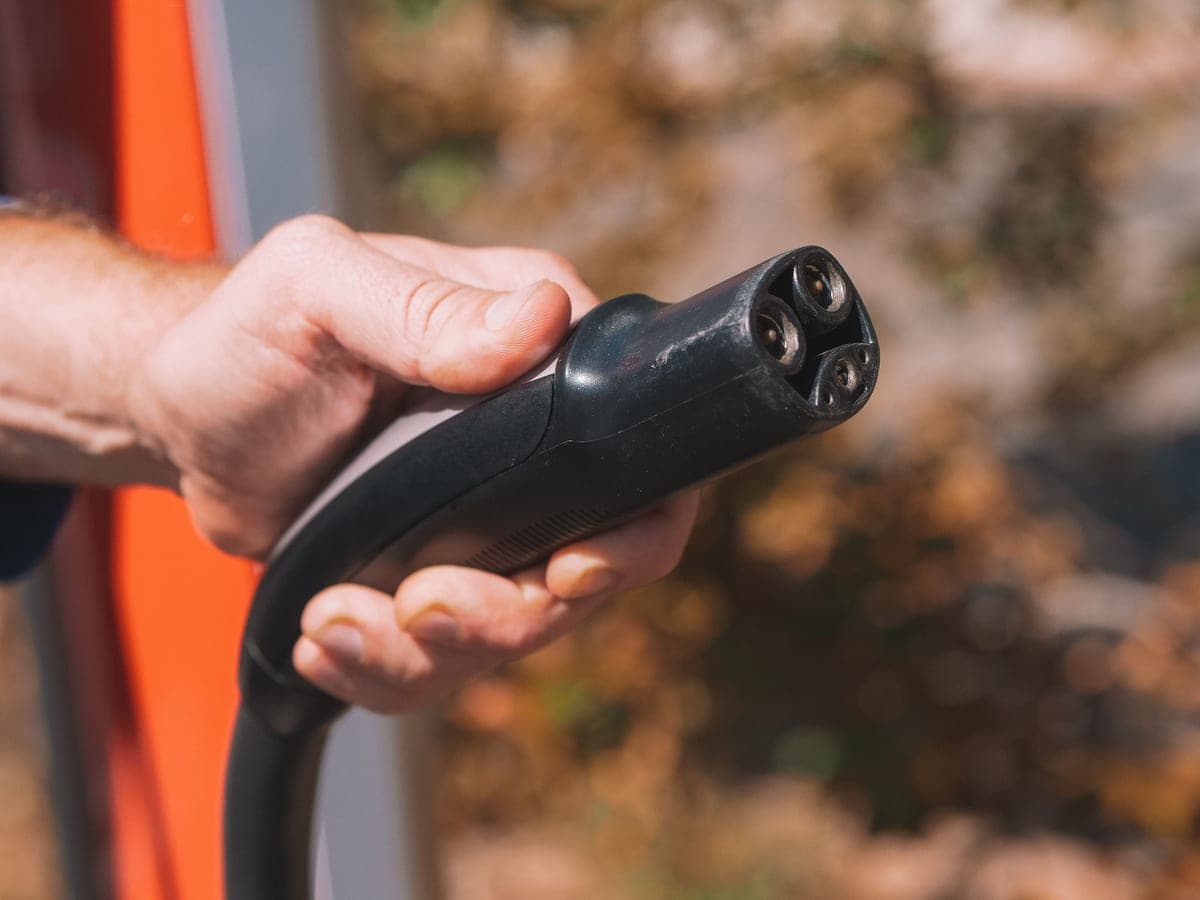
Every EV comes with a cable that plugs into a normal household outlet. That is Level 1 charging, and the entire internet will tell you it is too slow to bother with. For a lot of people that is simply not true, and it is worth twenty seconds of arithmetic before you spend $1,500 finding out.
How fast it actually is
Level 1 on a standard outlet
Typical draw: 12 A at 120 V = 1.44 kW
At 3.5 mi/kWh: 1.44 x 3.5 = about 5 miles of range per hour
8 hours overnight: about 40 miles
12 hours: about 60 miles
Some cars and cables draw 16 amps on a 20-amp circuit, giving roughly 6 to 7 miles per hour. Check what yours does -- the car usually reports the charging rate on its screen.
The test that decides it
Take your weekly mileage and divide by seven. If your daily average is comfortably under what you can replace overnight, Level 1 works.
| Your daily average | Plugged in 12 hours | Verdict |
|---|---|---|
| Under 30 miles | About 60 miles replaced | Comfortably yes |
| 30 to 45 miles | About 60 miles replaced | Yes, with little margin |
| 45 to 60 miles | About 60 miles replaced | Only if you never have a big day |
| Over 60 miles | About 60 miles replaced | No -- you will fall behind |
The four things that break Level 1
- Cold weather. Efficiency drops and some of the charge goes to keeping the battery warm. A margin that works in July can vanish in January.
- Long weekend trips. You come home at 15% and Level 1 needs three days to refill. If that happens monthly you will resent it; if once a year, use a fast charger on the way home.
- A large battery you regularly deplete. Level 1 replaces the same miles regardless of battery size, so a big battery run low takes proportionally longer.
- No reliable outlet. Street parking, a shared garage with no socket, an extension run you should not be making.
Doing Level 1 properly
- Use a dedicated circuit if you can. A 15-amp circuit shared with a freezer and a workshop will trip.
- Plug straight into the wall. No extension cords, no power strips -- why.
- Check the outlet. An old, loose receptacle carrying 12 amps continuously for hours is a genuine hazard. If it is warm to the touch, stop and have it looked at.
- Plug in every night, not when the battery is low. Level 1 works by never falling behind.
- Set a charge limit in the car if it offers one, per the manual.
FAQ
Questions people actually ask
How many miles per hour does Level 1 charging add?
Is Level 1 charging enough?
Is it safe to charge an EV from a normal wall outlet?
Does Level 1 charging damage the battery?
Sources
Where these numbers come from
- Lectron Level 2 EV chargers — LectronReference for portable charger output levels and included Level 1 adapters.
Read next
Related reading
- Level 1, Level 2 and DC fast charging: which one you needLevel 1, Level 2 and DC fast charging with real speeds, and which you need at home.
- Do you actually need a Level 2 charger?The honest test for whether you need a Level 2 charger, or whether Level 1 is enough.
- The best portable EV chargersPortable Level 2 chargers for renters and travelers, with the honest case for buying none.
- EV charging speed calculatorCalculate charging speed and time from your own numbers, with the working shown.
- The best Level 1 EV chargersLevel 1 charging on a normal outlet: what it delivers, and when to buy anything at all.
- The best dual-voltage portable EV chargersPortables that run from a standard outlet and a 240 V outlet, and how fast each one really is.