The basics
Level 1, Level 2 and DC fast charging: which one you need
Three speeds, two of which you will use and one of which you cannot have at home. Ten minutes here makes every other page make sense.
By Sawyer V. · Published September 8, 2026
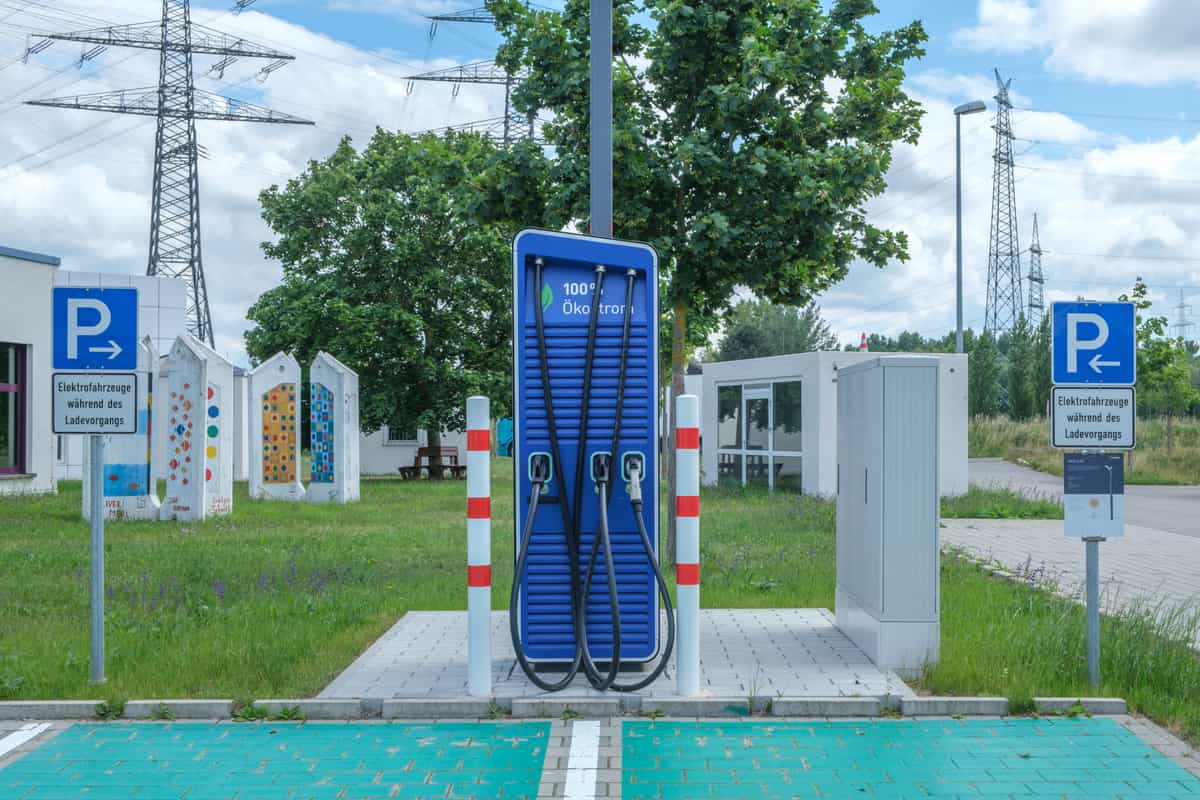
"Levels" is just a way of naming charging speeds. There are three, they differ enormously, and the differences come down to voltage and current -- the same two things that explain everything else in this subject.
| Level 1 | Level 2 | DC fast charging | |
|---|---|---|---|
| Voltage | 120 V | 240 V | 400-1000 V DC |
| Typical power | 1.4 kW | 7.7-11.5 kW | 50-350 kW |
| Miles of range per hour | about 5 | about 27-40 | hundreds |
| Where | Any wall outlet | Home, workplace, some public | Public only |
| What you need | The cable from the car | A 240 V circuit and a charger | Nothing -- it is a public station |
| Cost to set up at home | $0 | Roughly $1,400-$2,200 all in | Not possible at home |
Level 1: the cable in your trunk
Plugs into a normal household outlet. Adds roughly 3 to 5 miles of range per hour -- around 40 to 60 miles over a twelve-hour night.
The internet writes this off, and for a lot of households that is wrong. If you drive under about 40 miles a day and can plug in every night, Level 1 keeps up and costs nothing. Level 1 charging has the arithmetic to check.
Level 2: what people mean by home charging
Runs on a 240-volt circuit -- the kind an electric range or clothes dryer uses. Adds roughly 25 to 40 miles of range per hour, which fills essentially any EV overnight.
Why the jump is so large
Level 1: 12 A x 120 V = 1.44 kW
Level 2 at 32 A: 32 x 240 = 7.7 kW -- more than five times as fast
Level 2 at 48 A: 48 x 240 = 11.5 kW -- eight times
Doubling the voltage and tripling the current multiplies the power.
This is the level almost everything on this site is about. Level 2 chargers.
DC fast charging: the road-trip one
Often called Level 3, though that is not a formal designation. It bypasses the car's onboard charger and feeds DC power straight to the battery, which is why it can move so much power.
You cannot have this at home. It requires industrial electrical service -- a single fast charger can draw more power than an entire house. When you read about a car charging 10 to 80% in eighteen minutes, that is DC fast charging at a public station, not something a wall unit does.
Which level do you need?
- Under about 40 miles a day, with a reachable outlet: Level 1 may be all you need. Try it for a month first.
- More than that, or a big battery, or cold winters: Level 2 at home, and the rest of this site is about choosing one.
- Road trips: DC fast charging along the route. Nothing to buy or install.
Most households end up with Level 2 at home plus DC fast charging on trips. That combination is what makes an EV genuinely easy to live with.
FAQ
Questions people actually ask
What is the difference between Level 1 and Level 2 charging?
Can I install Level 3 charging at home?
Is Level 2 charging worth it?
How many miles per hour does Level 2 charging add?
Sources
Where these numbers come from
- NEC Article 625: EV charging equipment — WireRef
- Level 2 EV charger installation cost in 2026 — SimpleSwitchPublished all-in installation cost range. Fetched 2026-09-08.
Read next
Related reading
- Do you actually need a Level 2 charger?The honest test for whether you need a Level 2 charger, or whether Level 1 is enough.
- Level 1 charging: when the cable in your trunk is enoughHow fast Level 1 really is, and the math on whether it covers your daily driving.
- Volts, amps, kW and kWh, in plain EnglishThe four electrical terms that matter and the one formula that ties them together.
- Level 2 chargers for your homeThe wall units that charge overnight: what to buy, what the specs mean, and what to ignore.
- DC fast charging, explainedWhat DC fast charging is, how fast it is, which plugs it uses, and why it is not a home option.