Budget picks
The cheapest home EV charger that is still a good idea
There is a floor below which cheap stops being a bargain. Here is where it is, and the units that sit just above it.
By Sawyer V. · Published September 8, 2026
How this page is funded: we earn a commission if you buy through our Amazon links, at no extra cost to you. It does not change what we recommend, and we say plainly when the honest answer is to buy nothing. Full disclosure.
The short answer: buy the cheapest UL-listed unit with the amperage and cable length you need, and put the money you saved toward the installation, which is where the real cost is.
The longer answer involves saying clearly what "budget" should and should not mean on a device that pulls 40 amps continuously for hours in your garage.
Budget picks
Ranked for a first home charger. Every row jumps to the full write-up below.
| # | Product | Best for | Max output | Price |
|---|---|---|---|---|
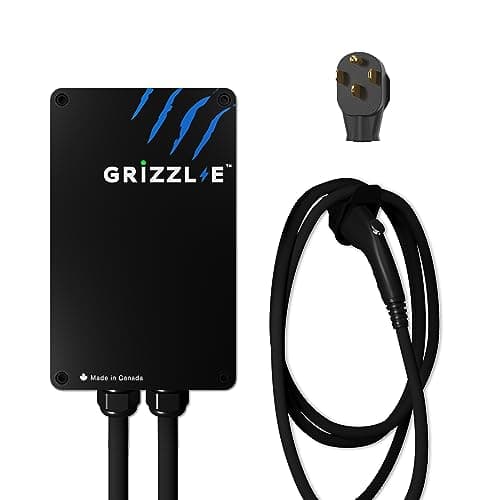
| 1 |  Grizzl-E ClassicHarsh weather and no app. J1772, 24 ft cable. Grizzl-E ClassicHarsh weather and no app. J1772, 24 ft cable. | Harsh weather and no app | 40 A9.6 kW | $299.99 · View on Amazon#ad how we are funded · price as of October 27, 2026 |
| 2 | Emporia Level 2 EV Charger (Classic)A first charger, hardwired. J1772, 25 ft cable. | A first charger, hardwired | 48 A11.5 kW | Check price on Amazon#ad how we are funded |
| 3 |  Lectron portable Level 2 chargerTravel and rentals. J1772, 21 ft cable. Lectron portable Level 2 chargerTravel and rentals. J1772, 21 ft cable. | Travel and rentals | 32 A7.7 kW | $269.99 · View on Amazon#ad how we are funded · price as of October 27, 2026 |
The one corner you cannot cut
Safety certification. A home EV charger should be UL listed, or tested to UL standards by another Nationally Recognized Testing Laboratory such as CSA or ETL. Marketplace listings are full of units that say "UL certified components" or "meets UL standards", which are not the same claim as the device itself being listed.
This matters practically as well as theoretically: many local inspectors will not sign off a permitted installation for a non-listed device, and some insurers ask. Safety certifications explains how to read the marks.
Where cheap is genuinely fine
- No app. Scheduling can live in the car. The Grizzl-E Classic omits the app entirely and is a better unit for it if you value simplicity.
- 40 amps instead of 48. A 40 A charger delivers 9.6 kW, about 34 miles of range per hour. Over a ten-hour night that is 340 miles. The upgrade to 48 A buys speed most households never use.
- A shorter cable, if you measured. Cable length is only worth paying for if you need the reach. Measure first -- cable length.
- Plug-in rather than hardwired, if you already have a suitable 240 V outlet. That is the single biggest saving available, because it can remove the electrician entirely.
The cheapest route of all
If your driving is modest, the genuinely cheapest option is the cable already in your trunk plus a normal outlet: zero dollars. If you need more than that but have an existing dryer or workshop 240-volt outlet, a portable Level 2 unit plugged into it costs a few hundred dollars and no installation at all. See the best portable chargers.
The budget picks in detail
Three units at different points on the price curve, each with the case against it stated.
1. Harsh weather and no app
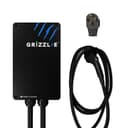
Grizzl-E Classic
United Chargers · J1772 · 40 A / 9.6 kW · 24 ft cable
A cast-aluminum box with no app, no account and no firmware to update. If you want a charger that behaves like an appliance, this is the one.
What is good
- Cast aluminum NEMA 4 / IP67 enclosure, built for outdoor mounting
- No app, no account, no network dependency
- Amperage is set with physical switches, not software
- Protections for over-current, over-voltage, ground fault and over-temperature
What is not
- 40 A ceiling, slower than the 48 A units if your panel can take more
- No scheduling, so off-peak charging has to be set in the car
- The cold-flexible 24 ft cable is only on the Extreme Edition
| Maximum output | 40 A / 9.6 kW at 240 V |
|---|---|
| Adjustable | 16, 24, 32 or 40 A |
| Connector | SAE J1772 |
| Cable | 24 ft on the Extreme Edition |
| Enclosure | Cast aluminum, NEMA 4 / IP67 |
| Certification | UL certified |
| Warranty | 3 years |
Skip this if: Skip it if you want scheduled charging or energy tracking in an app. The Classic deliberately has neither.
Specifications above are the manufacturer’s published figures. Source: United Chargers, InsideEVs. We have not tested this unit — see how we pick.
2. A first charger, hardwired
Emporia Level 2 EV Charger (Classic)
Emporia · J1772 · 48 A / 11.5 kW · 25 ft cable
The safe default for a first home charger: 48 amps hardwired, a genuinely long cable, a NEMA 4 outdoor-rated case, and no subscription attached to the app.
What is good
- 48 A hardwired is the fastest tier most homes can realistically support
- 25 ft of cable reaches across a two-car garage without a fight
- NEMA Type 4 enclosure is rated for outdoor mounting
- Energy monitoring in the app with no subscription
What is not
- Drops to 40 A if you use the NEMA 14-50 plug rather than hardwiring
- The app is the only way to change the amperage setting
| Maximum output | 48 A / 11.5 kW at 240 V (hardwired) |
|---|---|
| Plug-in output | 40 A with the NEMA 14-50 plug |
| Connector | SAE J1772 |
| Cable | 25 ft |
| Enclosure | NEMA Type 4, indoor or outdoor |
| Certification | UL listed, Energy Star |
| Warranty | 3 years |
Skip this if: Skip it if you want a unit with no app or network connection at all. The Grizzl-E Classic is the simpler machine.
Specifications above are the manufacturer’s published figures. Source: Emporia Energy. We have not tested this unit — see how we pick.
3. Travel and rentals
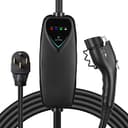
Lectron portable Level 2 charger
Lectron · J1772 · 32 A / 7.7 kW · 21 ft cable
A plug-in portable that runs at Level 2 speed from a NEMA 14-50 and drops to a standard wall outlet with the included adapter. The travel unit, not the garage unit.
What is good
- Level 2 speed from a NEMA 14-50 without an installed charger
- Falls back to a standard household outlet with the adapter
- Small enough to keep in the trunk
What is not
- 32 A ceiling, meaningfully slower than a 48 A wall unit
- Not weather-rated for permanent outdoor mounting
- Repeated plugging and unplugging wears a NEMA 14-50 receptacle faster than a hardwired unit
| Maximum output | 32 A / 7.7 kW at 240 V |
|---|---|
| Connector | SAE J1772 |
| Plug | NEMA 14-50, with an adapter for a standard outlet |
| Use | Portable. Lives in the car, not on the wall |
Skip this if: Skip it if this is your only charger and you have a garage. A wall unit is faster and does not live in your trunk.
Specifications above are the manufacturer’s published figures. Source: Lectron. We have not tested this unit — see how we pick.
FAQ
Questions people actually ask
What is the cheapest safe Level 2 EV charger?
Are unbranded EV chargers on marketplaces safe?
Is a 32-amp charger fast enough?
Sources
Where these numbers come from
- Level 2 EV charger installation cost, 2026 — SimpleSwitchPublished hardware price tiers cited above. Fetched 2026-09-08.
- Grizzl-E Classic product specifications — United Chargers
Read next
Related reading
- Refurbished and used EV chargersWhat the refurbished charger market actually offers, the one maker-direct program we could verify, and the checklist before buying any used unit.
- The best home EV chargers, for people buying their first oneSix Level 2 chargers ranked for a first-time buyer, with an honest reason to skip each one.
- How to check an EV charger's safety certificationWhat UL, ETL and CSA marks mean, and the wording designed to look like certification.
- The best portable EV chargersPortable Level 2 chargers for renters and travelers, with the honest case for buying none.
- EV charger install cost calculatorAdd up published 2026 cost ranges for your charger, wiring and panel situation.
- The best 40-amp EV chargersWhy 40 A is the sweet spot for most homes, and the units that do it well.