The lookup table
What size breaker and wire does an EV charger need?
One rule, one table, and the arithmetic shown so you can check every row. Bookmark this one.
By Sawyer V. · Published September 8, 2026
How this page is funded: we earn a commission if you buy through our Amazon links, at no extra cost to you. It does not change what we recommend, and we say plainly when the honest answer is to buy nothing. Full disclosure.
An EV charger runs at its full rated current for hours at a stretch. The electrical code calls that a continuous load, and requires the branch circuit to be rated at not less than 125% of it. That single rule generates every number below.
The table
| Charger | Power at 240 V | Breaker | Typical copper conductor | Miles/hr |
|---|---|---|---|---|
| 16 A | 3.8 kW | 20 A | 12 AWG | about 13 |
| 24 A | 5.8 kW | 30 A | 10 AWG | about 20 |
| 32 A | 7.7 kW | 40 A | 8 AWG | about 27 |
| 40 A | 9.6 kW | 50 A | 6 AWG | about 34 |
| 48 A | 11.5 kW | 60 A | 6 AWG | about 40 |
| 50 A | 12.0 kW | 70 A | 4 AWG | about 42 |
| 64 A | 15.4 kW | 80 A | 3 AWG | about 54 |
The arithmetic, row by row
How the breaker column is produced
48 A charger: 48 x 1.25 = 60 A. 60 is a standard size, so the breaker is 60 A.
40 A charger: 40 x 1.25 = 50 A. Standard size, so 50 A.
32 A charger: 32 x 1.25 = 40 A. Standard size, so 40 A.
50 A charger: 50 x 1.25 = 62.5 A. Not a standard size, so round up to 70 A.
Standard breaker sizes go 15, 20, 25, 30, 35, 40, 45, 50, 60, 70, 80, 90, 100.
That last row is worth pausing on, because it catches people out: a charger set to 50 amps needs a 70-amp circuit, not a 60-amp one. It is also why 48 amps is the most common top-end setting on home chargers -- it is the highest figure that lands neatly on a 60-amp breaker.
Working the other way: what your panel can support
More usefully, you often know your breaker and want to know the charger. Divide by 1.25, or multiply by 0.8:
| Circuit available | Maximum continuous charger draw | Power |
|---|---|---|
| 20 A | 16 A | 3.8 kW |
| 30 A | 24 A | 5.8 kW |
| 40 A | 32 A | 7.7 kW |
| 50 A | 40 A | 9.6 kW |
| 60 A | 48 A | 11.5 kW |
| 70 A | 56 A | 13.4 kW |
Aluminum conductors
Aluminum has lower ampacity than copper for the same size, so an aluminum feed needs a larger conductor -- and it needs terminals and antioxidant treatment rated for aluminum. It is common and perfectly acceptable on longer runs where it is meaningfully cheaper. Ask your electrician which they are quoting, because it affects the price comparison between bids.
Choosing a charger to fit your panel
If your panel can spare 60 amps, a 48-amp charger fits. If it can spare 50, a 40-amp charger fits and costs less to wire. If you genuinely do not know, buy an adjustable unit and set it to whatever the electrician confirms.
One charger per circuit size
Ranked for a first home charger. Every row jumps to the full write-up below.
| # | Product | Best for | Max output | Price |
|---|---|---|---|---|
| 1 |  Grizzl-E ClassicHarsh weather and no app. J1772, 24 ft cable. Grizzl-E ClassicHarsh weather and no app. J1772, 24 ft cable. | Harsh weather and no app | 40 A9.6 kW | $299.99 · View on Amazon#ad how we are funded · price as of October 27, 2026 |
| 2 | Emporia Level 2 EV Charger (Classic)A first charger, hardwired. J1772, 25 ft cable. | A first charger, hardwired | 48 A11.5 kW | Check price on Amazon#ad how we are funded |
| 3 |  ChargePoint Home FlexHomes with an uncertain panel. J1772, 23 ft cable. ChargePoint Home FlexHomes with an uncertain panel. J1772, 23 ft cable. | Homes with an uncertain panel | 50 A12 kW | $549.00 · View on Amazon#ad how we are funded · price as of October 27, 2026 |
The three units in detail
A 40 A unit for a 50 A circuit, a 48 A unit for a 60 A circuit, and an adjustable unit for when you do not know yet.
1. Harsh weather and no app
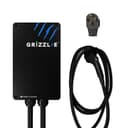
Grizzl-E Classic
United Chargers · J1772 · 40 A / 9.6 kW · 24 ft cable
A cast-aluminum box with no app, no account and no firmware to update. If you want a charger that behaves like an appliance, this is the one.
What is good
- Cast aluminum NEMA 4 / IP67 enclosure, built for outdoor mounting
- No app, no account, no network dependency
- Amperage is set with physical switches, not software
- Protections for over-current, over-voltage, ground fault and over-temperature
What is not
- 40 A ceiling, slower than the 48 A units if your panel can take more
- No scheduling, so off-peak charging has to be set in the car
- The cold-flexible 24 ft cable is only on the Extreme Edition
| Maximum output | 40 A / 9.6 kW at 240 V |
|---|---|
| Adjustable | 16, 24, 32 or 40 A |
| Connector | SAE J1772 |
| Cable | 24 ft on the Extreme Edition |
| Enclosure | Cast aluminum, NEMA 4 / IP67 |
| Certification | UL certified |
| Warranty | 3 years |
Skip this if: Skip it if you want scheduled charging or energy tracking in an app. The Classic deliberately has neither.
Specifications above are the manufacturer’s published figures. Source: United Chargers, InsideEVs. We have not tested this unit — see how we pick.
2. A first charger, hardwired
Emporia Level 2 EV Charger (Classic)
Emporia · J1772 · 48 A / 11.5 kW · 25 ft cable
The safe default for a first home charger: 48 amps hardwired, a genuinely long cable, a NEMA 4 outdoor-rated case, and no subscription attached to the app.
What is good
- 48 A hardwired is the fastest tier most homes can realistically support
- 25 ft of cable reaches across a two-car garage without a fight
- NEMA Type 4 enclosure is rated for outdoor mounting
- Energy monitoring in the app with no subscription
What is not
- Drops to 40 A if you use the NEMA 14-50 plug rather than hardwiring
- The app is the only way to change the amperage setting
| Maximum output | 48 A / 11.5 kW at 240 V (hardwired) |
|---|---|
| Plug-in output | 40 A with the NEMA 14-50 plug |
| Connector | SAE J1772 |
| Cable | 25 ft |
| Enclosure | NEMA Type 4, indoor or outdoor |
| Certification | UL listed, Energy Star |
| Warranty | 3 years |
Skip this if: Skip it if you want a unit with no app or network connection at all. The Grizzl-E Classic is the simpler machine.
Specifications above are the manufacturer’s published figures. Source: Emporia Energy. We have not tested this unit — see how we pick.
3. Homes with an uncertain panel
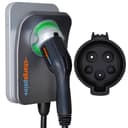
ChargePoint Home Flex
ChargePoint · J1772 · 50 A / 12 kW · 23 ft cable
The most adjustable unit here. It can be set anywhere from 16 A to 50 A, which makes it the one to buy when you do not yet know what your panel will allow.
What is good
- Six selectable amperage settings from 16 A to 50 A
- Sold in both hardwired and NEMA 14-50 versions
- Rated for indoor or outdoor installation
- The app is mature and does not require a subscription
What is not
- 23 ft is a foot shorter than the longest cables in this group
- The 50 A setting needs a bigger circuit than most panels have spare
| Maximum output | 50 A / 12 kW at 240 V |
|---|---|
| Amperage settings | 16, 24, 32, 40, 48 or 50 A |
| Connector | SAE J1772 |
| Cable | 23 ft |
| Installation | Hardwired or NEMA 14-50 |
| Certification | UL listed, Energy Star |
| Warranty | 3 years |
Skip this if: Skip it if your circuit is already fixed and you just want the cheapest safe 40 A unit. You are paying for flexibility you will not use.
Specifications above are the manufacturer’s published figures. Source: ChargePoint, ChargePoint. We have not tested this unit — see how we pick.
FAQ
Questions people actually ask
What size breaker do I need for a 48-amp EV charger?
What size wire for a 50-amp EV charger circuit?
Why does a 50-amp charger need a 70-amp breaker?
Can I put an EV charger on a 30-amp circuit?
Is aluminum wire acceptable for an EV charger circuit?
Sources
Where these numbers come from
- NEC Article 625: EV charging equipment — WireRefArticle 625 continuous-load requirement for EV supply equipment.
- NEC 125% rule for EV charger breaker and wire sizing — Electric Vehicle GeekPublished sizing ladder corroborating the breaker column. Fetched 2026-09-08.
- How to size an EV charger circuit, NEC 220.57 and Article 625 — TestTalk HQCorroborating published sizing method. Fetched 2026-09-08.
Read next
Related reading
- EV charger disconnect requirementsThe 2023 rule, the 2026 rewrite that dropped the 60-amp threshold, and why a plug-in install sidesteps the whole question.
- How many amps do you actually need?Three checks that determine your charger amperage, and why the smallest one wins.
- Can your electrical panel take an EV charger?What a load calculation is, what goes into it, and how to get a rough answer yourself.
- 32 A vs 40 A vs 48 A: how many amps do you actually need?What each amperage tier delivers in miles per hour, and the circuit each one requires.
- Hardwired or plug-in: which EV charger install is right?NEMA 14-50 or hardwired: amperage limits, cost, portability and what inspectors prefer.
- The best 60-amp breaker for an EV chargerWhy the best breaker is the one your panel is listed for, with a worked Square D QO example.
- 50 or 60 amp breaker for an EV charger?40 A chargers and 14-50 outlets take 50 A; 48 A units take 60 A. What the extra 10 amps buys.
- Does an EV charger need its own circuit?The dedicated-circuit rule, the energy-management exception, and what it means for your panel.
- Aluminum vs copper wire for an EV chargerPublished ampacities side by side, why aluminum goes up a size, and what has to be checked.
- Romex vs conduit for an EV chargerWhere each wiring method is allowed, what each costs per foot, and who decides on your job.