Safety
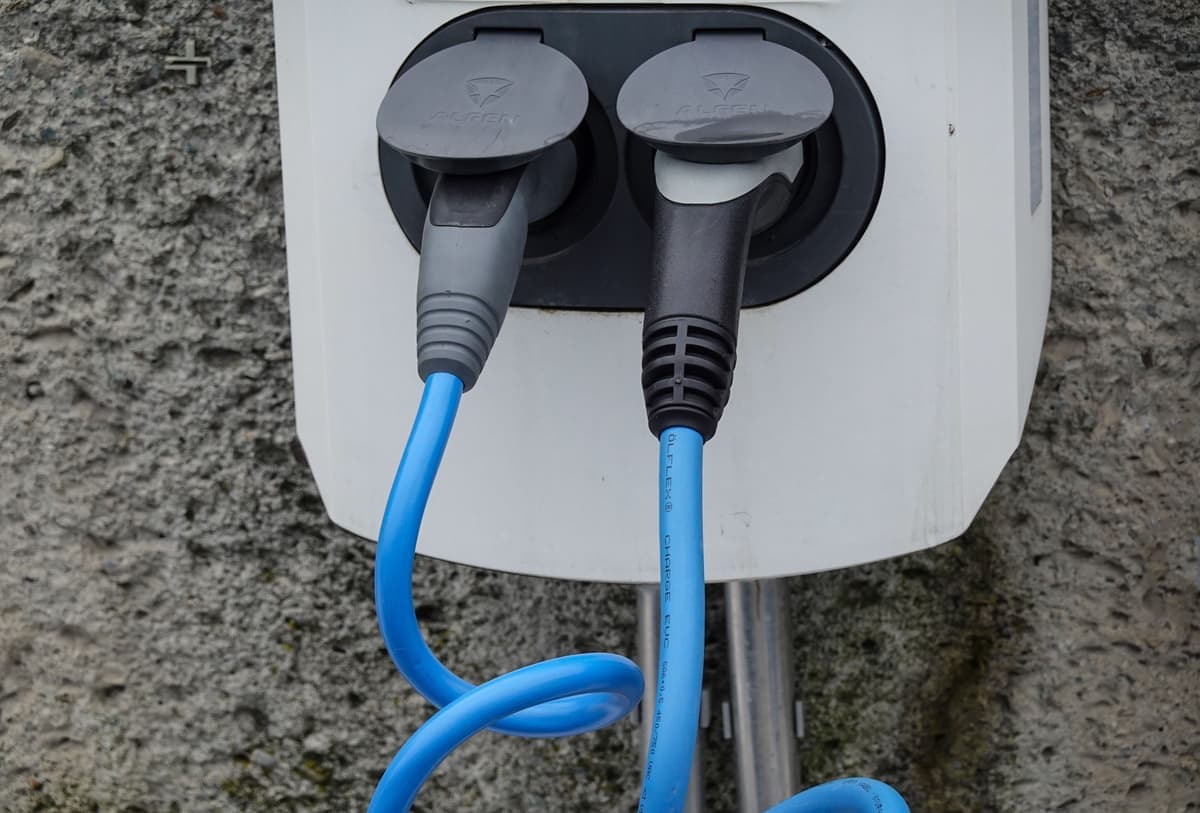
EV charger extension cords: the honest answer
The short version is do not. The longer version explains why, and what to do instead when the cable genuinely will not reach.
By Sawyer V. · Published September 8, 2026
Why this is different from a lamp
An extension cord is designed for intermittent loads: a drill for ten minutes, a lamp at 60 watts. EV charging is the opposite -- near the cord's full rating, continuously, for hours, night after night.
Three things go wrong:
- Resistance heating at the connections. Every plug-and-socket junction has resistance. Under a sustained load it warms; warm metal oxidizes; oxidized contacts have more resistance; more resistance means more heat. This runs away slowly, over weeks, which is exactly why people do not notice until something melts.
- Undersized conductors. Most household cords are 16 or 14 AWG, sized for intermittent use. Sustained current heats the whole length, and heat degrades insulation permanently.
- Coiling. A coiled cord cannot shed heat -- it behaves like an electromagnet's winding. Many people charge with the cord still coiled on a reel, which is the worst case.
What is safe
| Option | Verdict |
|---|---|
| Household extension cord | No. Not any gauge, not any length. |
| Power strip or surge protector | No. Not rated for a continuous high-current load at all. |
| Buying a charger with a longer cable | Yes. The correct answer. Units go to 25 ft -- see cable length. |
| Moving the charger closer to the car | Yes. Usually cheaper than you expect and it fixes the problem permanently. |
| Having an electrician install a second outlet closer to the car | Yes. Proper fixed wiring, correctly sized and inspected. |
| A manufacturer-approved extension for that specific charger | Sometimes. Some manufacturers sell or approve one. If yours does, follow their instructions exactly. If they do not, do not improvise. |
If you are renting and have no options
This is the genuinely hard case, and it deserves a real answer rather than a lecture. If the only outlet is out of reach and you cannot have wiring changed:
- Ask first. Landlords often say yes to an outlet, particularly if you offer to pay. It is a permanent improvement to their property.
- Park closer, even if it is inconvenient.
- Reduce the current. If your charger can be set to 8 or 12 amps, the load is far gentler on everything -- though this does not make an unrated cord acceptable.
- Use public or workplace charging as the primary method and treat home as a top-up. Charging in an apartment covers this properly.
None of these is as convenient as an extension cord. All of them are better than a fire in a building you do not own.
Warning signs to act on immediately
- A plug or receptacle that is warm or hot to the touch.
- Discoloration or scorching around the slots of an outlet.
- A burning or plastic smell near the charging point.
- Flickering lights when charging starts.
- A breaker that trips repeatedly -- see GFCI nuisance tripping.
Any of these means stop charging on that circuit and have an electrician look at it.
FAQ
Questions people actually ask
Can I use an extension cord with an EV charger?
What if I use a heavy-duty extension cord?
Can I use an extension cord for Level 1 charging?
What should I do if my charging cable does not reach?
Sources
Where these numbers come from
- NEC Article 625: EV charging equipment — WireRefRequirements for EV supply equipment and its supply circuit.
Read next
Related reading
- How long should your EV charger cable be?How to measure your run properly, and which chargers have the longest cables.
- Charging an EV when you live in an apartmentThe realistic options for apartment EV charging, ranked by how well they actually work.
- Why your EV charger keeps tripping the GFCI breakerWhy GFCI breakers trip on EV chargers and the safe sequence for diagnosing it.
- Level 1 charging: when the cable in your trunk is enoughHow fast Level 1 really is, and the math on whether it covers your daily driving.
- The best EV charging cablesPortable charging cables and properly rated J1772 extensions, plus the rule never to break.
- EV charger accessories: worth it, or skip itWhich EV accessories earn their place, which are situational, and which to skip.