The money page
What EV charger installation actually costs
Published 2026 figures, itemized, with the arithmetic shown. The number that surprises people is not the charger.
By Sawyer V. · Published September 8, 2026

How this page is funded: we earn a commission if you buy through our Amazon links, at no extra cost to you. It does not change what we recommend, and we say plainly when the honest answer is to buy nothing. Full disclosure.
Nearly every charger review skips this, which is odd, because it is the larger number. A $500 charger with a $1,700 installation is a $2,200 project, and the thing that moves that figure by thousands is not which charger you picked. It is your electrical panel.
The itemized breakdown
| Item | Published range | What moves it |
|---|---|---|
| Charger hardware | $200 - $900 | Entry 32 A units $200-$350; mid-range 48 A Wi-Fi $350-$600; premium $600-$900 |
| Labor and materials | $400 - $1,500 | Distance from panel to charger, wall type, whether conduit is needed |
| Permit | $50 - $300 | Your jurisdiction |
| Subpanel, if needed | +$500 - $1,500 | Panel has capacity but no free slots |
| 100 A to 200 A service upgrade | +$1,500 - $4,000 | Panel cannot carry the load; utility involvement required |
| Outdoor weatherproofing | +$200 - $1,000 | Exterior wall, conduit, weather-rated enclosures |
A worked example
A typical suburban install
Charger, mid-range 48 A Wi-Fi unit: $475
Labor, panel in the garage, 15 ft run: $650
Permit: $150
Panel work: none needed (200 A service, four free slots)
Total: $1,275
Now change one thing. The same house with a full 100-amp panel that needs a service upgrade:
The same house, full panel
Charger: $475
Labor: $650
Permit: $150
100 A to 200 A service upgrade: $1,500 to $4,000
Total: $2,775 to $5,275
That is the whole story of EV charger installation cost in two calculations. Everything else is detail.
Work out your install cost
Your all-in range
$1,200 – $2,400
This is arithmetic on published ranges, not a quote. It adds the figures you selected and nothing else. The only number that matters is the one an electrician writes down after looking at your panel, and that is worth getting from two or three of them.
How to make it cheaper, honestly
- Mount the charger as close to the panel as your cable will allow. Labor scales with the length and difficulty of the run more than anything else.
- Take less amperage. A 40 A charger on a 50 A circuit uses thinner, cheaper wire than a 48 A charger on a 60 A circuit, and it may fit a panel that the larger one would not. The speed difference is about six miles of range per hour.
- Use an existing 240 V outlet if you have one. A dryer or workshop socket within reach can remove the electrician entirely -- see hardwired vs plug-in.
- Get three quotes. The spread between electricians on the same job is routinely hundreds of dollars. Hiring an electrician lists what to ask so the quotes compare like for like.
- Check local rebates. The federal credit is gone but utility and state programs are not -- tax credits and rebates.
What not to economize on
The permit, and the safety listing on the charger. An unpermitted 240-volt circuit is a problem when you sell the house and potentially with your insurer if anything goes wrong. A charger without a recognized listing may fail inspection outright. Neither saving is worth what it risks.
Chargers at three price points
Ranked for a first home charger. Every row jumps to the full write-up below.
| # | Product | Best for | Max output | Price |
|---|---|---|---|---|
| 1 |  Grizzl-E ClassicHarsh weather and no app. J1772, 24 ft cable. Grizzl-E ClassicHarsh weather and no app. J1772, 24 ft cable. | Harsh weather and no app | 40 A9.6 kW | $299.99 · View on Amazon#ad how we are funded · price as of October 27, 2026 |
| 2 | Emporia Level 2 EV Charger (Classic)A first charger, hardwired. J1772, 25 ft cable. | A first charger, hardwired | 48 A11.5 kW | Check price on Amazon#ad how we are funded |
| 3 |  ChargePoint Home FlexHomes with an uncertain panel. J1772, 23 ft cable. ChargePoint Home FlexHomes with an uncertain panel. J1772, 23 ft cable. | Homes with an uncertain panel | 50 A12 kW | $549.00 · View on Amazon#ad how we are funded · price as of October 27, 2026 |
The three units in detail
A 40 A unit with a smaller circuit requirement, a 48 A default, and the adjustable option for an uncertain panel.
1. Harsh weather and no app
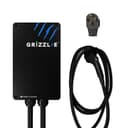
Grizzl-E Classic
United Chargers · J1772 · 40 A / 9.6 kW · 24 ft cable
A cast-aluminum box with no app, no account and no firmware to update. If you want a charger that behaves like an appliance, this is the one.
What is good
- Cast aluminum NEMA 4 / IP67 enclosure, built for outdoor mounting
- No app, no account, no network dependency
- Amperage is set with physical switches, not software
- Protections for over-current, over-voltage, ground fault and over-temperature
What is not
- 40 A ceiling, slower than the 48 A units if your panel can take more
- No scheduling, so off-peak charging has to be set in the car
- The cold-flexible 24 ft cable is only on the Extreme Edition
| Maximum output | 40 A / 9.6 kW at 240 V |
|---|---|
| Adjustable | 16, 24, 32 or 40 A |
| Connector | SAE J1772 |
| Cable | 24 ft on the Extreme Edition |
| Enclosure | Cast aluminum, NEMA 4 / IP67 |
| Certification | UL certified |
| Warranty | 3 years |
Skip this if: Skip it if you want scheduled charging or energy tracking in an app. The Classic deliberately has neither.
Specifications above are the manufacturer’s published figures. Source: United Chargers, InsideEVs. We have not tested this unit — see how we pick.
2. A first charger, hardwired
Emporia Level 2 EV Charger (Classic)
Emporia · J1772 · 48 A / 11.5 kW · 25 ft cable
The safe default for a first home charger: 48 amps hardwired, a genuinely long cable, a NEMA 4 outdoor-rated case, and no subscription attached to the app.
What is good
- 48 A hardwired is the fastest tier most homes can realistically support
- 25 ft of cable reaches across a two-car garage without a fight
- NEMA Type 4 enclosure is rated for outdoor mounting
- Energy monitoring in the app with no subscription
What is not
- Drops to 40 A if you use the NEMA 14-50 plug rather than hardwiring
- The app is the only way to change the amperage setting
| Maximum output | 48 A / 11.5 kW at 240 V (hardwired) |
|---|---|
| Plug-in output | 40 A with the NEMA 14-50 plug |
| Connector | SAE J1772 |
| Cable | 25 ft |
| Enclosure | NEMA Type 4, indoor or outdoor |
| Certification | UL listed, Energy Star |
| Warranty | 3 years |
Skip this if: Skip it if you want a unit with no app or network connection at all. The Grizzl-E Classic is the simpler machine.
Specifications above are the manufacturer’s published figures. Source: Emporia Energy. We have not tested this unit — see how we pick.
3. Homes with an uncertain panel
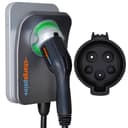
ChargePoint Home Flex
ChargePoint · J1772 · 50 A / 12 kW · 23 ft cable
The most adjustable unit here. It can be set anywhere from 16 A to 50 A, which makes it the one to buy when you do not yet know what your panel will allow.
What is good
- Six selectable amperage settings from 16 A to 50 A
- Sold in both hardwired and NEMA 14-50 versions
- Rated for indoor or outdoor installation
- The app is mature and does not require a subscription
What is not
- 23 ft is a foot shorter than the longest cables in this group
- The 50 A setting needs a bigger circuit than most panels have spare
| Maximum output | 50 A / 12 kW at 240 V |
|---|---|
| Amperage settings | 16, 24, 32, 40, 48 or 50 A |
| Connector | SAE J1772 |
| Cable | 23 ft |
| Installation | Hardwired or NEMA 14-50 |
| Certification | UL listed, Energy Star |
| Warranty | 3 years |
Skip this if: Skip it if your circuit is already fixed and you just want the cheapest safe 40 A unit. You are paying for flexibility you will not use.
Specifications above are the manufacturer’s published figures. Source: ChargePoint, ChargePoint. We have not tested this unit — see how we pick.
FAQ
Questions people actually ask
How much does it cost to install an EV charger at home?
Why is EV charger installation so expensive?
Does installation cost more if my panel is full?
Can I reduce the cost by installing it myself?
Is there still a tax credit for home EV charger installation?
Sources
Where these numbers come from
- Level 2 EV charger installation cost in 2026 — SimpleSwitchPublished hardware tiers, labor ranges, permit and panel-upgrade figures. Fetched 2026-09-08.
- EV charger installation cost: what to expect in 2026 — Murphy MadeCorroborating published all-in range. Fetched 2026-09-08.
- Alternative Fuel Vehicle Refueling Property Credit for individuals — Internal Revenue ServiceAuthority for the Section 30C residential credit and its June 30, 2026 expiry.
Read next
Related reading
- EV charger install cost calculatorAdd up published 2026 cost ranges for your charger, wiring and panel situation.
- Do you need a panel upgrade for an EV charger?When a panel upgrade is genuinely needed, what it costs, and the cheaper alternatives.
- Hiring an electrician for your EV chargerThe questions to ask, what a comparable quote contains, and the red flags.
- EV charger tax credits and rebates in 2026The federal 30C credit expired June 2026. Where state and utility rebates still exist.
- What it costs to install a NEMA 14-50 outletWhat drives the price of a 240 V outlet for charging, and the part not to cheap out on.