Free tool
EV charging speed calculator
Enter your numbers, get miles per hour and hours to charge, and see every step of the arithmetic so you can check it.
By Sawyer V. · Published September 8, 2026
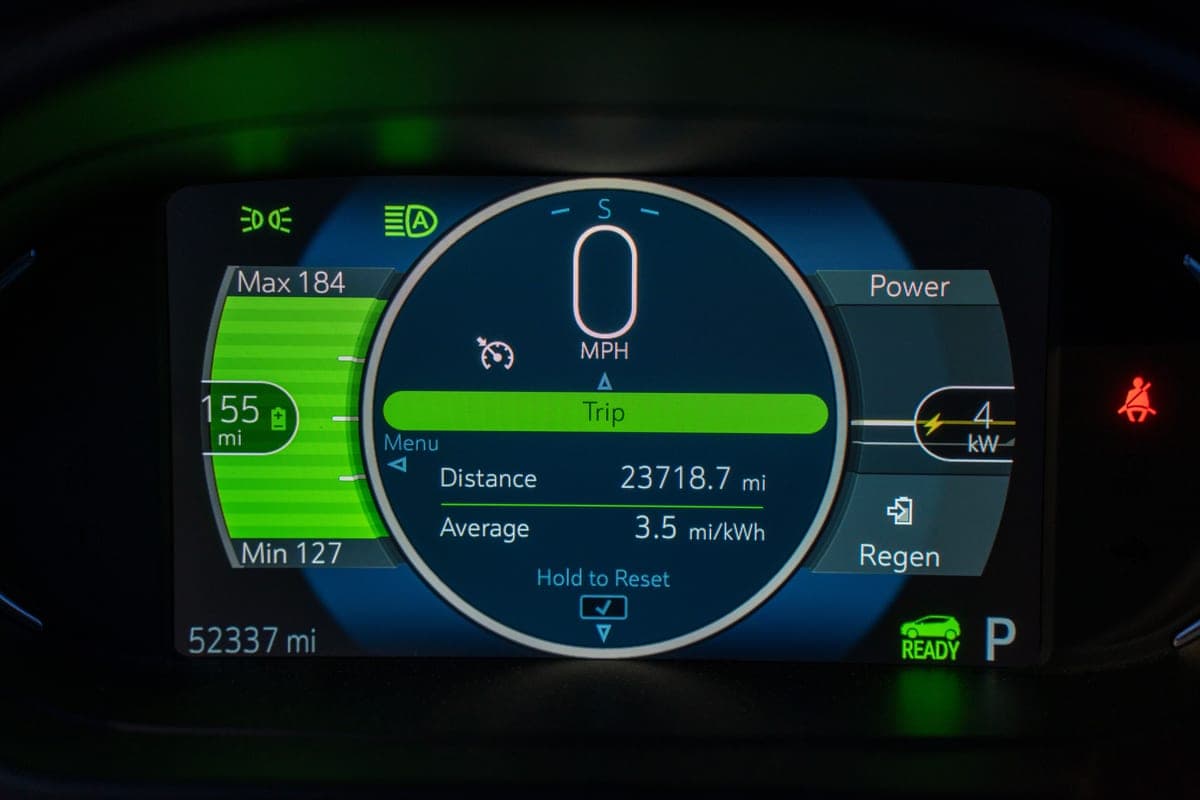
Most charging calculators hand you a number and hide the method. This one shows every step, because the arithmetic is simple enough to check and you should not have to trust anybody's black box -- including ours.
Work out your charging speed
Power
11.5 kW
Range added per hour
40 mi
20% to 80%
3h 54m
The working
48 A × 240 V ÷ 1000 = 11.5 kW
11.5 kW × 3.5 mi/kWh = 40 miles per hour
75 kWh × 60% ÷ 11.5 kW = 3h 54m
Real-world charging is a few percent slower than this: some energy becomes heat in the cable and the car’s onboard charger, and most cars taper the last stretch to 100%. Treat the result as the ceiling, not a promise.
Where to find each number
| Input | Where to get it |
|---|---|
| Charger amps | On the charger, or in its manual. If you have not bought one yet, try 32, 40 and 48 to compare. |
| Volts | 240 V for a home Level 2 circuit. 120 V for a normal wall outlet. 208 V in some apartment buildings. |
| Your car's mi/kWh | The trip computer. Use your own long-term average, not the EPA figure -- yours reflects your driving. |
| Battery kWh | The owner's manual, under specifications. Use usable capacity if both are listed. |
The formulas
What the calculator does
Power: kW = amps x volts / 1000
Range added: miles per hour = kW x mi/kWh
Time: hours = (battery kWh x charge window) / kW
That is all of it. No hidden factors.
Two limits the calculator cannot know
- Your car's onboard charger. It caps AC charging speed. If your car accepts 7.7 kW, entering 48 amps gives an answer your car cannot achieve -- enter the amps your car can actually use. Check the manual.
- Charging losses and tapering. Some energy becomes heat, and most cars slow near 100%. Real charging runs a few percent behind the calculation. We do not apply a fudge factor because we cannot source one for your car -- treat the result as the ceiling.
FAQ
Questions people actually ask
How do I calculate EV charging time?
How many miles per hour does my charger add?
Why is my real charging slower than the calculator says?
What efficiency figure should I use?
Sources
Where these numbers come from
- NEC Article 625: EV charging equipment — WireRefReference for Level 1 and Level 2 power levels.
Read next
Related reading
- How long does it take to charge an EV at home?The formula for your own charging time, and why empty-to-full is the wrong question.
- Volts, amps, kW and kWh, in plain EnglishThe four electrical terms that matter and the one formula that ties them together.
- What it costs to charge an electric car at homeThe formula for your real home charging cost, using your own rate rather than an average.
- How many amps do you actually need?Three checks that determine your charger amperage, and why the smallest one wins.