Good manners
EV charging etiquette
Nobody hands you these rules with the car. Here they are, for the driveway and the parking lot.
By Sawyer V. · Published September 8, 2026
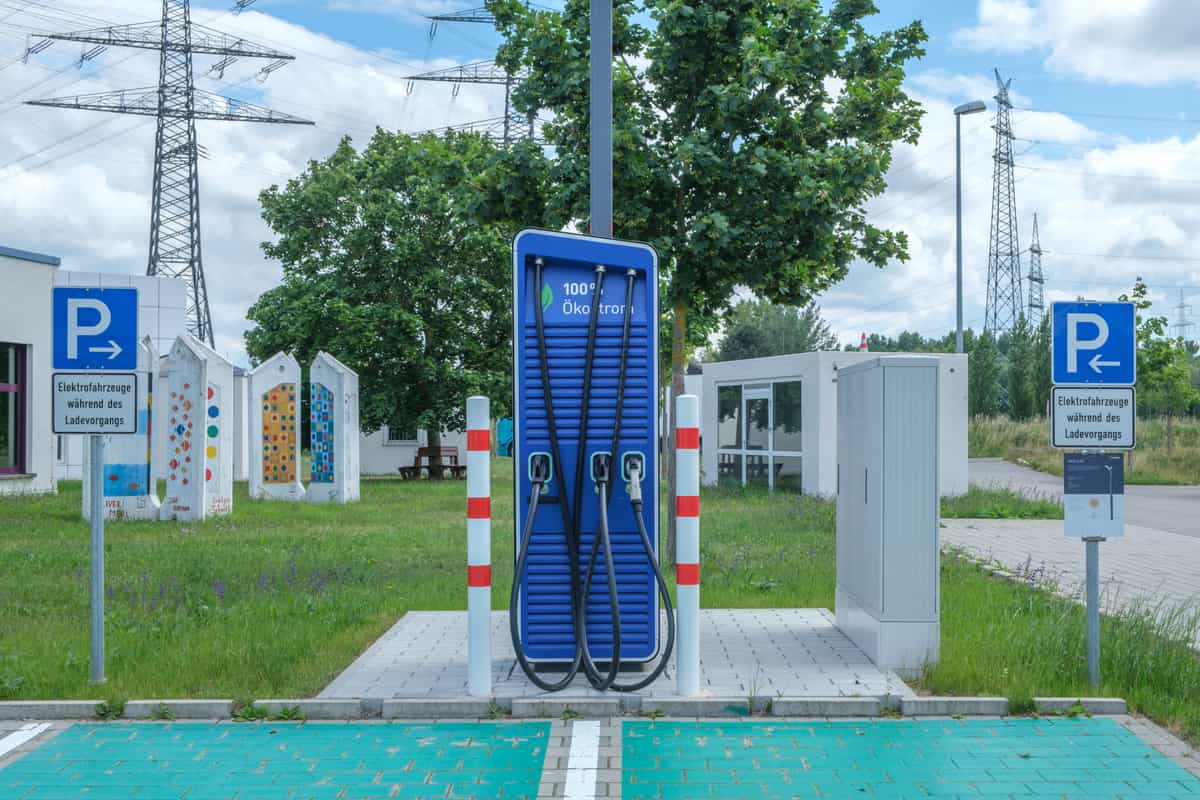
Most EV charging etiquette is obvious once stated and invisible until someone breaks it. Here is the whole thing, split between what happens at home and what happens in public.
At home
- Do not run a cable across a sidewalk or a shared path. It is a genuine trip hazard and in many places a liability you are personally taking on. If your only route crosses a walkway, that is a sign you need a different solution -- charging in an apartment.
- Ask before using an outlet that is not yours. Including a shared garage outlet, a communal exterior socket, or a neighbor's. In some places using one without permission is theft, and in all places it is rude.
- Offer to pay. A full overnight session is a few dollars of electricity. Offering removes the awkwardness entirely.
- Coil the cable when you are done. A cable draped across a shared driveway is somebody else's problem you created.
- Do not block the charger with a car that is not charging in a shared parking area.
When someone charges at your house
- Tell them the connector and amperage up front, so they know whether they need an adapter.
- Say what you are charging for the electricity, if anything. Being clear beats being generous and resentful.
- Show them the holster and where to hang the connector.
- If you have a guest with a different connector, the adapter they carry solves it -- see adapters.
In public
- Do not unplug someone else's car. The one genuinely hard rule. There is no situation where you know enough about their situation to make that call. The exception is where the site has an explicit posted policy allowing it once charging has completed -- and even then, leave a note.
- Move when you are done, especially at a DC fast charger. Sitting at 100% while someone waits is the single most complained-about behavior in EV ownership.
- Do not park in a charging space without charging. Not for five minutes, not to run into a store.
- Do not charge to 100% at a busy fast charger. The last stretch is slow and you are holding the space for a fraction of the energy.
- Put the connector back on its holster, not on the ground where it gets driven over.
- Report broken chargers in the network app. It takes twenty seconds and it is the only way they get fixed.
The apartment and workplace version
Shared chargers in a building or office work when everyone treats them as a shared resource rather than a personal parking space.
- Take what you need, not the maximum. If you need 30% and someone else needs 80%, do not take the whole evening.
- Use the group chat, if there is one. Most successful shared-charger arrangements run on a message rather than a rota.
- Leave a note or a phone number on the dash so someone can reach you.
- Do not treat a first-come charger as yours because you always get there first.
FAQ
Questions people actually ask
Can I unplug someone else's EV to charge mine?
No. You do not know their situation, and it is the most reliable way to start a genuine dispute. The only exception is where the site posts an explicit policy allowing it after charging completes -- and even then, leave a note.
Is it rude to charge at 100% at a public charger?
At a busy DC fast charger, yes. The last stretch is disproportionately slow, so you hold the space a long time for little energy.
Should I pay someone for charging at their house?
Offer. A full overnight session is a few dollars of electricity, and offering removes the awkwardness for both of you.
Can I run a charging cable across a sidewalk?
No. It is a trip hazard and in many places a liability you are taking on personally. Find another solution.
Sources
Where these numbers come from
- NEC Article 625: EV charging equipment — WireRefReference for EV supply equipment installation and cable management requirements.
Read next
Related reading
- Charging an EV when you live in an apartmentThe realistic options for apartment EV charging, ranked by how well they actually work.
- Charging at a hotel or AirbnbWhat to ask before booking, which outlets to look for, and the etiquette that gets a yes.
- EV charging adapters, sorted outWhich charging adapters you need, which came free with the car, and the safety rules.
- Is home EV charging safe?The real risks in home charging, the things that are not risks, and the habits that matter.