BMW
The best home charger for a BMW EV
A J1772 charger plugs straight into the CCS inlet these cars carry, and the iX3 is where BMW's move to NACS begins. Check the port in your driveway, then buy once.
By Sawyer V. · Published September 23, 2026
How this page is funded: we earn a commission if you buy through our Amazon links, at no extra cost to you. It does not change what we recommend, and we say plainly when the honest answer is to buy nothing. Full disclosure.
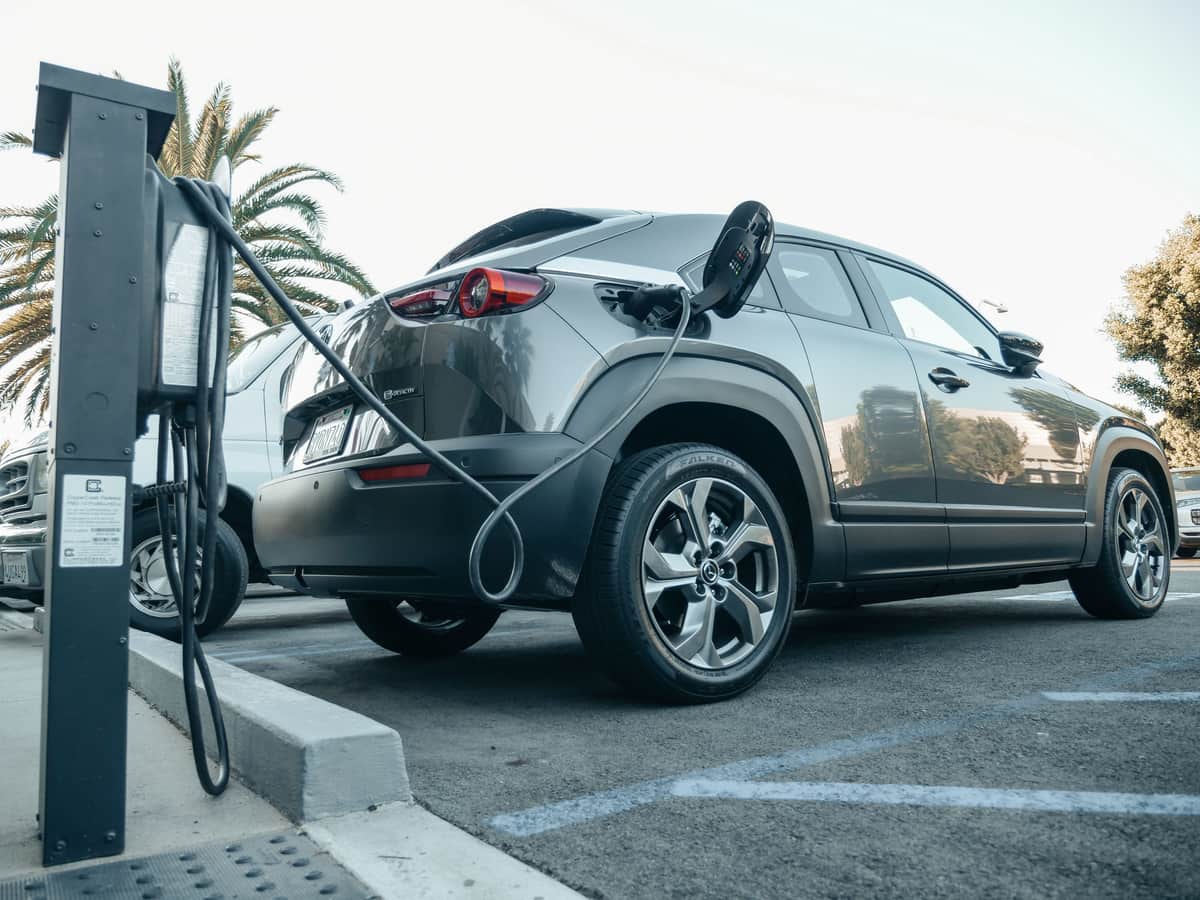
BMW's electric range is in the middle of a connector change, which makes the home charging question sound harder than it is. It is still decided by one thing: the shape of the inlet on your car.
The connector
BMW's EVs have used the CCS inlet, and the top section of a CCS Combo inlet is a J1772 inlet -- which is exactly what a home Level 2 charger plugs into. The Department of Energy makes the same point: a CCS port accepts Level 1, Level 2 and DC fast charging.
The change is at the other end of the lineup. CarGurus reports that the iX3 is the first BMW to come standard with a NACS port, that its adapter will be for CCS, and that other BMW Group models -- the i4, i5, iX, i7, the MINI Countryman SE ALL4 and the Rolls-Royce Spectre -- are expected to follow. It also notes that BMW delayed the rollout that had been slated for early 2025, and that there has been no announcement on adapter timing or availability since late 2024.
| Your inlet | Buy |
|---|---|
| CCS (J1772 on top) | Any J1772 Level 2 charger |
| NACS | A NACS charger, a dual-connector unit, or J1772 plus an adapter |
| Not sure | Look at the car before ordering |
How fast will it charge at home?
Home charging speed is set by the lower of two numbers: what your charger can deliver, and what the car's onboard charger will accept. BMW publishes the onboard figure for each model, and it is worth looking up for yours before paying for amps the car cannot use -- we do not print a figure here that we have not read from the manufacturer.
For scale, the Department of Energy puts AC Level 2 at roughly 25 miles of range per hour of charging. How many amps do you need covers matching the charger to the car.
What to look for in the charger
- Cable length, measured from the wall to the charge port with the car parked as it normally is. Cable length.
- An outdoor rating if it will not live in a garage. Outdoor chargers.
- Plug-in or hardwired, which is mostly a question of what your panel allows. Hardwired vs plug-in.
- A connector you will still want in five years, which for a CCS car today means J1772 with the adapter option open.
The picks
The Emporia Classic is the default for a CCS-inlet BMW: 48 A hardwired, a 24 ft cable, a NEMA Type 4 case, ENERGY STAR certification and no subscription. The Wallbox Pulsar Plus is the one to take if wall space is tight, with the same 48 A from a much smaller body and a 25 ft cable. The Tesla Universal Wall Connector is the hedge: it carries both connector types, which is the case worth considering if a NACS BMW is next in the driveway.
Chargers for a BMW EV
Two J1772 units for a CCS inlet, and one dual-connector unit for a mixed household.
1. A first charger, hardwired
Emporia Level 2 EV Charger (Classic)
Emporia · J1772 · 48 A / 11.5 kW · 24 ft cable
The safe default for a first home charger: 48 amps hardwired, a genuinely long cable, a NEMA 4 outdoor-rated case, and no subscription attached to the app.
What is good
- 48 A hardwired is the fastest tier most homes can realistically support
- 24 ft of cable reaches across a two-car garage without a fight
- NEMA Type 4 enclosure is rated for outdoor mounting
- Energy monitoring in the app with no subscription
What is not
- Drops to 40 A if you use the NEMA 14-50 plug rather than hardwiring
- The app is the only way to change the amperage setting
| Maximum output | 48 A / 11.5 kW at 240 V (hardwired) |
|---|---|
| Plug-in output | 40 A with the NEMA 14-50 plug |
| Connector | SAE J1772 |
| Cable | 24 ft |
| Enclosure | NEMA Type 4, indoor or outdoor |
| Certification | UL listed, Energy Star |
| Warranty | 3 years |
Skip this if: Skip it if you want a unit with no app or network connection at all. The Grizzl-E Classic is the simpler machine.
Specifications above are the manufacturer’s published figures. Source: Emporia Energy. We have not tested this unit — see how we pick.
2. Tight wall space
Wallbox Pulsar Plus
Wallbox · J1772 · 48 A / 11.5 kW · 25 ft cable
The smallest 48 A unit here at roughly 7.8 by 7.9 inches, which matters more than it sounds when the only free wall is beside a door.
What is good
- Smallest body of the 48 A units, under 8 inches square
- Current configurable in steps from 6 A to 48 A
- NEMA Type 4 enclosure, rated down to -22 F
- Weighs 4.4 lb without the cable, so mounting is simple
What is not
- Hardwired only at 48 A, with no plug-in version at full output
- Setup runs through the app, which some owners find fussy
| Maximum output | 48 A / 11.5 kW at 240 V |
|---|---|
| Configurable current | 6 A to 48 A |
| Connector | SAE J1772 |
| Cable | 25 ft |
| Body size | 7.8 x 7.9 x 3.9 inches without the cable |
| Operating temperature | -22 F to 104 F |
| Certification | UL 2594, UL 2231 |
| Warranty | 3 years |
Skip this if: Skip it if you want a plug-in unit you can take with you. The 48 A Pulsar Plus is hardwired.
Specifications above are the manufacturer’s published figures. Source: Wallbox, Wallbox. We have not tested this unit — see how we pick.
3. A two-car, two-connector garage
Tesla Universal Wall Connector
Tesla · J1772 + NACS · 48 A / 11.5 kW · 24 ft cable
The Wall Connector with a J1772 adapter built into the holster, so it charges a Tesla and a non-Tesla without anything loose to lose.
What is good
- Charges NACS and J1772 cars without a separate adapter to store
- Same 48 A output and four-year warranty as the Gen 3
- The adapter docks in the holster, so it cannot walk off
What is not
- Costs more than the NACS-only Gen 3
- Hardwired only
| Maximum output | 48 A / 11.5 kW at 240 V |
|---|---|
| Connector | NACS with an integrated J1772 adapter |
| Cable | 24 ft |
| Installation | Hardwired |
| Warranty | 4 years |
Skip this if: Skip it if both cars use the same connector. You are paying for an adapter you do not need.
Specifications above are the manufacturer’s published figures. Source: Tesla. We have not tested this unit — see how we pick.
FAQ
Questions people actually ask
Can I use a J1772 charger on a BMW i4?
Is BMW switching to NACS?
What charger should I buy if my next BMW might have NACS?
Do I need a 48 amp charger for a BMW?
Sources
Where these numbers come from
- All the EVs that use Tesla's NACS plug — CarGurusBMW Group section: the iX3 is the first BMW with a standard NACS port and its adapter will be for CCS; the i4, i5, iX, i7, MINI Countryman SE ALL4 and Rolls-Royce Spectre are expected to follow; the rollout slated for early 2025 was delayed, with no announcement on adapter timing since late 2024. Read 2026-09-23.
- Electric Vehicle Charging Infrastructure: AC Level 2 equipment — U.S. Department of Energy, Alternative Fuels Data CenterAC Level 2 runs at 240 V in homes, adds roughly 25 miles of range per hour of charging, and uses the J1772 or J3400 (NACS) connector. The CCS inlet accepts Level 1, Level 2 and DC fast charging. Read 2026-09-23.
Read next
Related reading
- NACS home charging, explained without the hypeWhich cars have native NACS ports and what it means for the charger you buy today.
- J1772 home charging: what it is and who needs itWhat J1772 is, which cars use it, and why it remains the most versatile choice.
- EV charging adapters, sorted outWhich charging adapters you need, which came free with the car, and the safety rules.
- The best home EV chargers, for people buying their first oneSix Level 2 chargers ranked for a first-time buyer, with an honest reason to skip each one.