By vehicle
Home charging a BMW iX3
Every other BMW EV takes a J1772 charger straight into its CCS inlet. The iX3 does not, and the CCS adapter BMW includes is no help at all on AC. Here is what actually works.
By Sawyer V. · Published October 22, 2026
How this page is funded: we earn a commission if you buy through our Amazon links, at no extra cost to you. It does not change what we recommend, and we say plainly when the honest answer is to buy nothing. Full disclosure.
The verdict: buy a 48-amp charger and order it with the NACS connector. That is one part, no adapter, no dongle to lose, and it fills a 112.3 kWh battery overnight with room to spare. If you already have a J1772 charger on the wall -- from a previous EV, or because it came with the house -- do not replace it. Add a J1772-to-NACS AC adapter instead; it costs a fraction of a charger and is rated well beyond anything a home circuit will ask of it. What you must not do is assume the adapter BMW puts in the trunk covers this, because BMW says in writing that it does not.
The connector, and why this BMW is different
BMW's other electric cars -- the i4, i5, iX and i7 -- carry a CCS1 inlet, which is the J1772 socket with two DC pins in a lobe below it. A J1772 home charger plugs straight into the top half of that, which is why the BMW page tells those owners to buy whatever good J1772 charger they like and stop thinking about it.
The iX3 is the first BMW here to arrive with a native NACS port instead, the small flat connector standardized as SAE J3400. The upside is real and BMW leads with it: Supercharger access with nothing in your hand, as part of the BMW Charging Network, plus a CCS adapter in the box so the older DC networks still work. The downside is the one nobody mentions in the showroom -- the charger on your garage wall is almost certainly J1772, and that is an AC connection the DC adapter cannot bridge.
| What you have | Works on an iX3? | What you need |
|---|---|---|
| A NACS wall charger | Yes, directly | Nothing |
| A Tesla Wall Connector at home | Yes, directly | Nothing -- it is a NACS connector |
| A J1772 wall charger | Not on its own | A J1772-to-NACS AC adapter |
| The included CCS adapter | DC fast charging only | BMW says it is incompatible with AC equipment |
| The supplied Multifunctional Charger | Yes | A 120 V outlet, or a 240 V outlet (BMW's recommendation) |
| A public J1772 Level 2 station | Not on its own | The same AC adapter |
How long it actually takes at home
Here the honest answer needs a caveat up front. BMW publishes the iX3's DC charging in detail -- 400 kW maximum, 170 to 185 miles of range in ten minutes, on 800-volt architecture -- and publishes no AC charging rate at all on its US model page. Numbers you will find quoted elsewhere for "11 kW or 22 kW" trace back to European material and unofficial sites, and 22 kW three-phase is not something an American house can supply in any case, so we are not going to put either figure in your planning.
What you can plan from is the charger side, which is the half you control. The arithmetic below is what each charger size delivers; the car's onboard charger sets the ceiling, so treat these as the most you will see rather than a promise.
| Charger | Power at 240 V | 29 kWh/100 mi (20 in) | 32 kWh/100 mi (21 in) |
|---|---|---|---|
| Level 1 cord, 12 A | 1.4 kW | about 5 mi/h | about 4 mi/h |
| 32 A | 7.7 kW | about 26 mi/h | about 24 mi/h |
| 40 A | 9.6 kW | about 33 mi/h | about 30 mi/h |
| 48 A | 11.5 kW | about 40 mi/h | about 36 mi/h |
Read the top row carefully, because it is the argument for installing anything at all. The Multifunctional Charger BMW supplies will run from a standard 120-volt household outlet, and at that speed a 112.3 kWh battery is a multi-day proposition. BMW's own page recommends using it on a 240-volt outlet instead, which is sound advice and the cheapest route to real charging speed. Level 1 chargers covers when the cord is genuinely enough; with this battery, it mostly is not.
Why the big battery changes the answer
112.3 kWh total capacity, per BMW.
At 11.5 kW (48 A), a full charge is roughly 10 hours before losses.
At 7.7 kW (32 A), roughly 15 hours.
At 1.4 kW (120 V), several days -- which is why BMW recommends a 240 V outlet for the supplied cord.
What to look for in the charger
- A NACS connector, ordered as NACS. This is the whole decision. Several chargers worth buying are sold in either connector and you pick at checkout; picking right removes the adapter from your life permanently.
- 48 amps, if your panel can feed it. A 112.3 kWh battery is where the step up from 40 A earns its money -- about 40 miles per hour against 33 on the EPA's 29 kWh/100 mi figure.
- A cable that reaches. The iX3's port placement decides this; measure from the charger position to the port with the car parked as you actually park it, not in a straight line.
- An outdoor enclosure rating if it is going on an exterior wall -- a published NEMA Type 4 or 3R, not a vague claim.
- Nothing exotic. Bidirectional charging is a BMW feature of this car, not a feature you buy in an ordinary wall charger, and it needs specific equipment and a properly equipped home.
The circuit follows from the amperage, not the car. A charger draws its rated current continuously, so the breaker is 125% of it: 48 A needs 60 A, 40 A needs 50 A, 32 A needs 40 A. Breaker and wire size has the table, and electrical panel load calculation tells you which of those your house can actually spare before you order anything.
The adapter route, honestly
If a J1772 charger is already installed and working, replacing it to suit a new car is the expensive answer to a cheap problem. A J1772-to-NACS AC adapter sits between the existing connector and the iX3's port. The one on the buy rows below is rated 80 A at 240 V with a UL 2252 certification and built-in temperature monitoring, which is far more headroom than any home circuit will ever ask of it.
Two honest caveats. First, BMW points iX3 owners at its dealer for an AC adapter, and buying the part your automaker sells is the conservative call on anything that carries 48 amps continuously into your car's charge port -- the same reasoning applies here as on GM's adapters. Second, an adapter is one more object that lives in the car and gets left at your parents' house. If you are installing a charger from scratch anyway, order the NACS connector and skip all of this.
For the broader category, including what comes free with other cars and what is worth owning, best J1772 adapter and EV charging adapters cover both directions properly.
The picks
Ranked for an iX3 specifically, which means the connector question comes before everything else. Honest counter-case on every one, as always -- and note that we have not tested any of these cars or chargers, which is why every figure on this page is attributed to BMW, the EPA or a maker's datasheet.
Chargers and the one adapter
A 48-amp unit ordered in NACS, a dual-connector unit for a mixed garage, a portable for renters, and the adapter that rescues a J1772 charger you already own. Live Amazon prices with the date they were read.
1. Ultimate build quality on a 60 A circuit
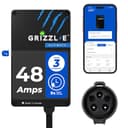
Grizzl-E Ultimate 48A
United Chargers · J1772 + NACS · 48 A / 11.5 kW · 25 ft cable
The Ultimate's hardware at the amperage most houses can feed: 48 A and 11.5 kW, hardwired, Wi-Fi and OCPP, in the same cast-aluminum Type 4 case. The catch is what United Chargers publishes about dialing it down -- the adjustable steps stop at 40 A.
What is good
- 48 A on a 60 A circuit, which a normal 200 A panel can usually spare
- Same cast-aluminum UL Type 4 case and -22 F rating as the 80 A Ultimate
- 25 ft cable, the long end of the range
- Wi-Fi, a mobile app and OCPP, so it is not locked to one vendor's cloud
- Offered with either a J1772 or a NACS connector
What is not
- Hardwire only -- there is no plug-in version of the Ultimate
- United Chargers publishes adjustable steps of 40/32/24/16 A, so the published step list does not include 48 A itself
- No ENERGY STAR certification listed, unlike the 80 A Ultimate
- A J1772 unit needs an adapter on every charge if you drive a NACS car
- Costs more than the 40 A Grizzl-E Classic for speed many owners will not use
| Maximum output | 48 A / 11.5 kW |
|---|---|
| Adjustable current | 40 A, 32 A, 24 A, 16 A (as published) |
| Connector | J1772 or NACS, chosen at purchase |
| Cable | 25 ft (7.6 m) |
| Installation | Hardwire only |
| Enclosure | Aluminum, UL Type 4 indoor/outdoor rating |
| Operating temperature | -30 C to +50 C (-22 F to 122 F) |
| Connectivity | Wi-Fi (2.4 GHz), mobile app, OCPP |
| Certification | UL, file E510712 |
| Weight | 11.00 kg / 24.25 lb, shipped |
| Enclosure size | 10.25 x 6.25 x 3.75 in |
| Country of origin | Canada, per United Chargers |
| Model number | GRS-077-W-HW-25N48-A-GB |
| Warranty | 3 years, or 5 years |
Skip this if: Skip it if your car accepts more than 11.5 kW and your panel can carry a 100 A circuit -- that is what the 80 A model is for. Skip it too if you want a plug-in unit; this is hardwire only.
Specifications above are the manufacturer’s published figures. Source: United Chargers. We have not tested this unit — see how we pick.
2. A two-car, two-connector garage
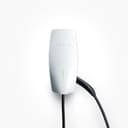
Tesla Universal Wall Connector
Tesla · J1772 + NACS · 48 A / 11.5 kW · 24 ft cable
The Wall Connector with a J1772 adapter built into the holster, so it charges a Tesla and a non-Tesla without anything loose to lose.
What is good
- Charges NACS and J1772 cars without a separate adapter to store
- Same 48 A output and four-year warranty as the Gen 3
- The adapter docks in the holster, so it cannot walk off
What is not
- Costs more than the NACS-only Gen 3
- Hardwired only
| Maximum output | 48 A / 11.5 kW at 240 V |
|---|---|
| Connector | NACS with an integrated J1772 adapter |
| Cable | 24 ft |
| Installation | Hardwired |
| Warranty | 4 years |
Skip this if: Skip it if both cars use the same connector. You are paying for an adapter you do not need.
Specifications above are the manufacturer’s published figures. Source: Tesla. We have not tested this unit — see how we pick.
3. A portable that replaces a wall unit
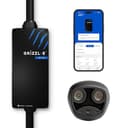
Grizzl-E Mini Connect
United Chargers · NACS · 40 A / 9.6 kW · 25 ft cable
A portable 40 A charger in a metal case, with four adapters, a 25 ft cable and the Grizzl-E Connect app. It does the job of a wall charger and fits in a carrying case.
What is good
- A 25 ft cable, which is wall-charger length on a portable unit
- Four adapters in the box, so one charger covers several outlet types
- Adjustable down to 7 A, lower than most chargers go
- Metal case with a Type 4 indoor/outdoor rating, and a -22 F to 122 F range
- Wi-Fi scheduling and statistics through the Grizzl-E Connect app
What is not
- Priced like a wall charger, not like a spare cable for the trunk
- 40 A is the ceiling, so it cannot match a 48 A hardwired unit
- The live Amazon listing is the NACS version; the J1772 version is sold by the maker
- Heavier than a basic travel cordset at close to 20 lb shipped
- 2.4 GHz Wi-Fi only, like the rest of the Connect range
| Maximum output | 40 A (the maker lists 10 kW) |
|---|---|
| Adjustable | 7 A to 40 A |
| Connector | J1772 or NACS, chosen at purchase |
| Cable | 25 ft (7.6 m) |
| Plug | NEMA 14-50, with four adapters included |
| Enclosure | Aluminum, Type 4 indoor/outdoor rating |
| Operating temperature | -30 C to +50 C (-22 F to 122 F) |
| Size | 6.9 x 3.1 x 2.4 in |
| Weight | 19.84 lb (9 kg), shipped |
| Connectivity | Wi-Fi (2.4 GHz) and the Grizzl-E Connect app |
| Country of origin | Canada, per United Chargers |
| In the box | Charger, 4 adapters, mounting cradle, EasyEvPlug, carrying case |
| Certification | UL, file E510712 |
| Warranty | 3 years, or 5 years chosen at purchase |
Skip this if: Skip it if you want a cheap cable for the trunk. This is a full-price charger that happens to be portable -- and the live Amazon listing is the NACS version.
Specifications above are the manufacturer’s published figures. Source: United Chargers. We have not tested this unit — see how we pick.
4. NACS car, J1772 charger
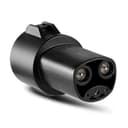
Lectron J1772 to Tesla (NACS) adapter
Lectron · J1772 to NACS · 80 A / 19.2 kW
Lets a Tesla or any NACS-port car charge from a J1772 charger. Rated to 80 A, certified to UL 2252, with temperature monitoring built into the body.
What is good
- Certified to UL 2252, which is the standard written for exactly this device
- Rated well above any home circuit at 80 A, so it is never the limiting part
- Temperature monitoring in the body, the failure mode that matters on an adapter
- Works on any J1772 Level 1 or Level 2 charger
What is not
- Most owners already have one in the car and do not need to buy anything
- AC only -- it is not a DC fast-charging adapter
- One more loose item to keep track of, unless it lives clipped to the cable
| Direction | J1772 charger to a NACS (Tesla) port |
|---|---|
| Maximum current | 80 A |
| Voltage | 240 V AC |
| Certification | UL 2252 |
| Safety | Built-in temperature monitoring |
| Use | AC charging (Level 1 and Level 2) |
Skip this if: Skip it if your car came with one. Every Tesla ships with a J1772 adapter, and cars sold with a native NACS port ship with one too -- check the trunk before buying.
Specifications above are the manufacturer’s published figures. Source: Lectron. We have not tested this unit — see how we pick.
FAQ
Questions people actually ask
What charge port does the BMW iX3 have?
Can a BMW iX3 use a J1772 home charger?
What home charger should I buy for a BMW iX3?
How long does it take to charge a BMW iX3 at home?
Does the BMW iX3 come with a charger?
Can a BMW iX3 charge from a Tesla Wall Connector?
How much does an iX3's tire size change home charging?
Sources
Where these numbers come from
- BMW iX3: model overview, features and specs — BMW of North AmericaThe iX3's NACS charge port allows access to Tesla Superchargers as part of the BMW Charging Network, with an included CCS (Level 3) adapter. Range 383-434 miles. Maximum charging power 400 kW, adding 170-185 miles of range in 10 minutes of DC fast charging. Sixth-generation 800-volt drive and battery technology; two 800 V electric motors. High-voltage lithium-ion battery with a total capacity of 112.3 kWh, warranted 8 years / 100,000 miles against defects in materials or workmanship. The iX3 comes with the Multifunctional Charger, which plugs into a standard 120 V household outlet or a 240 V outlet (recommended); the optional BMW Wallbox can be installed for 240 V hardwired charging. On adapters: "Can I use the DC adapter to charge at an AC (Level 2) charging station? No, CCS (Combined Charging System) DC adapters are designed specifically for high-voltage DC fast charging and are incompatible with AC charging equipment. AC adapters to charge at Level 2 charging stations are available for purchase from your BMW dealer." The battery can also be used for bidirectional charging, to supply a home with back-up electricity or as a mobile power bank. 0-60 mph in 4.7 seconds, xDrive standard. No AC onboard charger rate is published on this page. Read 2026-10-22.
- Fuel economy of 2026-2027 BMW vehicles — U.S. EPA and U.S. Department of Energy, fueleconomy.gov2027 BMW iX3 50 xDrive, three published variants: 20 inch summer tires 118 MPGe, 29 kWh/100 mi, 434 miles total range; 21 inch summer tires 105 MPGe, 32 kWh/100 mi, 398 miles; 21 inch all-season tires 105 MPGe, 32 kWh/100 mi, 399 miles. Read 2026-10-22.
- Electric Vehicle Charging Stations: AC Level 2 equipment — U.S. Department of Energy, Alternative Fuels Data CenterAC Level 2 equipment offers charging through 240 V (typical in residential applications) or 208 V (typical in commercial applications) and adds roughly 25 miles of range per hour; Level 1 at 120 V adds about 5 miles per hour, assuming 1.9 kW. SAE is standardizing the J3400 connector based on Tesla's NACS design, which works for all charging levels. Read 2026-10-17.
- NEC Article 625: EV Charging Equipment — WireRefEV charging is a continuous load, so the branch circuit is sized at 125% of the charger's rated current -- a 48 A charger requires a 60 A circuit. Each EVSE requires a dedicated branch circuit unless an approved energy management system controls the load. Read 2026-10-17.
- Grizzl-E Ultimate 48 — United Chargers48 A / 11.5 kW, hardwire only, connector J1772 and NACS chosen at purchase, 25 ft cable, cast aluminum UL Type 4 indoor/outdoor enclosure, OCPP, UL E510712, Wi-Fi 2.4 GHz and mobile app, published adjustable steps 40/32/24/16 A, -22 F to 122 F. Read 2026-10-11.
- Wall Connector support page — TeslaUniversal Wall Connector: 48 A / 11.5 kW at 240 V, NACS connector with an integrated J1772 adapter in the holster, 24 ft cable, hardwired, rated for indoor and outdoor use, 4-year limited warranty.
- Grizzl-E Mini — United Chargers40 A / 9.6 kW portable Level 2 charger, 25 ft cable, aluminum Type 4 indoor/outdoor enclosure, UL listed file E510712, NEMA 14-50 plug with four adapters, Grizzl-E Connect app, 3-year warranty with a 5-year option at purchase.
- Lectron J1772 to Tesla (NACS) EV Adapter, UL 2252 certified, 240 V, 80 A — LectronJ1772 charger to a NACS (Tesla) port, maximum 80 A at 240 V AC, UL 2252 certified, built-in temperature monitoring, for AC charging at Level 1 and Level 2.
Read next
Related reading
- The best home charger for a BMW EVA J1772 charger for a CCS inlet, and what BMW's NACS switch on the iX3 means for the rest.
- NACS home charging, explained without the hypeWhich cars have native NACS ports and what it means for the charger you buy today.
- The best J1772 adaptersWhich J1772 adapter direction you need, which came free with the car, and the safety rules.
- The best NACS home chargersEvery home charger sold with a NACS connector, ranked, plus when a J1772 unit is still the better buy.
- Tesla Wall Connector vs Universal Wall ConnectorTesla's two wall units: NACS-only against a built-in J1772 adapter and Powershare support.