Sharing capacity
Load management: charging without a panel upgrade
A way to add a charger your panel technically cannot support, by having the charger get out of the way when the rest of the house needs the power.
By Sawyer V. · Published September 8, 2026
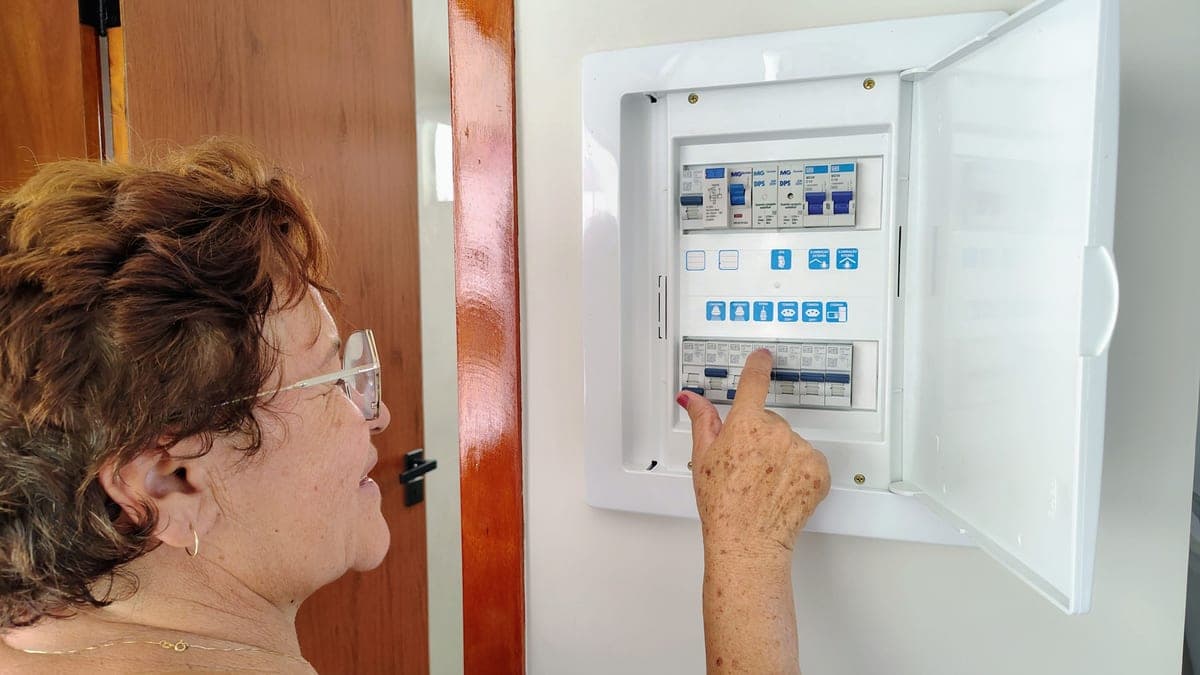
Load management means the charger monitors how much power the rest of the house is using and reduces or pauses its own draw when the total gets close to your service limit. Instead of sizing your panel for the worst case -- everything on at once, forever -- you let the charger be the thing that yields.
It works because charging is uniquely flexible. Your oven cannot wait; your car, parked for ten hours to replace two hours of charging, absolutely can.
The three kinds you will encounter
| Type | How it works | Typical use |
|---|---|---|
| Whole-home load management | A monitor at the service entrance measures total household draw and tells the charger to back off. | Adding a charger to a panel with limited capacity. |
| Power sharing between chargers | Two or more chargers on one circuit divide the available current. | Two EVs, one circuit. Tesla publishes up to six Wall Connectors linked. |
| Simple scheduling | Not true load management, but often enough: charge at 1am when nothing else runs. | Households whose peak is predictable. |
What it costs you
Charging speed, occasionally. If the house is drawing heavily, the charger slows down. Given that you are asleep and the car needs a fraction of the night, this is usually invisible.
Why the slowdown rarely matters
You drove 40 miles: about 11.4 kWh to replace at 3.5 mi/kWh
At full 48 A (11.5 kW): about 1 hour
Throttled to 24 A (5.8 kW) for the whole night: about 2 hours
You are plugged in for ten. Both finish long before morning.
When it is the right answer
- Your load calculation says no, but only just. Load management is dramatically cheaper than a service upgrade.
- You have two EVs and one circuit. Power sharing is exactly this problem.
- You are on 100-amp service with substantial electric loads -- electric heat, range, water heater.
- A service upgrade is blocked by cost, by the utility, or by a landlord.
When it is not
- Your panel is old or unsafe. Load management does not fix a panel that needs replacing.
- You need guaranteed full-rate charging every night -- a courtesy vehicle, a rideshare car, a genuinely high-mileage commute.
- You are electrifying everything anyway. If a heat pump and an induction range are coming, upgrade once.
FAQ
Questions people actually ask
What is EV charger load management?
Does load management slow down charging?
Can two EVs share one charging circuit?
Is load management cheaper than a panel upgrade?
Sources
Where these numbers come from
- Wall Connector support page — TeslaPublished power sharing across up to six units.
- Level 2 EV charger installation cost in 2026 — SimpleSwitchPublished service-upgrade cost range. Fetched 2026-09-08.
Read next
Related reading
- How to set your EV charger's ampsPublished amperage ranges for every charger on this site, the 80% rule, and where each maker puts the setting.
- Do you need a panel upgrade for an EV charger?When a panel upgrade is genuinely needed, what it costs, and the cheaper alternatives.
- Can your electrical panel take an EV charger?What a load calculation is, what goes into it, and how to get a rough answer yourself.
- Smart EV chargers: which ones earn the appWhich Wi-Fi chargers earn their price, and why your car may already do the useful part.
- How many amps do you actually need?Three checks that determine your charger amperage, and why the smallest one wins.
- The best EV chargers for a two-EV householdCharging two EVs at home: taking turns, power sharing, or two circuits.
- Emporia Vue vs Sense for EV ownersCircuit-level sensors against machine-learning detection, judged on what an EV owner needs to know.
- The best EV chargers with load managementChargers that slow down when your house is busy, the two kinds of load management, and three picks.
- Emporia Pro EV charger review48 A, the Vue 3 in the box and PowerSmart load management: who it is for.
- Adding a second EV chargerFour routes for a second EV, what each asks of your panel, and when to do nothing at all.