Running costs
What it costs to charge an electric car at home
One formula, your own electricity rate, and an honest answer. We are not going to print a national average and call it your bill.
By Sawyer V. · Published September 8, 2026
Most pages answering this question give you a national average electricity price and multiply it out. That produces a number that is wrong for almost everybody, because residential electricity rates vary by a factor of three or more across the country and by time of day within a single household.
So here is the formula instead. Get your rate off your own bill and the answer takes thirty seconds.
The formula
Cost to fill = battery size (kWh) x your rate ($/kWh)
Cost per mile = your rate / your car's efficiency (mi/kWh)
Cost per 100 miles = cost per mile x 100
Where to find your two numbers
- Your electricity rate. On your bill, look for a per-kWh figure. Include delivery and supply charges if they are separate -- the total per-kWh cost is what you actually pay. If you are on a time-of-use plan, note the off-peak rate as well, because that is when you will charge.
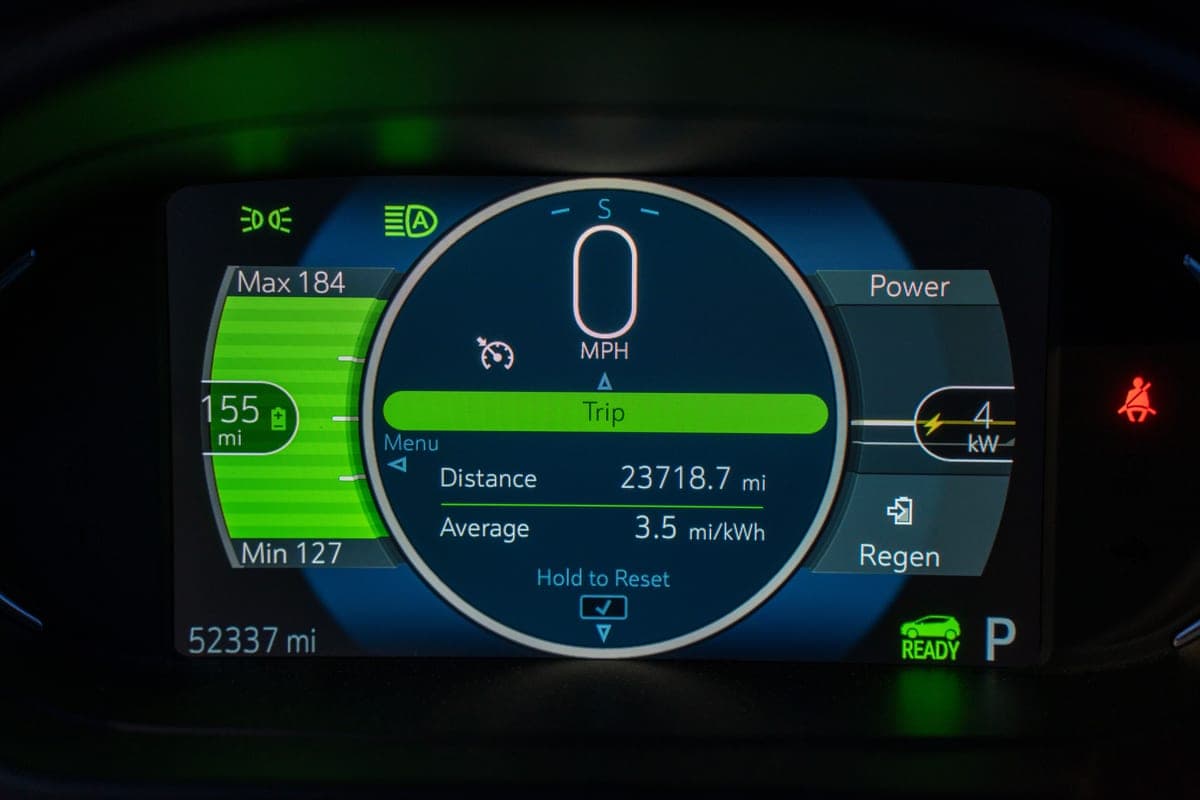
- Your car's efficiency. In the car's trip computer, usually shown as mi/kWh or as kWh/100 mi. Use your own long-term average rather than the EPA figure; the EPA number is a test result, yours is your driving.
A worked example
75 kWh battery, $0.16/kWh, 3.5 mi/kWh
Full charge: 75 x $0.16 = $12.00
Per mile: $0.16 / 3.5 = $0.046
Per 100 miles: about $4.60
1,000 miles a month: about $46
Substitute your own two numbers. If your off-peak rate is $0.10 and your peak is $0.32, the same 1,000 miles is either $29 or $91 -- which is why scheduling matters more than almost anything else you can control.
Efficiency losses: the part people forget
Not every kilowatt-hour that leaves your wall reaches the battery. Some becomes heat in the cable and the car's onboard charger. That means your meter will show slightly more energy than the car reports receiving -- so a cost calculated from the car's own consumption figure is a slight underestimate of what you paid.
We are not going to print a loss percentage we cannot source for your specific car. The practical guidance: if you want the exact figure, read it from a charger that meters at the wall, or from your utility's usage data on a night you charged and nothing else unusual ran.
How to spend less
- Charge off-peak. If your utility offers a time-of-use plan, this is by far the biggest lever. Your car can almost certainly schedule it; if not, a smart charger can.
- Check for an EV-specific rate. Many utilities offer one. It is a phone call.
- Do not charge to 100% routinely unless your car's manual recommends it. Most manufacturers suggest a daily ceiling below full, and the last stretch is also the slowest.
- Precondition while plugged in. Heating or cooling the cabin from wall power rather than the battery costs the same energy but does not eat your range.
Work out your own numbers
The charging speed calculator shows how long a charge takes and how much energy it moves, which is the input to all of the above. For the up-front side of the ledger, what installation costs.
FAQ
Questions people actually ask
How much does it cost to charge an electric car at home?
Is charging at home cheaper than public charging?
Does charging an EV increase my electricity bill a lot?
Do I lose energy charging at home?
Sources
Where these numbers come from
- Alternative Fuel Infrastructure Tax Credit — US Department of Energy, Alternative Fuels Data CenterReference for federal EV infrastructure policy context.
Read next
Related reading
- Is charging an EV cheaper than gas?Real EIA and EPA figures for October 2026: cost per 100 miles for EVs and gas cars, by state, and the break-even electricity rate.
- EV charging speed calculatorCalculate charging speed and time from your own numbers, with the working shown.
- Volts, amps, kW and kWh, in plain EnglishThe four electrical terms that matter and the one formula that ties them together.
- What EV charger installation actually costsItemized 2026 installation costs with published ranges, plus the one variable that changes everything.
- How long does it take to charge an EV at home?The formula for your own charging time, and why empty-to-full is the wrong question.
- Charging at night on a time-of-use rateHow time-of-use rates work, how to schedule charging, and how to check the switch pays.
- Home charging vs public chargingSpeed, cost and convenience compared, plus when public charging is genuinely the better plan.