Charging times
How long does it take to charge an EV at home?
The honest answer depends on three numbers you can look up in ten minutes. And empty-to-full is the wrong question anyway.
By Sawyer V. · Published September 8, 2026
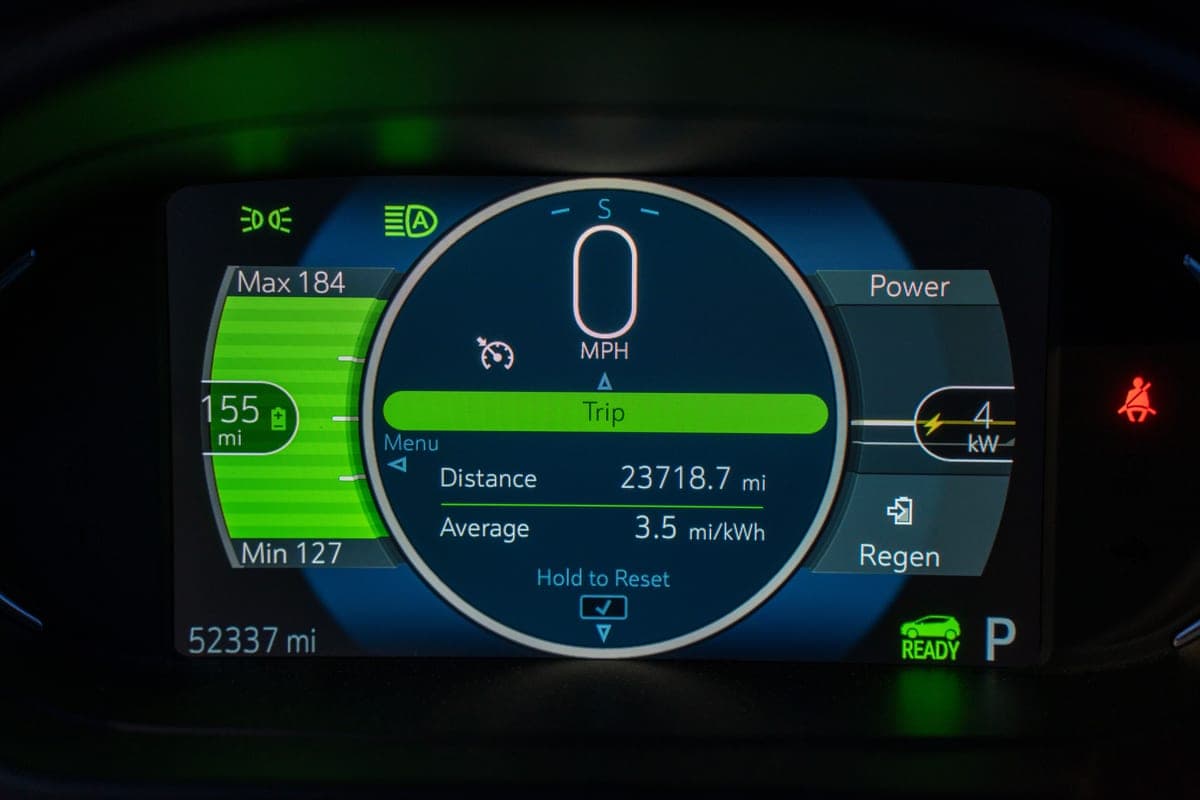
Everyone asks how long it takes to charge from empty to full. It is the wrong question, because you will almost never do it -- in the same way you rarely run a gas tank to zero.
The question that matters is: can I replace what I drove today, tonight? That is a much smaller number, and the answer is almost always yes with hours to spare.
The formula
Charging time
Energy to replace (kWh) = miles driven / your car's mi/kWh
Charging power (kW) = amps x volts / 1000, capped by your car's onboard charger
Hours = energy / power
A worked example
A normal Tuesday
You drove 42 miles. At 3.5 mi/kWh that is 12 kWh.
Your charger is 40 A on 240 V: 9.6 kW.
12 / 9.6 = 1.25 hours -- about 1 hour 15 minutes.
You are plugged in for 11 hours.
That is the reality of home charging, and it is why we keep arguing against overbuying amperage. Try your own numbers in the charging speed calculator.
The empty-to-full numbers, since you asked
| Battery | 32 A (7.7 kW) | 40 A (9.6 kW) | 48 A (11.5 kW) |
|---|---|---|---|
| 50 kWh | 6.5 h | 5.2 h | 4.3 h |
| 65 kWh | 8.4 h | 6.8 h | 5.7 h |
| 75 kWh | 9.7 h | 7.8 h | 6.5 h |
| 100 kWh | 13.0 h | 10.4 h | 8.7 h |
| 131 kWh | 17.0 h | 13.6 h | 11.4 h |
Three things that make it slower than the table
- Your car's onboard charger. If it accepts 7.7 kW, the 48 A column does not apply to you -- read the 32 A column instead. Check the manual.
- Tapering. Most cars slow charging near full to protect the battery. The last 10% takes disproportionately long, which is one reason many manufacturers suggest a daily limit below 100%.
- Cold. A cold battery accepts power more slowly, and some energy goes to warming it. Cold weather charging.
FAQ
Questions people actually ask
How long does it take to charge an EV at home?
How do I work out my own charging time?
Why does my EV charge slower than the calculated time?
Should I charge to 100% every night?
Sources
Where these numbers come from
- NEC Article 625: EV charging equipment — WireRefReference for Level 2 power levels used in the table.
Read next
Related reading
- Why is my EV charging so slowly?Nine reasons a home charge is slower than expected, in diagnostic order, starting with the four that cost nothing to fix.
- EV charging speed calculatorCalculate charging speed and time from your own numbers, with the working shown.
- Volts, amps, kW and kWh, in plain EnglishThe four electrical terms that matter and the one formula that ties them together.
- What it costs to charge an electric car at homeThe formula for your real home charging cost, using your own rate rather than an average.
- 32 A vs 40 A vs 48 A: how many amps do you actually need?What each amperage tier delivers in miles per hour, and the circuit each one requires.
- Can you leave an EV plugged in all the time?What happens when the car is full, what a charge limit does, and when to unplug instead.