Detached buildings
Installing an EV charger in a detached garage
The most expensive common scenario in home charging, and the one where the cheaper alternative is most often overlooked.
By Sawyer V. · Published September 8, 2026
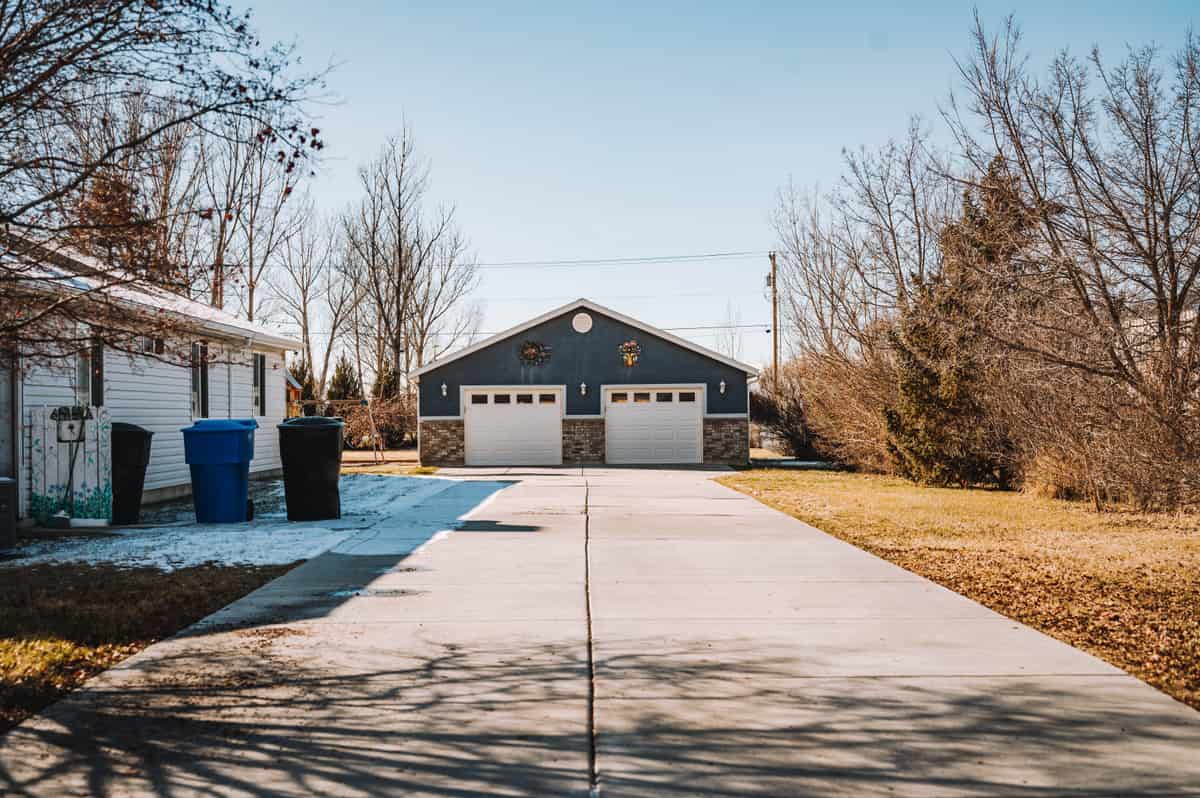
A detached garage turns a straightforward job into a construction project, because the power has to physically get there. Published labor figures for this category run roughly $1,500 to $3,000 before any panel work, and the variable that dominates is whether a feed already exists.
Start here: is there already a feed?
Many detached garages already have power for lights and outlets. Go and look at what is there:
| What you find | What it means |
|---|---|
| A subpanel with spare capacity | Best case. The charger circuit may come off the existing subpanel with no trenching. |
| A subpanel that is small or full | The feed may need upsizing, or the charger may need to run at reduced amperage. |
| A single circuit feeding lights and outlets | Almost certainly too small for a charger. New feed required. |
| Nothing | New feed required. This is the full-cost scenario. |
What a new feed involves
- A trench from the house to the garage, at a code-specified depth that depends on the wiring method and whether it is under a driveway.
- Conductors rated for wet locations, sized for both the load and the voltage drop over the distance.
- A subpanel in the garage, with its own disconnect and grounding arrangement, since a detached structure has particular grounding requirements.
- Restoration of whatever the trench went through -- lawn, driveway, patio. This is a real cost people forget.
Voltage drop: the reason distance costs money
Over a long run, resistance in the conductors causes the voltage at the far end to sag. The standard fix is thicker conductors, and copper is priced by weight -- so a 120-foot run does not cost twice a 60-foot run, it costs more than twice, because the wire itself steps up a size or two as well.
This is why an electrician will ask the distance before quoting, and why a quote given over the phone without it is not worth much.
The alternative worth considering first
If the trench is long and the driveway is in the way, ask a genuinely useful question: does the charger have to be in the garage?
Mounting it on the house wall nearest where you park can eliminate the trench entirely. You need a weather-rated unit and a cable long enough to reach, but on a 25-foot cable with the car parked on the driveway, this frequently works -- and it can turn a $4,000 project into a $1,500 one.
FAQ
Questions people actually ask
How much does it cost to install an EV charger in a detached garage?
Can I use the existing power in my detached garage?
How deep does the trench need to be?
Can I avoid trenching to my detached garage?
Sources
Where these numbers come from
- Level 2 EV charger installation cost in 2026 — SimpleSwitchPublished labor ranges for long runs and trenching. Fetched 2026-09-08.
Read next
Related reading
- Installing an EV charger outdoorsEnclosure ratings, weatherproof receptacles, mounting and the extra cost of an outdoor install.
- What EV charger installation actually costsItemized 2026 installation costs with published ranges, plus the one variable that changes everything.
- The best EV chargers for mounting outdoorsChargers genuinely rated for outdoor mounting, and what NEMA 4 and IP67 actually certify.
- Hiring an electrician for your EV chargerThe questions to ask, what a comparable quote contains, and the red flags.
- Do you need a subpanel for an EV charger?When a charger needs a subpanel instead of a breaker, and why space and capacity are different problems.
- Voltage drop on a long EV charger runWhat distance does to conductor size, with the published 3% voltage-drop table at 240 V.