Outside installs
Installing an EV charger outdoors
Entirely normal, entirely safe when done right, and roughly $200 to $1,000 more than an indoor run. Here is what that money buys.
By Sawyer V. · Published September 8, 2026
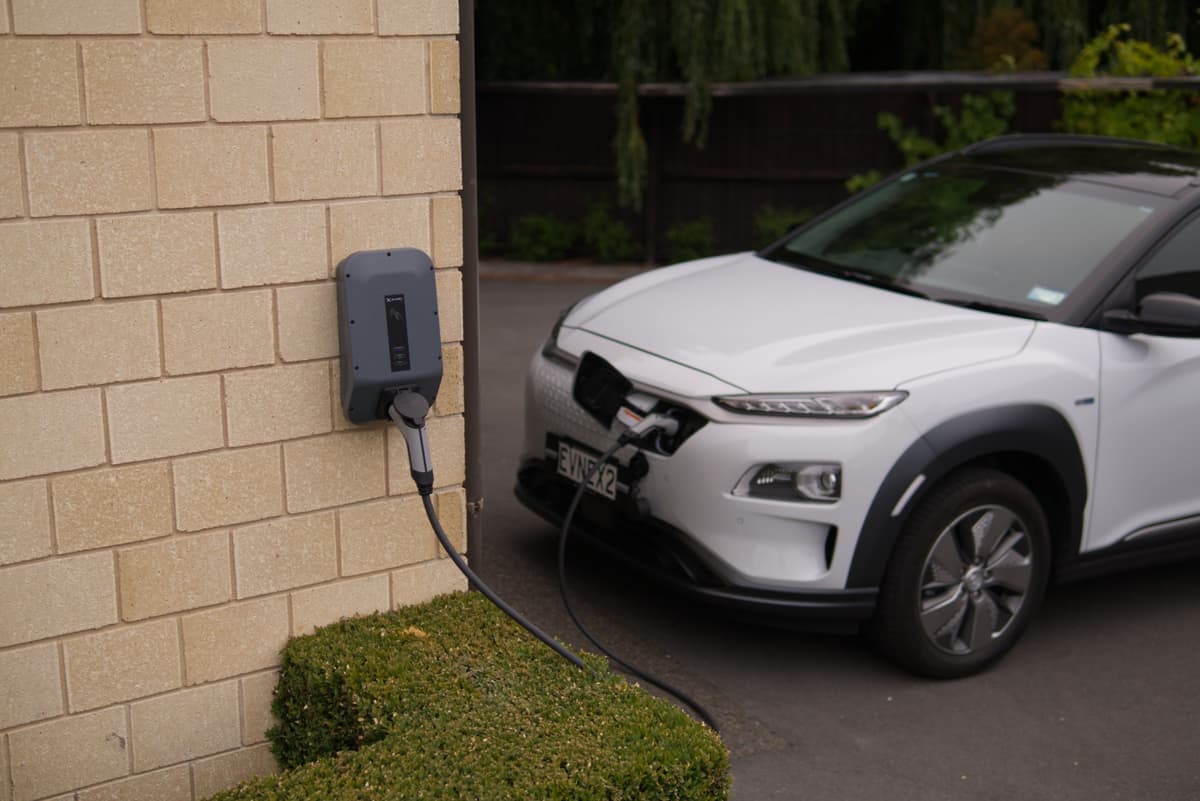
No garage is not a problem. Home chargers are routinely mounted on outside walls and carport posts, and the units built for it publish enclosure ratings that cover rain, snow, dust and hose-directed water. Published figures put the extra cost of an outdoor installation at roughly $200 to $1,000 over an equivalent indoor run.
1. The charger must be rated for it
Look for a published NEMA Type 3R rating at minimum, and preferably NEMA Type 4 or an IP65/IP67 rating. Do not assume -- some units sold for home use are indoor-only, and the rating is always published if it exists. Outdoor-rated chargers.
2. Hardwiring is usually the better outdoor choice
A hardwired unit has fewer openings to weather than a plug and receptacle. If you do go plug-in outdoors, you need a weather-rated receptacle in an in-use cover -- the bubble-style cover that closes over a plugged-in cord, not the flap-style one that only closes when nothing is plugged in.
3. Mounting and physical protection
- Under an eave if possible. Not required, but it reduces direct sun and rain exposure and extends the life of the enclosure and cable.
- Roughly 40 to 50 inches high, following the manufacturer's recommendation, so the connector never sits on wet ground.
- Holster oriented so the connector hangs downward, so water does not collect in it.
- Physical protection where a vehicle could strike it. If the charger is on a post or a wall a car pulls toward, a bollard or a wheel stop is worth it, and an inspector may require protection.
- Correct fixings for the wall type, and appropriate sealing where the conduit penetrates.
4. GFCI protection
Outdoor receptacle installations require GFCI protection. This occasionally interacts awkwardly with a charger's own internal ground-fault detection and causes nuisance tripping -- GFCI nuisance tripping covers what to do. Hardwired installations frequently avoid the issue.
5. Cold climates
Check the published operating temperature range -- the Wallbox Pulsar Plus publishes -22 F to 104 F, for example. Then think about the cable, which is what you will actually notice: several manufacturers sell cold-flexible cable versions specifically because ordinary cable goes rigid in deep cold. Cold weather charging.
FAQ
Questions people actually ask
Can an EV charger be installed outside?
How much extra does an outdoor EV charger installation cost?
Is it safe to charge an EV in the rain?
Should an outdoor EV charger be hardwired?
Sources
Where these numbers come from
- Pulsar Plus datasheet — WallboxPublished NEMA Type 4 rating and operating temperature range.
- Level 2 EV charger installation cost in 2026 — SimpleSwitchPublished outdoor weatherproofing cost range. Fetched 2026-09-08.
Read next
Related reading
- Outdoor EV charging: what needs a coverWhy a plug-in outdoor install needs an extra-duty 2-gang while-in-use cover, why a 1-gang bubble cover will not fit, and what the charger itself needs.
- The best EV chargers for mounting outdoorsChargers genuinely rated for outdoor mounting, and what NEMA 4 and IP67 actually certify.
- Installing an EV charger in a detached garageTrenching, subpanels and existing feeds: what drives the cost of a detached-garage install.
- Why your EV charger keeps tripping the GFCI breakerWhy GFCI breakers trip on EV chargers and the safe sequence for diagnosing it.
- EV charging in cold weatherWhat cold does to range and charging, and the habits that make winter a non-event.
- The best EV charger holsters and cable organizersHolsters and hooks that keep the connector off the floor and the cable out from under the wheels.
- Where to mount an EV chargerPicking the wall: reach to the port, indoor or outdoor, distance from the panel, cable storage.
- Romex vs conduit for an EV chargerWhere each wiring method is allowed, what each costs per foot, and who decides on your job.