Panels
Do you need a subpanel for an EV charger?
A subpanel solves a shortage of breaker spaces. It does not create electrical capacity, and confusing the two is the expensive mistake.
By Sawyer V. · Published September 23, 2026
How this page is funded: we earn a commission if you buy through our Amazon links, at no extra cost to you. It does not change what we recommend, and we say plainly when the honest answer is to buy nothing. Full disclosure.
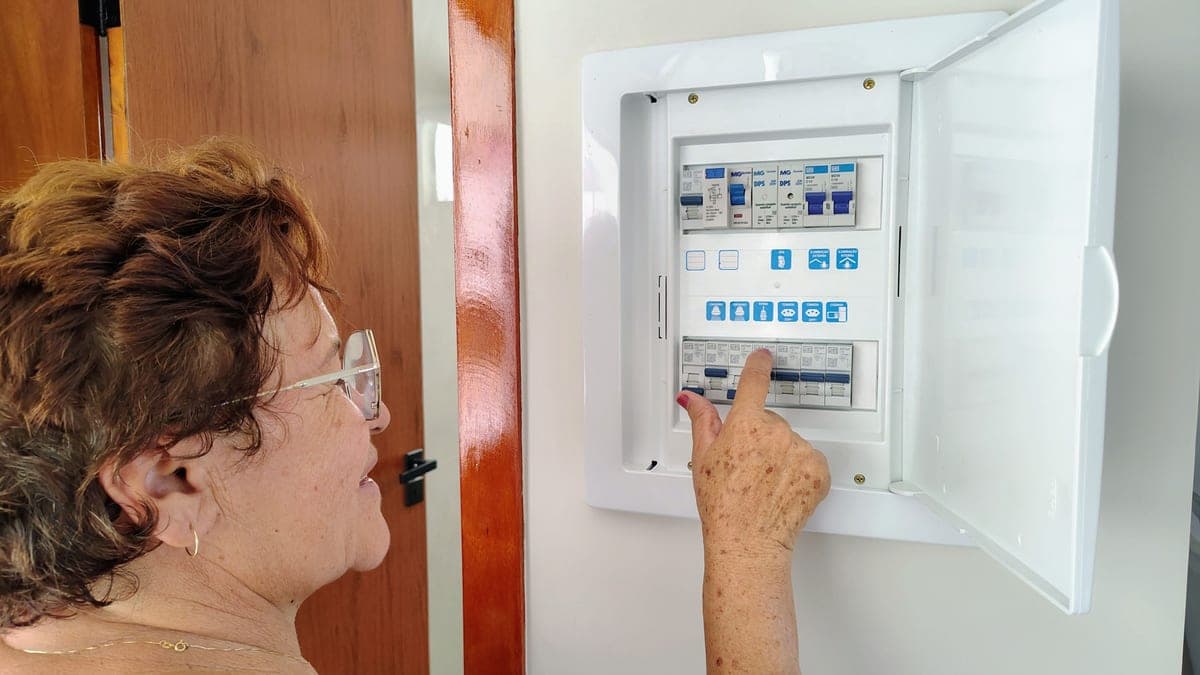
Two different problems get the same answer from the internet. One is that your panel is physically full -- every slot occupied, no room for a two-pole breaker. The other is that your service cannot carry another 50 or 60 amps. A subpanel fixes the first. It does nothing at all for the second.
Space and capacity are not the same
| Symptom | Problem | Usual fix |
|---|---|---|
| No free slots, but the load calculation passes | Space | Subpanel, or tandem breakers where the panel allows |
| Free slots, but the load calculation fails | Capacity | Load management, or a service upgrade |
| Neither slots nor capacity | Both | Service and panel upgrade |
| Charger is 80 ft away across the yard | Distance | Subpanel at the far end, or heavier conductors |
The Department of Energy puts it plainly: some homes have insufficient capacity for Level 2 equipment, and an electrician can tell you whether yours is one of them. That assessment comes before any decision about panels.
When a subpanel is the right answer
1. The main panel is full
A 40 or 48 A charger needs two adjacent slots for a two-pole breaker. If there are none, a subpanel fed from a single large breaker in the main panel creates room for the EV circuit and anything else the garage needs later.
2. The charger is in a detached garage
Running one circuit to a detached building is often barely cheaper than running a feeder and putting a small panel there. The feeder means you can add lighting, outlets or a second charger later without digging the trench again. Detached garage installations covers the whole job.
3. Several circuits at the end of a long run
One feeder plus a subpanel beats three long branch circuits in both cost and tidiness, and it keeps the voltage-drop calculation to a single conductor run. Voltage drop on long runs explains what distance does to conductor size.
What the work involves
- A feeder breaker in the main panel, sized for the subpanel.
- A feeder run to the new location, in conduit or cable as the site requires.
- The subpanel itself, mounted where it is accessible and clear of obstructions.
- Grounding and bonding done correctly for the situation. In a detached building this is its own design question and a common inspection failure.
- The EV branch circuit from the subpanel to the charger, on its own breaker under the dedicated-circuit rule.
All of it is licensed, permitted work in most jurisdictions. The Department of Energy notes that installations must comply with local and state codes and that permits may be required from the building authority. Permits and hiring an electrician cover the process.
The cheaper alternatives, first
- A load-managed charger can let an existing service carry the car without new panel hardware.
- Tandem breakers, where your panel is listed for them, can free a slot -- the panel label decides.
- A smaller charger. A 40 A unit on a 50 A circuit asks less of the panel than a 48 A unit on a 60 A circuit. 32A vs 40A vs 48A.
- A dryer-circuit splitter, if the laundry is near the car. Charging from a dryer outlet.
Ask for these to be priced alongside the subpanel. The quote that looks obvious to an electrician is not always the cheapest way to get a car charged.
The load-managed alternative
If capacity rather than space is the problem, this is the charger to price against the panel work.
1. A tight panel
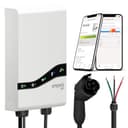
Emporia Pro EV Charger
Emporia · J1772 · 48 A / 11.5 kW · 25 ft cable
Emporia's 48-amp charger with PowerSmart load management built in: the Vue 3 energy monitor comes in the box, and the charger backs off when the rest of the house is busy. The one to look at when your panel is the obstacle.
What is good
- PowerSmart load management included, not an add-on
- Vue 3 energy monitor in the box, for whole-home data
- Emporia says it works even with older 60 or 100 amp services
- J1772 or NACS connector options
What is not
- PowerSmart needs the Vue installed in your panel -- electrician work
- Costs more than the Emporia Classic, which charges at the same 48 A
- Only worth it if your panel is the constraint
| Maximum output | 48 A hardwired; 40 A with a NEMA plug |
|---|---|
| Connector | J1772 or NACS, chosen at purchase |
| Cable | 25 ft |
| Load management | PowerSmart, standard |
| In the box | Emporia Vue 3 energy monitor |
| Installation | NEMA 14-50 plug or hardwired; rear-entry option |
| Certification | UL certified, GFCI-protected |
| Warranty | 3 years |
Skip this if: Skip it if your panel has comfortable room for a full EV circuit. Without that problem you are paying for load management you will not use -- the Emporia Classic charges at the same 48 A.
Specifications above are the manufacturer’s published figures. Source: Emporia Energy, Emporia Energy, Classic vs Pro, Emporia Energy, store. We have not tested this unit — see how we pick.
FAQ
Questions people actually ask
Does a subpanel increase my electrical capacity?
Do I need a subpanel for a detached garage EV charger?
Is a subpanel cheaper than a panel upgrade?
Can I install a subpanel myself?
Sources
Where these numbers come from
- Charging Electric Vehicles at Home — U.S. Department of Energy, Alternative Fuels Data CenterOutdoor installation and use are safe with outdoor-rated equipment; EV charging is a continuous load under the NEC; permits may be required; an electrician can say whether a home has the capacity. Read 2026-09-23.
- NEC Article 625: EV charging equipment — WireRef625.41 continuous load rated at 125%, 625.42 dedicated branch circuit and the energy-management exception, 625.54 GFCI protection and the double-GFCI nuisance-tripping problem. Read 2026-09-23.
Read next
Related reading
- Do you need a panel upgrade for an EV charger?When a panel upgrade is genuinely needed, what it costs, and the cheaper alternatives.
- Installing an EV charger in a detached garageTrenching, subpanels and existing feeds: what drives the cost of a detached-garage install.
- Can your electrical panel take an EV charger?What a load calculation is, what goes into it, and how to get a rough answer yourself.
- Voltage drop on a long EV charger runWhat distance does to conductor size, with the published 3% voltage-drop table at 240 V.