Winter
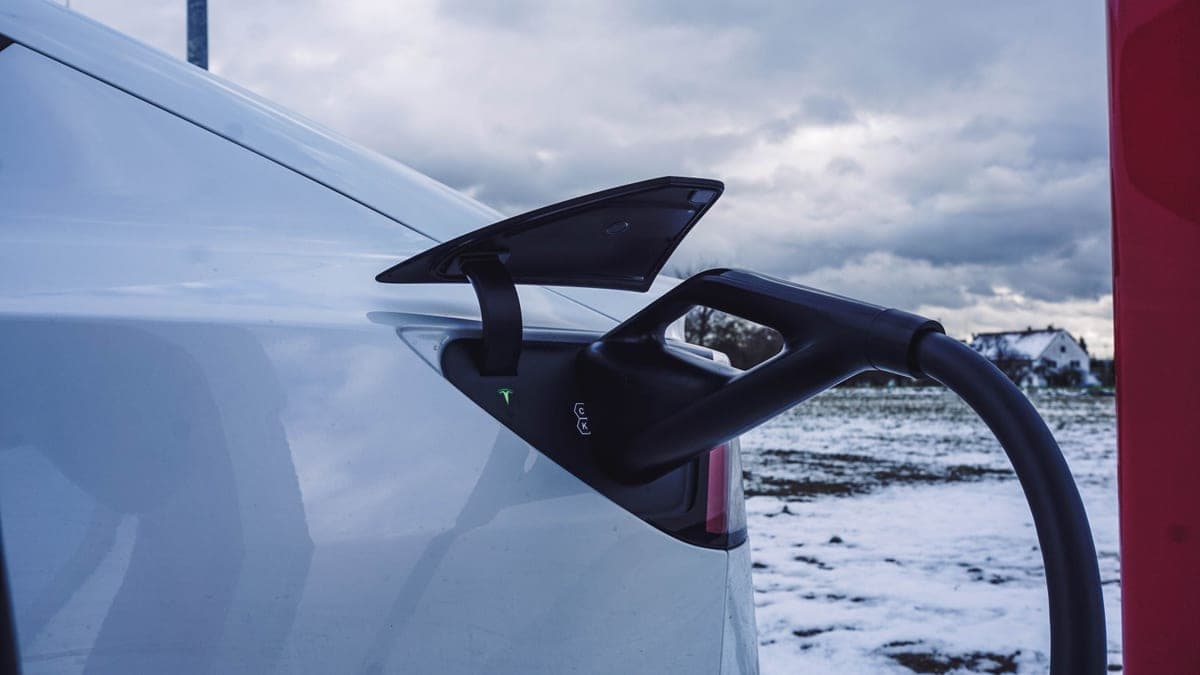
Charge port frozen shut
Two different problems get the same name: a port door that will not open, and a connector that will not come out. Both are fixable in minutes, and one common fix will cost you a charge port.
By Sawyer V. · Published October 11, 2026
How this page is funded: we earn a commission if you buy through our Amazon links, at no extra cost to you. It does not change what we recommend, and we say plainly when the honest answer is to buy nothing. Full disclosure.
The verdict first, because it is usually 7 am and cold: put the car on defrost, turn the cabin heat up, and leave it ten minutes before touching anything. If the car is plugged in and charging, even better -- preconditioning draws from the wall and warms the car from the inside out. That solves the large majority of frozen ports with no risk. Everything else on this page is for when it does not.
Which problem do you have?
| Symptom | What is actually frozen | First thing to try |
|---|---|---|
| Port door will not open at all | Water in the door seal or hinge, frozen | Cabin defrost and heat, ten minutes |
| Door opens, connector will not seat | Ice in the port recess or on the pins | Defrost, then dry the port with a cloth |
| Connector went in, charge will not start | Ice on the pins breaking contact, or a cold battery | Unplug, dry both faces, replug |
| Connector will not come out after charging | Meltwater refrozen around the latch pawl | Start a charge session, then stop it, then pull |
| Latch released but connector still stuck | Ice in the collar between connector and port | Warm the connector body in gloved hands; rock gently |
The connector-stuck trick, explained
This is the one most people have not heard. When a connector freezes into the port, the ice is usually meltwater that ran into the collar during charging and refroze once the session ended and everything cooled. Starting a new charge session puts current through the pins again, which warms them from the inside; a few minutes later, stop the session and the latch will usually release. You are using the car as a very precise heater instead of a hairdryer.
If your charger or car app lets you start a session remotely, you can do this from the kitchen. This is one of the few genuinely practical arguments for a connected charger in a cold climate -- see do you need a smart EV charger.
What actually prevents it
- Hang the connector up. A connector left on the ground sits in slush, fills with water and freezes into a solid lump. A wall dock and a J-hook is the single highest-value thing you can change, and it costs about the price of a takeaway.
- Close the port door fully after unplugging. Most frozen-door cases are a door that was left ajar and then rained on.
- Dry the port face before plugging in if the car has been in weather. Ten seconds with a cloth.
- Precondition on the charger, not on the battery. The EPA notes that preheating the cabin while plugged in extends range, because the energy comes from the wall. It also warms the bodywork around the port.
- Park nose-in, away from the prevailing wind if the port is at the front, and the reverse if it is at the back. Driving snow into an open port is how the recess ices up.
- Do not coil a wet cable tight. Water trapped between coils freezes and makes the cable unusable until it thaws.
About those magnetic port covers
They are sold everywhere and they are cheap, and we are not going to recommend one. The charge port already has a sealing door designed for weather. The covers on the market are unbranded marketplace goods, and not one of them publishes a test, a temperature range, or an IP rating for the assembly -- so there is nothing to evaluate and nothing to stand behind. If the door seals and the connector is hung up, the problem mostly does not occur. That is a cheaper fix than a cover anyway.
What else winter does, so you can tell them apart
A cold car charges differently, and that is not a fault. The EPA measures EV range dropping roughly 41% and fuel economy roughly 39% at 20 F against 75 F, with about two thirds of the extra energy going to cabin heat -- so the same kilowatt-hours buy fewer miles. A very cold battery may also accept less power until it warms. Neither of those is a frozen port. EV charging in cold weather covers the range and speed side, and why is my EV charging slowly is the diagnostic list.
If the cable itself has gone board-stiff, that is normal below freezing and it is a cable-compound property, not a defect. Chargers that publish a low operating-temperature rating are the ones that stay manageable; best EV charger for cold weather ranks on exactly that spec.
The two things that prevent most of this
A holster so the connector never sits in slush, and a charger with a published cold rating. Live Amazon prices with the date they were read.
1. J1772 connectors
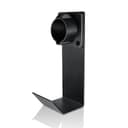
Lectron J1772 holster dock and J-hook
Lectron · J1772
A steel dock that latches a J1772 connector and a hook for the cable, rated by Lectron for indoor and outdoor use. Fits all J1772 connectors.
What is good
- Anti-corrosive steel rather than plastic
- Latches the connector so it stays put
- Hook keeps the cable off the ground
What is not
- J1772 only
- No holder for a portable's control box -- see the holder set
- Check your charger does not already have a holster
| Fits | All J1772 connectors |
|---|---|
| Material | Anti-corrosive steel |
| Use | Indoor or outdoor |
| In the box | Dock and J-hook, with mounting hardware |
Skip this if: Skip it if your connector is a Tesla (NACS) -- this dock is shaped for J1772.
Specifications above are the manufacturer’s published figures. Source: Lectron. We have not tested this unit — see how we pick.
2. Harsh weather and no app
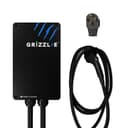
Grizzl-E Classic
United Chargers · J1772 · 40 A / 9.6 kW · 24 ft cable
A cast-aluminum box with no app, no account and no firmware to update. If you want a charger that behaves like an appliance, this is the one.
What is good
- Cast aluminum NEMA 4 / IP67 enclosure, built for outdoor mounting
- No app, no account, no network dependency
- Amperage is set with physical switches, not software
- Protections for over-current, over-voltage, ground fault and over-temperature
What is not
- 40 A ceiling, slower than the 48 A units if your panel can take more
- No scheduling, so off-peak charging has to be set in the car
- The cold-flexible 24 ft cable is only on the Extreme Edition
| Maximum output | 40 A / 9.6 kW at 240 V |
|---|---|
| Adjustable | 16, 24, 32 or 40 A |
| Connector | SAE J1772 |
| Cable | 24 ft on the Extreme Edition |
| Enclosure | Cast aluminum, NEMA 4 / IP67 |
| Certification | UL certified |
| Warranty | 3 years |
Skip this if: Skip it if you want scheduled charging or energy tracking in an app. The Classic deliberately has neither.
Specifications above are the manufacturer’s published figures. Source: United Chargers, InsideEVs. We have not tested this unit — see how we pick.
FAQ
Questions people actually ask
How do I open a frozen EV charge port door?
My charging cable is frozen into the car. How do I get it out?
Can I use hot water to unfreeze a charge port?
Do magnetic charge port covers work?
Does cold weather damage an EV charge port?
Sources
Where these numbers come from
- Fuel economy in cold weather — U.S. EPA and U.S. Department of Energy, fueleconomy.govFor electric vehicles, fuel economy can drop roughly 39% in mixed city and highway driving and range can drop by 41% at 20 F compared with 75 F. About two thirds of the extra energy consumed is used to heat the cabin. With the cabin heater not used, EV fuel economy is 8% lower and range about 12% lower at 20 F than at 75 F. Preheating the cabin while plugged into the charger can extend range. Read 2026-10-11.
- Charging Electric Vehicles at Home — U.S. Department of Energy, Alternative Fuels Data CenterMost drivers charge overnight at home; residential charging costs depend on equipment and time of day; outdoor use is safe with outdoor-rated equipment; smarter Level 2 units add timers and monitoring. Read 2026-10-11.
- Lectron J1772 EV charger J-hook nozzle holster dock — LectronWall-mounted J1772 connector holster dock with a cable J-hook, anti-corrosive steel, for indoor or outdoor mounting. Read via the product record.
- Grizzl-E Classic product specifications — United Chargers40 A / 9.6 kW, NEMA 14-50 plug, 24 ft cable, cast-aluminum NEMA 4 / IP67 enclosure, UL certified, no app. Read via the product record.
Read next
Related reading
- EV charging in cold weatherWhat cold does to range and charging, and the habits that make winter a non-event.
- Why is my EV charging so slowly?Nine reasons a home charge is slower than expected, in diagnostic order, starting with the four that cost nothing to fix.
- The best EV chargers for cold climatesChargers with published low-temperature ratings and cold-flexible cables, plus what winter really costs you.
- Your winter EV charging kitFive winter purchases in priority order, plus the four habits that matter more than any of them.
- The best EV charger holsters and cable organizersHolsters and hooks that keep the connector off the floor and the cable out from under the wheels.