Getting started
Home charging vs public charging
Most EV owners do almost all their charging at home, and the ones who cannot need a different plan. Here is how the two compare on the things that matter.
By Sawyer V. · Published September 27, 2026
How this page is funded: we earn a commission if you buy through our Amazon links, at no extra cost to you. It does not change what we recommend, and we say plainly when the honest answer is to buy nothing. Full disclosure.
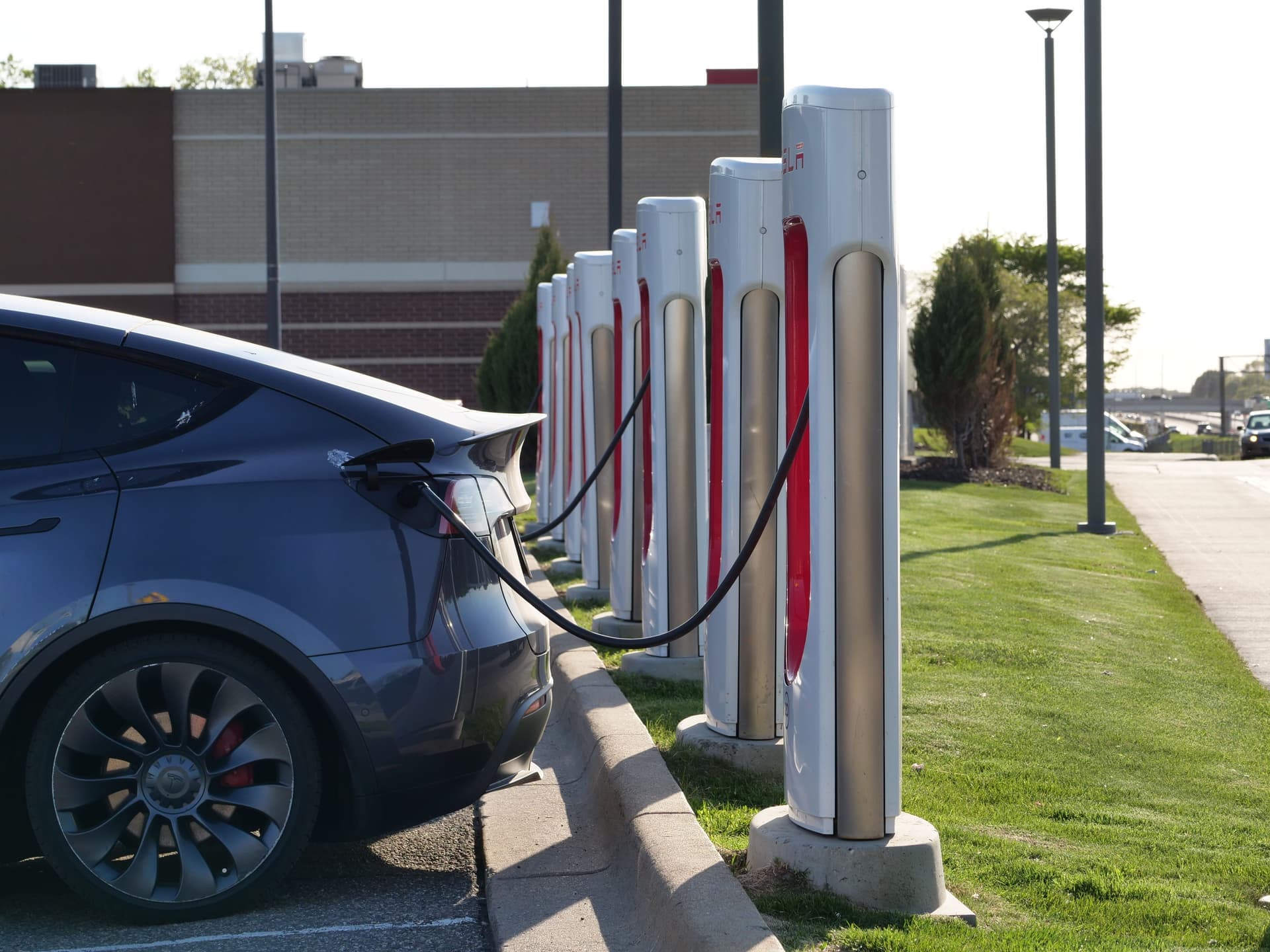
New owners ask this question backwards. They compare a 350 kW public charger with a 9.6 kW home charger and conclude that home charging is slow, which is true and almost entirely irrelevant. What matters is not how fast the power flows but how many hours it has to flow for.
Speed, in the only terms that count
Overnight against a coffee stop
AC Level 2 at home: about 25 miles of range per hour of charging
Ten hours parked overnight = far more than a normal day's driving
DC fast charging in public: about 100 to 200+ miles per 30 minutes
One is measured in hours you were asleep; the other in minutes you were standing there
Those Department of Energy figures are the fair comparison. A home charger is slower per hour and faster per week, because it works while you do nothing. How long charging takes.
Cost
Home electricity is generally the cheapest energy an EV will ever take, and public DC fast charging is generally the most expensive -- it is a different product, sold by the minute or the kilowatt-hour at a location that had to be built and maintained. Your own utility rate is the only number that makes this concrete, which is why we do not print one here. What charging costs at home walks the arithmetic, and time-of-use rates covers the cheapest version of it.
For scale on the bigger picture, the EPA notes that driving on electricity typically costs less than half what it costs to drive a standard gasoline vehicle.
Side by side
| Home | Public | |
|---|---|---|
| Typical speed | About 25 miles of range per hour (Level 2) | About 100-200+ miles per 30 minutes (DC fast) |
| Cost per kWh | Your utility rate, usually the lowest available | Higher, set by the network |
| Convenience | Plug in when you park; no detour | A stop you have to plan and make |
| Availability | Always yours | Depends on the site, the queue and the connector |
| Up-front cost | Charger and installation | None |
| Best for | Daily driving | Road trips, apartments, occasional top-ups |
When public charging is the right plan
- No off-street parking. Charging in an apartment covers the real options.
- A long road trip, where DC fast charging is the entire point. Road trip kit.
- A rental or a short lease, where installing anything is off the table. Chargers for renters.
- Very low mileage. A driver doing 30 miles a week can live on occasional public charging, and a Level 1 cord at home.
What a home charger really buys
Not speed. Time, and the end of a recurring errand. The car is full every morning, the charging happens while you sleep, and the weekly stop at a station disappears. That is the case for Level 2 at home, and it holds whether or not the public network near you is any good.
If you are still deciding whether you need Level 2 at all, do you need a Level 2 charger is the page that answers it honestly, including the case for buying nothing.
Two straightforward home chargers
Both are ordinary, well-documented Level 2 units for a first installation.
1. A first charger, hardwired
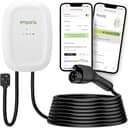
Emporia Level 2 EV Charger (Classic)
Emporia · J1772 · 48 A / 11.5 kW · 24 ft cable
The safe default for a first home charger: 48 amps hardwired, a genuinely long cable, a NEMA 4 outdoor-rated case, and no subscription attached to the app.
What is good
- 48 A hardwired is the fastest tier most homes can realistically support
- 24 ft of cable reaches across a two-car garage without a fight
- NEMA Type 4 enclosure is rated for outdoor mounting
- Energy monitoring in the app with no subscription
What is not
- Drops to 40 A if you use the NEMA 14-50 plug rather than hardwiring
- The app is the only way to change the amperage setting
| Maximum output | 48 A / 11.5 kW at 240 V (hardwired) |
|---|---|
| Plug-in output | 40 A with the NEMA 14-50 plug |
| Connector | SAE J1772 |
| Cable | 24 ft |
| Enclosure | NEMA Type 4, indoor or outdoor |
| Certification | UL listed, Energy Star |
| Warranty | 3 years |
Skip this if: Skip it if you want a unit with no app or network connection at all. The Grizzl-E Classic is the simpler machine.
Specifications above are the manufacturer’s published figures. Source: Emporia Energy. We have not tested this unit — see how we pick.
2. Grizzl-E toughness, with an app
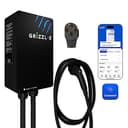
Grizzl-E Classic Connect
United Chargers · J1772 · 40 A / 9.6 kW · 25 ft cable
The next-generation Grizzl-E: 40 A on a NEMA 14-50, a 25 ft cable, a UL Type 4 indoor/outdoor rating -- and, unlike the Classic, Wi-Fi and the Grizzl-E Connect app. Sold with a J1772 or NACS cable.
What is good
- 25 ft cable, a foot longer than the Classic Extreme Edition's
- Wi-Fi app with schedules and charging statistics, which the Classic deliberately lacks
- UL/cUL listed, with a published file number
- Rated to run from -22 F to 122 F
What is not
- 40 A ceiling, with no hardwired 48 A version
- Sold with a NEMA 14-50 plug; the Classic's 6-50 option is not among the Connect listings we found
- The app needs 2.4 GHz Wi-Fi where the charger is mounted
| Maximum output | 40 A / 9.6 kW at 240 V (the maker lists 10 kW) |
|---|---|
| Adjustable | 16 A to 40 A |
| Connector | SAE J1772 or NACS, chosen at purchase |
| Cable | 25 ft (7.6 m) |
| Plug | NEMA 14-50 |
| Enclosure rating | UL Type 4, indoor and outdoor |
| Operating temperature | -22 F to 122 F |
| Size | 10.25 x 6.25 x 3.75 in |
| Connectivity | Wi-Fi (2.4 GHz) and the Grizzl-E Connect app |
| Certification | UL/cUL, file E510712 |
| Warranty | 3 years; 5-year warranty sold separately |
Skip this if: Skip it if you wanted a Grizzl-E precisely because it has no app -- the original Classic is still the no-software choice -- or if you want 48 A. The Classic Connect is a 40 A plug-in unit.
Specifications above are the manufacturer’s published figures. Source: United Chargers. We have not tested this unit — see how we pick.
FAQ
Questions people actually ask
Is it cheaper to charge at home or in public?
Is home charging too slow?
Can I own an EV without a home charger?
Does a home charger help on road trips?
Sources
Where these numbers come from
- Charging Electric Vehicles at Home — U.S. Department of Energy, Alternative Fuels Data CenterMost drivers charge overnight at home; residential costs depend on equipment and time of day; some utilities offer time-of-use rates; outdoor use is safe with outdoor-rated equipment; smarter Level 2 units add timers and monitoring. Read 2026-09-27.
- Electric Vehicle Charging Infrastructure: charging levels and connectors — U.S. Department of Energy, Alternative Fuels Data CenterAC Level 1 about 5 miles of range per hour at 1.9 kW; AC Level 2 about 25 miles per hour, 2.9 to 19.2 kW, on J1772 or J3400 (NACS); DC fast charging about 100 to 200+ miles per 30 minutes on CCS, CHAdeMO or J3400; CCS accepts Level 1, Level 2 and DC fast charging. Read 2026-09-27.
- ENERGY STAR certified electric vehicle chargers — U.S. EPA, ENERGY STARCertified chargers are tested by a nationally recognized testing laboratory and use less energy when idle; driving on electricity typically costs less than half of gasoline. Read 2026-09-27.
Read next
Related reading
- Do you actually need a Level 2 charger?The honest test for whether you need a Level 2 charger, or whether Level 1 is enough.
- What it costs to charge an electric car at homeThe formula for your real home charging cost, using your own rate rather than an average.
- DC fast charging, explainedWhat DC fast charging is, how fast it is, which plugs it uses, and why it is not a home option.
- Charging an EV when you live in an apartmentThe realistic options for apartment EV charging, ranked by how well they actually work.