Troubleshooting
Why your EV charger keeps tripping the GFCI breaker
Frustrating, common, and occasionally the breaker doing exactly its job. Work through it in this order, and never by disabling the protection.
By Sawyer V. · Published September 8, 2026
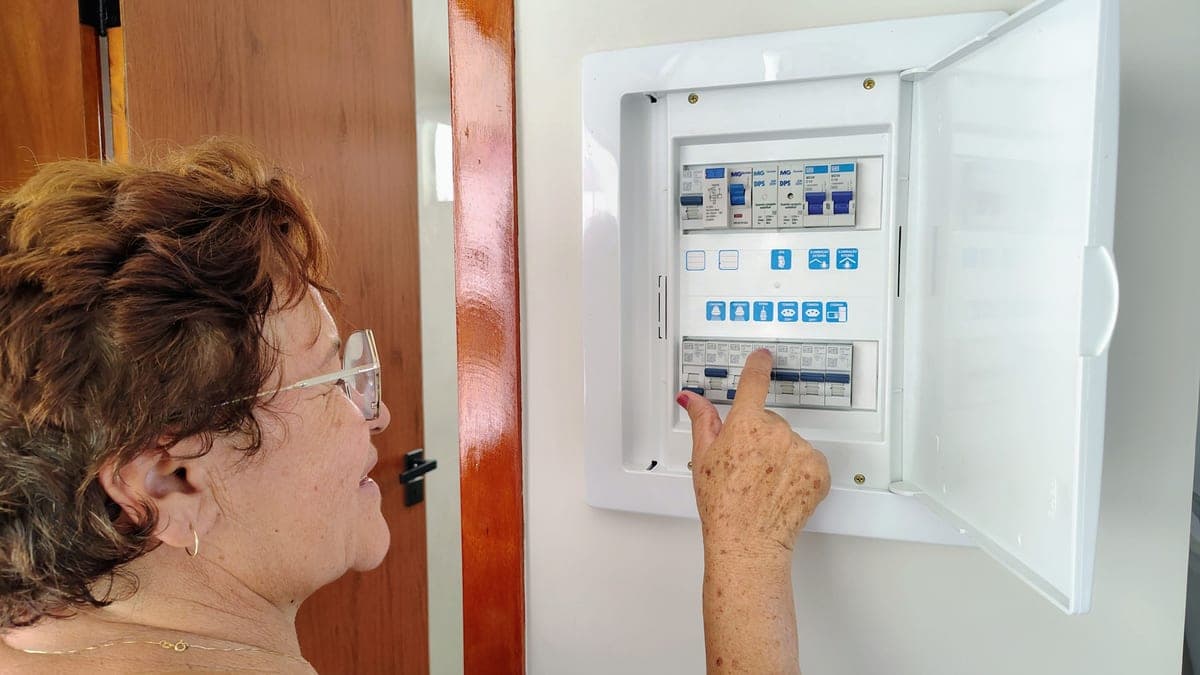
Why this happens with EV chargers specifically
Two things collide. Code generally requires GFCI protection on the 240-volt receptacle circuits used for plug-in chargers. And EV chargers have their own built-in ground-fault detection, because that is what the safety standard requires of them.
So you have two protective devices watching the same circuit. Small, harmless leakage currents -- from cable capacitance, from the charger's own electronics, from moisture -- can be enough to trip the upstream breaker even though nothing is wrong. That is what "nuisance tripping" means.
Work through it in this order
- Note the pattern. Does it trip on plug-in, mid-charge, only in rain, only in cold, only at a particular time of night? The pattern is most of the diagnosis, so write it down before you call anyone.
- Check the connector and receptacle for moisture and debris. Water in a connector is a genuine ground-fault path. Dry it thoroughly and try again.
- Try a different vehicle, or the same vehicle on a different charger if you can. This tells you whether the fault is in the car, the charger or the circuit -- which is the single most useful thing to know.
- Check whether it started after something changed -- a new charger, a firmware update, new wiring, a storm.
- Get an electrician to verify the installation: terminations, grounding, whether the GFCI type is correct for the application, and whether the manufacturer's manual specifies a particular breaker type. Manufacturers sometimes do.
- Consider hardwiring. Where code permits it for your installation, a hardwired charger with its own built-in ground-fault protection avoids the duplicate-device problem entirely. Discuss it with your electrician -- see hardwired vs plug-in.
When it is not a nuisance
Take it seriously and stop using the circuit until an electrician has looked, if:
- It trips immediately and every time, rather than intermittently.
- There is any discoloration, heat or smell at the receptacle, the plug or the panel.
- It started after visible damage to the cable or connector.
- Other circuits are also behaving oddly.
In these cases the breaker is probably not being a nuisance. It is being a breaker.
Damaged cables
A charging cable that has been driven over, pinched in a garage door, or dragged across concrete for years can develop insulation damage that creates a genuine leakage path -- often intermittently and worse in the wet. Inspect the full length of the cable and the connector body. If the cable is damaged, the charger needs repair or replacement, and this is precisely the situation a warranty is for.
FAQ
Questions people actually ask
Why does my EV charger trip the GFCI breaker?
Can I replace the GFCI breaker with a standard one?
Does hardwiring fix GFCI nuisance tripping?
Is GFCI tripping dangerous?
Sources
Where these numbers come from
- NEC Article 625: EV charging equipment — WireRefRequirements for EV supply equipment protection and receptacle circuits.
Read next
Related reading
- How to set your EV charger's ampsPublished amperage ranges for every charger on this site, the 80% rule, and where each maker puts the setting.
- The NEMA 14-50 outlet, explainedWhat a NEMA 14-50 is, the circuit it needs, its 40-amp charging limit, and what to specify.
- Hardwired or plug-in: which EV charger install is right?NEMA 14-50 or hardwired: amperage limits, cost, portability and what inspectors prefer.
- Hiring an electrician for your EV chargerThe questions to ask, what a comparable quote contains, and the red flags.
- Installing an EV charger outdoorsEnclosure ratings, weatherproof receptacles, mounting and the extra cost of an outdoor install.
- The best 60-amp breaker for an EV chargerWhy the best breaker is the one your panel is listed for, with a worked Square D QO example.
- Your EV charger is not working: what to checkThe six usual causes of a charge that will not start, in the order worth checking them.