Buying checklist
What to look for in a Level 2 charger
Six questions, in the order that actually matters. Answer them and the shortlist writes itself.
By Sawyer V. · Published September 8, 2026
How this page is funded: we earn a commission if you buy through our Amazon links, at no extra cost to you. It does not change what we recommend, and we say plainly when the honest answer is to buy nothing. Full disclosure.
1. Which connector does your car use?
J1772 for nearly every non-Tesla EV; NACS for Teslas and a growing number of new models. Match it and everything downstream gets simpler. If your household has both, buy J1772 and use the adapter, or buy a unit that handles both. Plug types explained has the detail.
2. What can your electrical panel actually feed?
This decides your amperage, and amperage decides your price bracket. Read the main breaker rating, count spare slots, and if you can, work through a load calculation.
If you cannot answer this yet, buy an adjustable charger -- the ChargePoint Home Flex or the Wallbox Pulsar Plus. That is precisely the problem they exist to solve, and it is worth the small premium.
3. How long does the cable need to be?
Measure it properly, following the real path, and add three feet. This is the specification you cannot fix later. How to measure.
4. Is it properly certified?
UL listed, ETL listed, or tested to UL standards by CSA. Not "UL certified components", not "meets UL standards". This is the one place on the whole project where the cheap option is not a trade-off. Safety certifications explains the wording, and marketplace chargers covers how to check a listing.
5. Where will it live?
Inside a dry garage, any unit will do. On an exposed wall, you need a published outdoor rating -- NEMA 3R minimum, NEMA 4 or IP65/67 preferably. In a cold climate, look for a published low-temperature rating and a cold-flexible cable. Outdoor chargers.
6. Do you actually want an app?
Ask what you would use it for. Scheduling is usually already in your car. Energy monitoring is genuinely nice. Load management is essential if your panel is tight or you have two EVs, and irrelevant otherwise. Smart chargers has the honest version.
Three chargers that answer the checklist well
Ranked for a first home charger. Every row jumps to the full write-up below.
| # | Product | Best for | Max output | Price |
|---|---|---|---|---|
| 1 | Emporia Level 2 EV Charger (Classic)A first charger, hardwired. J1772, 25 ft cable. | A first charger, hardwired | 48 A11.5 kW | Check price on Amazon#ad how we are funded |
| 2 |  ChargePoint Home FlexHomes with an uncertain panel. J1772, 23 ft cable. ChargePoint Home FlexHomes with an uncertain panel. J1772, 23 ft cable. | Homes with an uncertain panel | 50 A12 kW | $549.00 · View on Amazon#ad how we are funded · price as of October 26, 2026 |
| 3 |  Grizzl-E ClassicHarsh weather and no app. J1772, 24 ft cable. Grizzl-E ClassicHarsh weather and no app. J1772, 24 ft cable. | Harsh weather and no app | 40 A9.6 kW | $299.99 · View on Amazon#ad how we are funded · price as of October 26, 2026 |
The picks in detail
Three units covering the three common answers to question 2: known circuit, unknown circuit, and no-app preference.
1. A first charger, hardwired
Emporia Level 2 EV Charger (Classic)
Emporia · J1772 · 48 A / 11.5 kW · 25 ft cable
The safe default for a first home charger: 48 amps hardwired, a genuinely long cable, a NEMA 4 outdoor-rated case, and no subscription attached to the app.
What is good
- 48 A hardwired is the fastest tier most homes can realistically support
- 25 ft of cable reaches across a two-car garage without a fight
- NEMA Type 4 enclosure is rated for outdoor mounting
- Energy monitoring in the app with no subscription
What is not
- Drops to 40 A if you use the NEMA 14-50 plug rather than hardwiring
- The app is the only way to change the amperage setting
| Maximum output | 48 A / 11.5 kW at 240 V (hardwired) |
|---|---|
| Plug-in output | 40 A with the NEMA 14-50 plug |
| Connector | SAE J1772 |
| Cable | 25 ft |
| Enclosure | NEMA Type 4, indoor or outdoor |
| Certification | UL listed, Energy Star |
| Warranty | 3 years |
Skip this if: Skip it if you want a unit with no app or network connection at all. The Grizzl-E Classic is the simpler machine.
Specifications above are the manufacturer’s published figures. Source: Emporia Energy. We have not tested this unit — see how we pick.
2. Homes with an uncertain panel
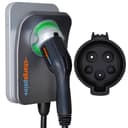
ChargePoint Home Flex
ChargePoint · J1772 · 50 A / 12 kW · 23 ft cable
The most adjustable unit here. It can be set anywhere from 16 A to 50 A, which makes it the one to buy when you do not yet know what your panel will allow.
What is good
- Six selectable amperage settings from 16 A to 50 A
- Sold in both hardwired and NEMA 14-50 versions
- Rated for indoor or outdoor installation
- The app is mature and does not require a subscription
What is not
- 23 ft is a foot shorter than the longest cables in this group
- The 50 A setting needs a bigger circuit than most panels have spare
| Maximum output | 50 A / 12 kW at 240 V |
|---|---|
| Amperage settings | 16, 24, 32, 40, 48 or 50 A |
| Connector | SAE J1772 |
| Cable | 23 ft |
| Installation | Hardwired or NEMA 14-50 |
| Certification | UL listed, Energy Star |
| Warranty | 3 years |
Skip this if: Skip it if your circuit is already fixed and you just want the cheapest safe 40 A unit. You are paying for flexibility you will not use.
Specifications above are the manufacturer’s published figures. Source: ChargePoint, ChargePoint. We have not tested this unit — see how we pick.
3. Harsh weather and no app
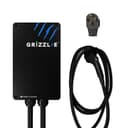
Grizzl-E Classic
United Chargers · J1772 · 40 A / 9.6 kW · 24 ft cable
A cast-aluminum box with no app, no account and no firmware to update. If you want a charger that behaves like an appliance, this is the one.
What is good
- Cast aluminum NEMA 4 / IP67 enclosure, built for outdoor mounting
- No app, no account, no network dependency
- Amperage is set with physical switches, not software
- Protections for over-current, over-voltage, ground fault and over-temperature
What is not
- 40 A ceiling, slower than the 48 A units if your panel can take more
- No scheduling, so off-peak charging has to be set in the car
- The cold-flexible 24 ft cable is only on the Extreme Edition
| Maximum output | 40 A / 9.6 kW at 240 V |
|---|---|
| Adjustable | 16, 24, 32 or 40 A |
| Connector | SAE J1772 |
| Cable | 24 ft on the Extreme Edition |
| Enclosure | Cast aluminum, NEMA 4 / IP67 |
| Certification | UL certified |
| Warranty | 3 years |
Skip this if: Skip it if you want scheduled charging or energy tracking in an app. The Classic deliberately has neither.
Specifications above are the manufacturer’s published figures. Source: United Chargers, InsideEVs. We have not tested this unit — see how we pick.
FAQ
Questions people actually ask
What should I look for in a home EV charger?
What is the most important spec on an EV charger?
Should I buy an adjustable charger?
Sources
Where these numbers come from
Read next
Related reading
- How to choose an EV chargerThe beginner's route to choosing a home charger: three questions, no assumed knowledge.
- How long should your EV charger cable be?How to measure your run properly, and which chargers have the longest cables.
- How to check an EV charger's safety certificationWhat UL, ETL and CSA marks mean, and the wording designed to look like certification.
- The best home EV chargers, for people buying their first oneSix Level 2 chargers ranked for a first-time buyer, with an honest reason to skip each one.
- Do you need a smart EV charger?What an app adds over a plain charger, which features your car already has, and when to skip it.