Surge protection
The best surge protector for an EV charger
The charger and the car on the end of it are two of the most expensive electronics you own, connected to the grid for hours every night. A whole-home surge protector covers both.
By Sawyer V. · Published September 10, 2026
How this page is funded: we earn a commission if you buy through our Amazon links, at no extra cost to you. It does not change what we recommend, and we say plainly when the honest answer is to buy nothing. Full disclosure.
This is an accessory nobody asks about until something fails. A home charger is a sophisticated electronic device wired to your panel, and it connects to an even more expensive one -- your car -- for hours every night. A surge arriving through the utility supply reaches both.
Why at the panel, not a strip
A hardwired 240-volt charger has nothing to plug into a strip. And even a plug-in charger should never run through a power strip or surge-protecting extension: they are not rated for a continuous high-current load. Why. Whole-home protection sits at the panel and covers every circuit at once.
How to read the ratings
| Rating | What it means | Better is |
|---|---|---|
| Type 1 / Type 2 | Type 2 installs on the load side of the main breaker; Type 1 can go on either side of the main disconnect | Either suits a home; Type 1 gives more placement options |
| Surge current (kA) | How large a surge it can divert | Higher |
| Clamping voltage / VPR | How much voltage gets through before it acts | Lower |
| SCCR | Fault current it can withstand safely | At or above your service's available fault current |
| NEMA 4 / 4X | A watertight enclosure; 4X adds corrosion resistance | Matters if it is mounted outdoors |
The two, side by side
| Siemens FS140 | Eaton CHSPT2ULTRA | |
|---|---|---|
| Type | Type 2 | Type 2 |
| Surge current | 140 kA per phase | 108 kA per phase |
| Enclosure | NEMA 4X | NEMA 4 |
| Warranty, as published | 10 years | Lifetime limited, up to $75,000 connected-equipment coverage |
Practical points
- One is enough. If your panel already has a whole-home protector, a second adds nothing.
- It is electrician work, and a sensible thing to add on the same visit as a charger installation.
- Mount it close to the panel with short leads -- the installer will know why.
The surge protectors in detail
Two whole-home units, each with the case against it.
1. Highest surge rating
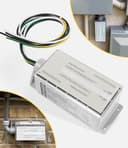
Siemens FS140 whole-home surge protector
Siemens · Panel-mounted
The highest surge-current rating of the three here at 140 kA per phase, in a NEMA 4X enclosure. Mounted at the panel, it protects every circuit in the house -- the EV charger included.
What is good
- 140 kA per phase, the highest rating here
- Three status indicators, including an audible alarm
- NEMA 4X enclosure, rated for outdoor mounting
- Protects every circuit, not just the charger
What is not
- Installation is licensed electrical work
- No surge protector is a guarantee against every event
- Overkill if a lower-rated unit covers your service
| Type | Type 2 surge protective device |
|---|---|
| Surge current | 140 kA per phase |
| Breaker | 30 A or smaller, 2-pole |
| System | 120/240 V, 60 Hz split-phase |
| Status indicators | Audible alarm, protection LED, service LED |
| Enclosure | NEMA 4X, outdoor-rated |
| Warranty | 10 years, as published |
Skip this if: Skip it if you already have a whole-home surge protector at your panel. One is enough; a second adds nothing.
Specifications above are the manufacturer’s published figures. Source: Crosswyre Electric. We have not tested this unit — see how we pick.
2. Longest warranty
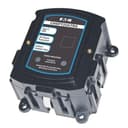
Eaton CHSPT2ULTRA whole-home surge protector
Eaton · Panel-mounted
108 kA per phase, fits any manufacturer's load center, and carries the longest published warranty of the three: lifetime limited, with up to $75,000 of connected-equipment coverage.
What is good
- The longest published warranty here, with connected-equipment coverage
- 108 kA per phase
- Fits any manufacturer's load center
What is not
- Lower surge-current rating than the Siemens FS140
- Installation is licensed electrical work
- No surge protector is a guarantee against every event
| Type | Type 2 surge protective device |
|---|---|
| Surge current | 108 kA per phase |
| Compatibility | Any manufacturer's load center |
| Status indicator | LED |
| Enclosure | NEMA 4 |
| Warranty | Lifetime limited, up to $75,000 connected-equipment coverage |
Skip this if: Skip it if you already have a whole-home surge protector installed at your panel.
Specifications above are the manufacturer’s published figures. Source: Crosswyre Electric. We have not tested this unit — see how we pick.
If you specifically want a Type 1 device
Both picks above are Type 2, which is the right answer for the overwhelming majority of houses: Type 2 mounts on the load side of the main breaker, which is where a residential panel wants it anyway. If your electrician has told you they want a Type 1 unit -- usually because of where the device has to sit relative to the main disconnect -- the part to ask for by name is the Square D HEPD80, rated 80 kA per phase at 120/240 V and listed as SPD type 1.
We do not have a buy link for it, and that is deliberate rather than an oversight. Schneider Electric still lists the HEPD80 as "Stock - Normally stocked in distribution facility" with a list price around the high-$100s, but there is no live Amazon listing for it in any configuration. It is a distributor part, not a retail one. Ask your electrician to add it to their supply-house order; that is both cheaper for you than a marked-up marketplace listing and the route the part is actually sold through.
What we would do
If you have nothing at the panel now, add one when the charger goes in. The Siemens FS140 publishes the highest surge rating here. The Eaton carries the longest published warranty. Either covers an EV circuit perfectly well, and for most houses the choice between them is warranty against headline kA rating.
FAQ
Questions people actually ask
Do I need a surge protector for my EV charger?
Can I plug my EV charger into a surge protector strip?
What happened to the Square D HEPD80 you used to recommend?
What kA rating do I need for a whole-home surge protector?
Sources
Where these numbers come from
- Best whole house surge protectors of 2026 — Crosswyre ElectricType, surge current, enclosure and warranty for the units ranked here, plus the FS140's indicators and breaker size. Fetched 2026-09-10.
Read next
Related reading
- EV charging in a power outageWhy a wall charger stops with the grid, what a battery and a generator really deliver, and the free step that beats both.
- Do EV chargers have built-in surge protection?What the charger makers actually publish about surge protection, and why the protection that matters sits in the panel.
- EV charger warranties, comparedPublished warranty terms side by side, what they typically exclude, and why it matters here.
- Is home EV charging safe?The real risks in home charging, the things that are not risks, and the habits that matter.
- Hiring an electrician for your EV chargerThe questions to ask, what a comparable quote contains, and the red flags.
- EV charger accessories: worth it, or skip itWhich EV accessories earn their place, which are situational, and which to skip.