Protection
Do EV chargers have built-in surge protection?
Mostly no -- and the two that claim it publish no rating. Here is what every charger does protect against, what it does not, and whether that leaves you exposed.
By Sawyer V. · Published October 7, 2026

How this page is funded: we earn a commission if you buy through our Amazon links, at no extra cost to you. It does not change what we recommend, and we say plainly when the honest answer is to buy nothing. Full disclosure.
The verdict first: do not choose a charger for its surge protection, because almost no maker publishes anything you could choose on. Fit a whole-home surge protective device at the panel instead. It publishes a real number, it protects the car as well as the charger, and on new or replaced service work your electrician is required to install one anyway.
What the makers actually publish
We went through the manufacturer text for every charger in this site's product registry. This is what is there -- and more usefully, what is not:
| Charger | Mentions surge protection? | Publishes a rating? |
|---|---|---|
| DEWALT 48 A (DXPAEV048) | Yes, in a list of "over 10 safety features" | No |
| Autel MaxiCharger AC 80A | Yes, "integrated surge protection" | No |
| Emporia Level 2 | Not in the text we hold | No |
| Grizzl-E Classic and Classic Connect | Not in the text we hold | No |
| Grizzl-E Ultimate 80A | Not in the text we hold | No |
| Grizzl-E Mini Connect | Not in the text we hold | No |
| Grizzl-E Duo Connect | Not in the text we hold | No |
| Enphase HCS-80 | Not in the text we hold | No |
| Tesla Wall Connector | Not in the text we hold | No |
Compare that with a device that is actually built for the job. A whole-home surge protective device publishes a surge current rating in kiloamps, a voltage protection rating, an enclosure type and a connected-equipment warranty. The three devices in the picks below publish 140 kA, 108 kA and 80 kA per phase respectively. You cannot put that next to "includes surge protection" and reach a conclusion, because one of the two is a measurement and the other is a sentence.
What your charger definitely does protect against
Surge is the wrong thing to worry about, because the protection chargers do carry is both published and genuinely important:
- Ground-fault protection. Every Level 2 charger includes a charge-circuit interrupting device. Autel publishes 20 mA for its CCID, which is far more sensitive than the 6 mA residential GFCI you may be picturing is designed for -- different jobs, both real. GFCI nuisance tripping covers how this behaves in practice.
- Overcurrent and overvoltage cut-off, which several makers do name, including DEWALT and Autel.
- Overtemperature cut-off, which is why a charger slows or stops rather than melting a connector.
- A ground-continuity check before energizing. This is why a charger refuses to work on an old two-wire dryer outlet that has no separate ground -- correctly. Charging from a dryer outlet covers that case.
- Control-pilot handshaking with the car, so power never reaches the pins until the connector is seated and the car agrees.
Why the panel is the right place
A surge that arrives on the service conductors reaches everything in the house. Protecting one 240-volt appliance and leaving the furnace control board, the heat pump, the range and the car itself unprotected solves a small part of the problem. Fitting the device at the service entrance covers the lot, including the charger you were worried about and the vehicle plugged into it -- which is, by some distance, the most expensive thing on the circuit.
This is also now a code matter rather than a preference. NEC 2020 and later requires a Type 1 or Type 2 surge protective device on all new and replaced dwelling-unit services, under article 230.67. If your EV charger project includes a panel replacement or a service upgrade, your electrician is required to fit one under the adopted code in most states.
Who needs one, and who can reasonably skip it
| Your situation | What to do | Why |
|---|---|---|
| Panel upgrade or new service as part of the charger install | Fit a whole-home SPD -- it is required | NEC 230.67 applies to new and replaced dwelling services |
| Existing panel, overhead service, frequent storms | Fit one. This is the strongest voluntary case. | Overhead conductors are the usual path for an external surge |
| Existing panel, underground service, mild climate | Worth doing, not urgent | Most surges originate inside the house from motor loads |
| Choosing between two chargers on surge claims | Ignore the claims and choose on something measurable | No maker publishes a rating you could compare |
| Renting, cannot touch the panel | A charger with an app that logs faults, and plug-in rather than hardwired | You cannot fit a panel device in someone else's panel |
If you have decided you want one, the whole-home surge protector roundup ranks three devices on their published kA ratings, clamping voltage and enclosure, and explains how to read those numbers. This page exists to answer the question that comes first.
Devices that publish a rating
Panel-mounted surge protective devices with published surge current ratings, which is the specification the chargers do not have. Prices are live from Amazon and carry the date they were read.
1. Highest surge rating
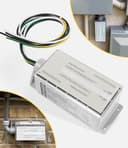
Siemens FS140 whole-home surge protector
Siemens · Panel-mounted
The highest surge-current rating of the three here at 140 kA per phase, in a NEMA 4X enclosure. Mounted at the panel, it protects every circuit in the house -- the EV charger included.
What is good
- 140 kA per phase, the highest rating here
- Three status indicators, including an audible alarm
- NEMA 4X enclosure, rated for outdoor mounting
- Protects every circuit, not just the charger
What is not
- Installation is licensed electrical work
- No surge protector is a guarantee against every event
- Overkill if a lower-rated unit covers your service
| Type | Type 2 surge protective device |
|---|---|
| Surge current | 140 kA per phase |
| Breaker | 30 A or smaller, 2-pole |
| System | 120/240 V, 60 Hz split-phase |
| Status indicators | Audible alarm, protection LED, service LED |
| Enclosure | NEMA 4X, outdoor-rated |
| Warranty | 10 years, as published |
Skip this if: Skip it if you already have a whole-home surge protector at your panel. One is enough; a second adds nothing.
Specifications above are the manufacturer’s published figures. Source: Crosswyre Electric. We have not tested this unit — see how we pick.
2. Type 1 placement
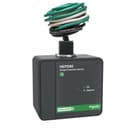
Square D HEPD80 whole-home surge protector
Square D (Schneider Electric) · Panel-mounted
The only Type 1 unit here, so it can be installed on either side of the main disconnect -- including ahead of the main breaker -- which gives your electrician more placement options. 80 kA per phase in a NEMA 4X enclosure.
What is good
- Type 1, so it can go ahead of the main breaker as well as after it
- NEMA 4X, resistant to corrosion and water
- A real step up from no whole-home protection
What is not
- Lowest surge rating of the three at 80 kA per phase
- Shortest published warranty of the three
- Installation is licensed electrical work
| Type | Type 1 surge protective device, UL 1449 3rd Edition |
|---|---|
| Surge current | 80 kA per phase |
| System | 120/240 V single-phase |
| Placement | Either side of the main disconnect |
| Status indicator | Green LED |
| Enclosure | NEMA 4X, indoor or outdoor |
| Warranty | 5 years, $75,000 connected-equipment coverage |
Skip this if: Skip it if you want the highest surge-current rating available. The Siemens FS140 publishes 140 kA per phase.
Specifications above are the manufacturer’s published figures. Source: Crosswyre Electric. We have not tested this unit — see how we pick.
3. Longest warranty
Eaton CHSPT2ULTRA whole-home surge protector
Eaton · Panel-mounted
108 kA per phase, fits any manufacturer's load center, and carries the longest published warranty of the three: lifetime limited, with up to $75,000 of connected-equipment coverage.
What is good
- The longest published warranty here, with connected-equipment coverage
- 108 kA per phase
- Fits any manufacturer's load center
What is not
- Lower surge-current rating than the Siemens FS140
- Installation is licensed electrical work
- No surge protector is a guarantee against every event
| Type | Type 2 surge protective device |
|---|---|
| Surge current | 108 kA per phase |
| Compatibility | Any manufacturer's load center |
| Status indicator | LED |
| Enclosure | NEMA 4 |
| Warranty | Lifetime limited, up to $75,000 connected-equipment coverage |
Skip this if: Skip it if you already have a whole-home surge protector installed at your panel.
Specifications above are the manufacturer’s published figures. Source: Crosswyre Electric. We have not tested this unit — see how we pick.
FAQ
Questions people actually ask
Do EV chargers have built-in surge protection?
Do I need a surge protector for my EV charger?
Is a surge protector required by code for an EV charger?
What protection does an EV charger actually have?
Can I use a plug-in surge strip for an EV charger?
Sources
Where these numbers come from
- WireRef NEC reference: surge protection and service requirements — WireRefNEC 2020 and later makes surge protection mandatory for dwelling units per 230.67, for all new and replaced dwelling-unit services. Read 2026-10-07.
- DEWALT Electric Vehicle (EV) 240V Level 2 Charger up to 48 Amps, DXPAEV048 — DEWALTClaims "over 10 technologically advanced safety features including overvoltage, overcurrent, overheat, overcharge and surge protection". No surge rating, clamping voltage or kA figure is published. Read 2026-10-05.
- Autel MaxiCharger AC 80A specifications — Autel EnergyProtection row lists "Overcurrent, overvoltage, undervoltage, integrated surge protection" alongside 20 mA CCID ground-fault detection. No surge rating, clamping voltage or kA figure is published. Read 2026-10-01.
- Whole-house surge protector specifications and NEC 230.67 — Crosswyre ElectricPublished surge current ratings for the panel devices this site stocks: Siemens FS140 140 kA per phase, Eaton CHSPT2ULTRA 108 kA per phase, Square D HEPD80 80 kA per phase and Type 1 under UL 1449 3rd Edition. Also states that NEC 2020 article 230.67 requires a Type 1 or Type 2 surge protective device for all new and replaced dwelling unit services. Read via the product records.
Read next
Related reading
- The best surge protector for an EV chargerWhole-home surge protectors that cover the charger and the car, with the ratings explained.
- Why your EV charger keeps tripping the GFCI breakerWhy GFCI breakers trip on EV chargers and the safe sequence for diagnosing it.
- Do you need a panel upgrade for an EV charger?When a panel upgrade is genuinely needed, what it costs, and the cheaper alternatives.
- Is home EV charging safe?The real risks in home charging, the things that are not risks, and the habits that matter.
- Hiring an electrician for your EV chargerThe questions to ask, what a comparable quote contains, and the red flags.