Wiring methods
Romex vs conduit for an EV charger
Two ways to get 50 amps across your garage. One is cheaper and faster; the other is required in more places than people expect.
By Sawyer V. · Published September 27, 2026
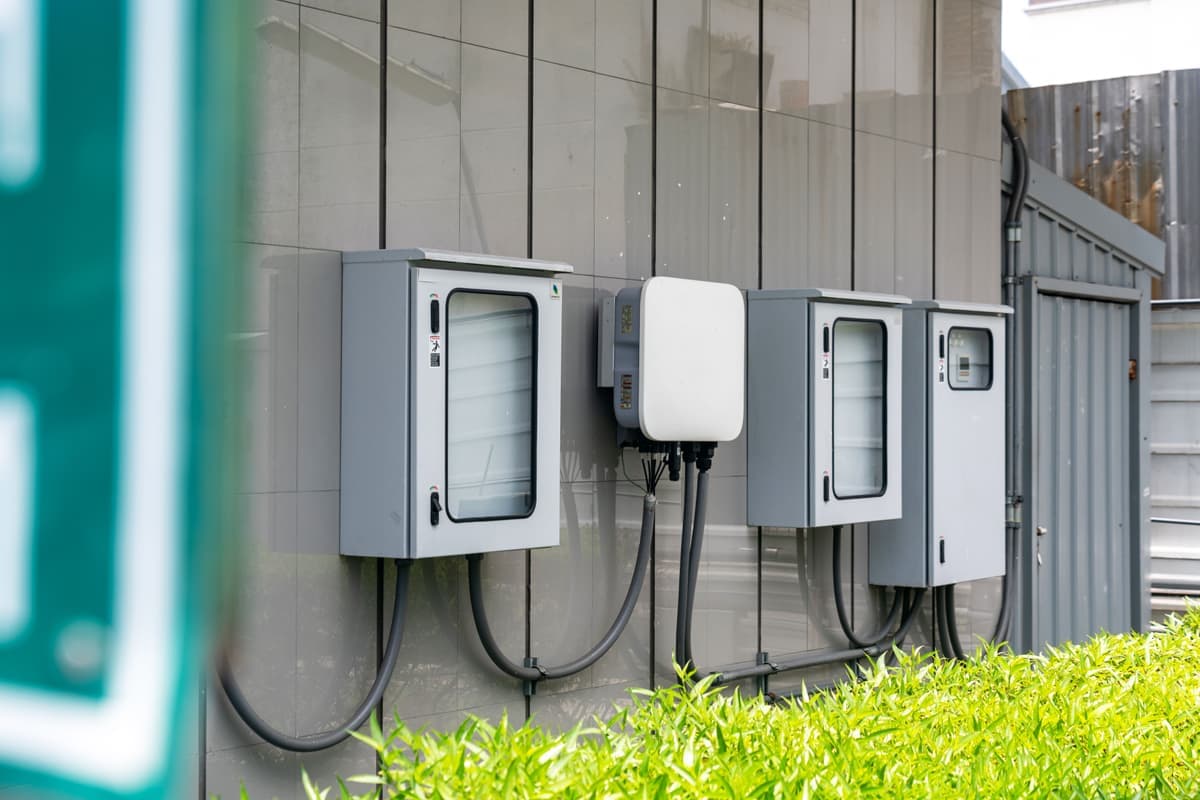
This question usually arrives attached to a price difference between two quotes. One electrician has priced cable stapled through the framing; the other has priced conduit down the garage wall. Neither is cutting corners -- they are reading different requirements for the same run.
Where each one belongs
| Run | Usually |
|---|---|
| Inside finished walls, dry | Cable (NM-B) |
| Exposed on a garage wall | Conduit, where damage is a concern |
| Outdoors, any exposed length | Conduit -- PVC is standard for wet locations |
| Underground to a detached garage | Conduit, buried to the required depth |
| An unfinished basement ceiling | Either, depending on exposure and local rules |
| A city that restricts cable | Conduit, whatever the run looks like |
Cost, honestly
The published material figures are roughly $0.30 to $0.80 per foot for NM-B cable against $1.50 to $4.00 per foot for conduit with individual conductors pulled through it. Labor moves the same way: conduit has to be cut, bent, secured and then wired.
On a 60 ft run, materials only
Cable at $0.30-0.80/ft: roughly $18 to $48
Conduit at $1.50-4.00/ft: roughly $90 to $240
Add fittings, boxes and more labor hours for conduit
On a short indoor run the gap is small; on a long outdoor run it is the quote
Those are material ranges, not quotes, and they are the reason conduit turns up on outdoor jobs and cable turns up inside walls. Where an EV circuit is concerned, the run length usually matters more than the method: voltage drop and conductor material both move the number too.
What conduit buys beyond compliance
- Upgradeability. New conductors can be pulled later -- worth real money if you might go from 40 A to 48 A.
- Physical protection in a garage where things lean against walls.
- A tidy exposed run, which matters on a finished wall.
- Future circuits through the same path, if you size the conduit for it. Roughing in for a new build.
What does not change
- The breaker. A 40 A charger is a 50 A circuit either way.
- Conductor size. Set by current and distance, not by the method.
- Charging speed. Identical.
- The permit. Both are ordinary methods; neither avoids inspection. Permits.
The conduit types you will hear named
| Type | Where it is used |
|---|---|
| EMT | The common indoor conduit, including exposed garage walls |
| PVC | The standard for underground and wet locations |
| RMC | Rigid metal, where the strongest physical protection is wanted |
For an EV circuit the common pattern is simple: cable inside the walls to the garage, and conduit for anything exposed, outdoors or buried. A detached garage nearly always means PVC in a trench. Detached garages.
What to ask when two quotes differ
- Which method are you quoting, and why that one? The answer should describe the route, not a preference.
- Is any part of this run outdoors, buried or exposed? That is usually what forces conduit.
- Does our jurisdiction restrict cable? Some cities do, and a local electrician knows immediately.
- If conduit, what size? One step larger than the minimum is cheap now and valuable later.
- Does the price difference reflect material, labor or both? It is usually both, and the split tells you what is really going on.
One question worth asking if conduit is quoted for a long run: size it one step larger than the minimum. The material cost is small, and it is the difference between pulling a heavier circuit later and digging the trench again.
FAQ
Questions people actually ask
Can I use Romex for an EV charger?
Is conduit more expensive?
Does the wiring method affect charging speed?
Which is better for a detached garage?
Sources
Where these numbers come from
- Romex vs conduit — WireRefWhere conduit is required (wet locations, exposed runs where physical damage is a concern, underground), which conduit type suits which location, and published material cost ranges of $0.30-0.80 per ft for NM-B cable against $1.50-4.00 per ft for conduit. Read 2026-09-27.
- NEC Article 625: EV charging equipment — WireRef625.41 continuous load rated at 125%, 625.42 dedicated branch circuit and the energy-management exception allowing multiple chargers to share one circuit, 625.54 GFCI protection. Read 2026-09-27.
- Charging Electric Vehicles at Home — U.S. Department of Energy, Alternative Fuels Data CenterInstallations must comply with local and state codes and permits may be required; an electrician can say whether a home has the capacity; outdoor installation and use are safe with outdoor-rated equipment. Read 2026-09-27.
Read next
Related reading
- What size breaker and wire does an EV charger need?Breaker and wire size for every charger amperage, with the 125% rule worked through.
- Aluminum vs copper wire for an EV chargerPublished ampacities side by side, why aluminum goes up a size, and what has to be checked.
- Installing an EV charger outdoorsEnclosure ratings, weatherproof receptacles, mounting and the extra cost of an outdoor install.
- Installing an EV charger in a detached garageTrenching, subpanels and existing feeds: what drives the cost of a detached-garage install.