Condos & HOAs
The best EV chargers for a condo
You own your unit, maybe your parking space, but not the wall or the wiring behind it. The charger is the easy part; the HOA conversation is the project.
By Sawyer V. · Published September 10, 2026
How this page is funded: we earn a commission if you buy through our Amazon links, at no extra cost to you. It does not change what we recommend, and we say plainly when the honest answer is to buy nothing. Full disclosure.
A condo sits between a house and an apartment. Unlike a renter, you have standing to ask for a charger and often the right to pay for one. Unlike a homeowner, the wall, the conduit and the electrical service belong to the association. So the order of operations is different: the HOA first, the charger second.
Condo picks
Ranked for a first home charger. Every row jumps to the full write-up below.
| # | Product | Best for | Max output | Price |
|---|---|---|---|---|
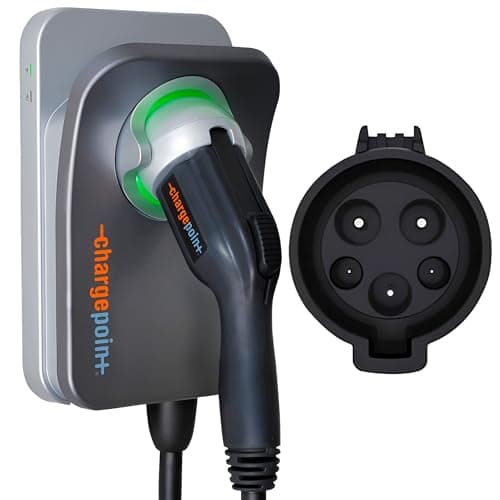
| 1 |  ChargePoint Home FlexHomes with an uncertain panel. J1772, 23 ft cable. ChargePoint Home FlexHomes with an uncertain panel. J1772, 23 ft cable. | Homes with an uncertain panel | 50 A12 kW | $549.00 · View on Amazon#ad how we are funded · price as of October 27, 2026 |
| 2 |  Grizzl-E ClassicHarsh weather and no app. J1772, 24 ft cable. Grizzl-E ClassicHarsh weather and no app. J1772, 24 ft cable. | Harsh weather and no app | 40 A9.6 kW | $299.99 · View on Amazon#ad how we are funded · price as of October 27, 2026 |
| 3 | J+ Booster 2The best portable overall. J1772, 25 ft cable. | The best portable overall | 40 A9.6 kW | Check price on Amazon#ad how we are funded |
What an HOA typically wants to know
- Who pays for the installation, and who owns the equipment afterward.
- How electricity is measured and paid for -- your own meter, a building meter, or a flat fee.
- Where the circuit comes from -- your unit's panel, or the building's common panel -- and whether the building has capacity.
- Insurance and liability, and who maintains the equipment.
Having answers ready makes approval far more likely. Offering to pay for the installation removes the most common objection, since it is a permanent improvement to association property.
Why adjustable matters in a building
A building's electrician may allocate a limited amount of capacity to each space, especially as more residents add chargers. An adjustable unit installs at whatever figure you are given and can be raised later if capacity is added. The ChargePoint Home Flex publishes six settings from 16 A to 50 A for exactly this. Load management is the building-scale version of the same idea.
Metering and billing
Consumer home chargers report energy use, but they are not certified revenue-grade meters. If your HOA wants to bill you precisely per kWh, that is a question about a separate meter, not about which charger you buy. If they will settle on a flat amount or bill from your own unit's meter, a charger's energy reporting is plenty to size that number -- the same point we make on the rental property page.
If a wall unit is not approved
If you can get a 240-volt receptacle at your space but not a permanent fixture -- or you might sell soon -- a portable Level 2 charger plugged into that receptacle gives you the same speed with nothing permanently attached. Portable vs wall-mounted.
The condo picks in detail
An adjustable wall unit, a no-app wall unit, and a portable for when a fixture is not approved. Each ends with the case against it.
1. Homes with an uncertain panel
ChargePoint Home Flex
ChargePoint · J1772 · 50 A / 12 kW · 23 ft cable
The most adjustable unit here. It can be set anywhere from 16 A to 50 A, which makes it the one to buy when you do not yet know what your panel will allow.
What is good
- Six selectable amperage settings from 16 A to 50 A
- Sold in both hardwired and NEMA 14-50 versions
- Rated for indoor or outdoor installation
- The app is mature and does not require a subscription
What is not
- 23 ft is a foot shorter than the longest cables in this group
- The 50 A setting needs a bigger circuit than most panels have spare
| Maximum output | 50 A / 12 kW at 240 V |
|---|---|
| Amperage settings | 16, 24, 32, 40, 48 or 50 A |
| Connector | SAE J1772 |
| Cable | 23 ft |
| Installation | Hardwired or NEMA 14-50 |
| Certification | UL listed, Energy Star |
| Warranty | 3 years |
Skip this if: Skip it if your circuit is already fixed and you just want the cheapest safe 40 A unit. You are paying for flexibility you will not use.
Specifications above are the manufacturer’s published figures. Source: ChargePoint, ChargePoint. We have not tested this unit — see how we pick.
2. Harsh weather and no app
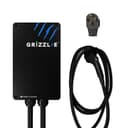
Grizzl-E Classic
United Chargers · J1772 · 40 A / 9.6 kW · 24 ft cable
A cast-aluminum box with no app, no account and no firmware to update. If you want a charger that behaves like an appliance, this is the one.
What is good
- Cast aluminum NEMA 4 / IP67 enclosure, built for outdoor mounting
- No app, no account, no network dependency
- Amperage is set with physical switches, not software
- Protections for over-current, over-voltage, ground fault and over-temperature
What is not
- 40 A ceiling, slower than the 48 A units if your panel can take more
- No scheduling, so off-peak charging has to be set in the car
- The cold-flexible 24 ft cable is only on the Extreme Edition
| Maximum output | 40 A / 9.6 kW at 240 V |
|---|---|
| Adjustable | 16, 24, 32 or 40 A |
| Connector | SAE J1772 |
| Cable | 24 ft on the Extreme Edition |
| Enclosure | Cast aluminum, NEMA 4 / IP67 |
| Certification | UL certified |
| Warranty | 3 years |
Skip this if: Skip it if you want scheduled charging or energy tracking in an app. The Classic deliberately has neither.
Specifications above are the manufacturer’s published figures. Source: United Chargers, InsideEVs. We have not tested this unit — see how we pick.
3. The best portable overall
J+ Booster 2
J+ Americas · J1772 · 40 A / 9.6 kW · 25 ft cable
A 40 A portable in a military-grade aluminum body, ETL certified to UL standards and IP67 rated, weighing 2.2 lb without cables. The portable that behaves like a wall unit.
What is good
- 40 A, matching many wall-mounted units
- Eight amperage settings from 6 A to 40 A, so it fits almost any outlet
- Adapters for a wide range of outlets, including NEMA TT-30 for campgrounds
- IP67 and drive-over resistant, which portables usually are not
- 2.2 lb without cables, so it genuinely travels
What is not
- Costs more than most portables, and more than some wall units
- Every extra outlet adapter is a separate purchase
- Still a portable, so it is not rated for permanent outdoor mounting
| Maximum output | 40 A / 9.6 kW at 240 V |
|---|---|
| Adjustable | 6, 8, 12, 16, 20, 24, 32 or 40 A |
| Power range | 1.4 kW to 9.6 kW |
| Connector | SAE J1772 |
| Cable | 21 ft or 25 ft, depending on version |
| Adapters included | NEMA 14-50 and 5-15 |
| Further adapters available | 5-20, 6-15, 6-20, 6-50, TT-30 |
| Weight | 2.2 lb without cables; 7 lb with cables and adapters |
| Body | Military-grade aluminum, drive-over resistant to 6,600 lb wheel loads |
| Rating | IP67 waterproof and dustproof |
| Certification | ETL certified to UL standards |
Skip this if: Skip it if you only ever charge in one place. A hardwired wall unit is cheaper for a fixed installation.
Specifications above are the manufacturer’s published figures. Source: J+ Americas. We have not tested this unit — see how we pick.
What we would do
Get the HOA's answer on capacity and metering first. Then the ChargePoint Home Flex if capacity is limited or uncertain, the Grizzl-E if you want the simplest possible unit in a shared space, or the J+ Booster 2 if only a receptacle is approved. Renting rather than owning? Charging in an apartment is written for you.
FAQ
Questions people actually ask
Can I install an EV charger in my condo parking space?
What is the best EV charger for a condo?
How do condos bill residents for EV charging?
Sources
Where these numbers come from
- ChargePoint Home Flex specifications and ordering information — ChargePoint
- Grizzl-E Classic product specifications — United Chargers
- Portable Level 2 EV charger 40A (UL) -- J+ Booster 2 — J+ AmericasCurrent settings, adapters, weight, IP rating and certification.
- State Laws and Incentives — US Department of Energy, Alternative Fuels Data CenterIndex of state laws and incentives, by state. Fetched 2026-09-10.
- Electric Vehicle (EV) Charger Policies for Multifamily Housing (California) — US Department of Energy, Alternative Fuels Data CenterCommon interest developments may not prohibit EV chargers in an owner's designated space; reasonable restrictions allowed. Fetched 2026-09-10.
- EV Charging Station and NGV Policies for Condominiums (Florida) — US Department of Energy, Alternative Fuels Data CenterCondominium associations may not prohibit EV chargers in an owner's designated space; reasonable restrictions allowed. Fetched 2026-09-10.
Read next
Related reading
- Charging at 208 voltsWhy building power is often 208 V, the 13% speed difference that follows, and why the breaker and wire do not change.
- Charging an EV when you live in an apartmentThe realistic options for apartment EV charging, ranked by how well they actually work.
- Load management: charging without a panel upgradeHow load management avoids a panel upgrade, what it costs in speed, and when to use it.
- The best EV charger for a rental propertyChargers for a property guests will use: durability, simple operation and access control.
- ChargePoint Home Flex16 to 50 A adjustable, 23 ft cable, UL listed and Energy Star. The pick when your panel is a question mark.
- The best EV chargers for rentersChargers that leave with you when the lease ends, and what to ask your landlord first.