Ownership
How long does an EV charger last?
A home charger is a simple machine with one moving part and one thing that wears: the cable you handle every day. Here is what fails, what is covered, and what to check.
By Sawyer V. · Published September 23, 2026
How this page is funded: we earn a commission if you buy through our Amazon links, at no extra cost to you. It does not change what we recommend, and we say plainly when the honest answer is to buy nothing. Full disclosure.
There is no odometer on a wall charger, so nobody can give you an honest average lifespan, and this page will not invent one. What can be said is which parts are under stress, what the makers are prepared to warrant, and what you can do in five minutes a month to keep the thing healthy.
What the warranties say
| Charger | Warranty |
|---|---|
| Emporia Classic | 3 years |
| Grizzl-E Classic Connect | 3 years, with a 5-year warranty sold separately |
| Grizzl-E Classic | 3 years |
| Wallbox Pulsar Plus | 3 years |
| Autel MaxiCharger AC Home | 3 years |
| Tesla Wall Connector (Gen 3) | 4 years |
Read a warranty as a statement of confidence rather than a prediction. Three years is the class standard, and the units that publish more are telling you something -- as is a maker that sells you an extension.
What actually wears out
The cable and the connector
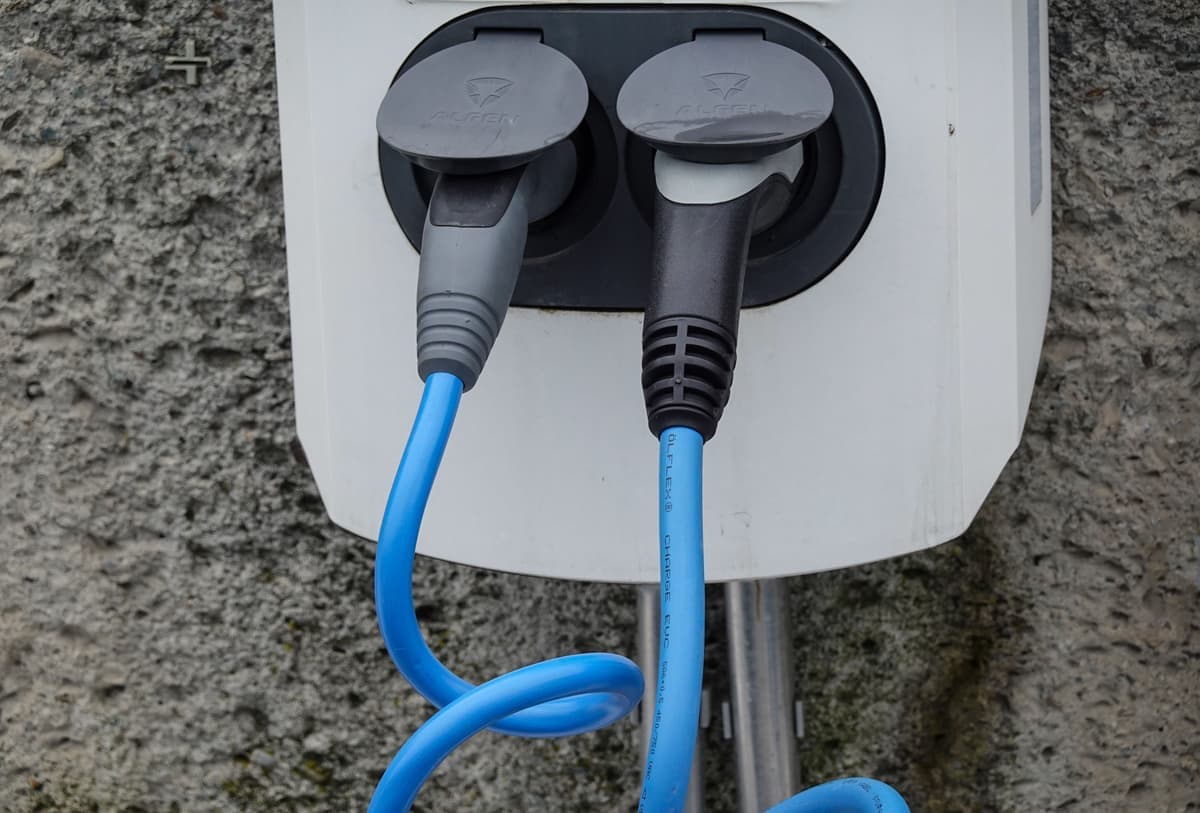
This is the part you pull, bend, drop and drive over. Cold makes cheap cable stiff, which makes handling rougher, which shortens its life. The connector's latch and pins take a cycle every single day. Nothing else on the charger gets that treatment.
The contactor
Inside the box is a relay that closes when charging starts and opens when it ends. It is rated for a very large number of cycles, but it is the one moving part. A charger that clicks and then does nothing is often a contactor story, and it is a warranty conversation rather than a home repair.
Water and heat
Outdoors, the enclosure is doing real work. The Department of Energy is clear that outdoor installation and use are safe -- including charging in the rain -- provided the equipment is outdoor-rated. A unit rated NEMA Type 4 or IP66 on a shaded wall will long outlast an indoor-rated box that someone mounted outside anyway. Outdoor installation covers doing it properly.
The software, if it has any
This is the modern failure mode. A charger tied to an app depends on the maker keeping the app and its servers alive. A charger with no network connection has nothing to withdraw. It is a genuine argument for a no-app charger, and a genuine argument for buying connected units from companies likely to still be here.
The five-minute maintenance routine
- Look at the cable along its length for cuts, flat spots or crushing. A driven-over cable is the most common damage there is.
- Look into the connector for debris, corrosion or a bent pin, and check the latch springs back.
- Hang it up. Every day it lives on the floor is a day it can be run over or soak in a puddle.
- Check the enclosure seals if it is outdoors: cover closed, gasket intact, conduit entry sealed, no pooling below it.
- Watch one charge start, occasionally. A unit that hesitates, clicks repeatedly or trips the breaker is telling you something early.
Repair, warranty or replace
- Under warranty: stop and call the maker. Opening the case yourself usually ends the coverage.
- Out of warranty, cable damaged: on most home units the cable is not a user-replaceable part, which pushes you toward replacement.
- Out of warranty, dead unit: compare the repair quote with a new charger. The install is already done, so replacement is often cheaper than it sounds.
- Still working but the app is gone: if it charges, it charges. Schedule in the car instead. Charging at night.
One more thing worth knowing when you replace: ENERGY STAR certified chargers are tested by a nationally recognized laboratory and draw less power when they are sitting idle, which is most hours of most days.
Units with the strongest published terms
A three-year warranty is the class standard. These three publish the terms quoted above.
1. A first charger, hardwired
Emporia Level 2 EV Charger (Classic)
Emporia · J1772 · 48 A / 11.5 kW · 24 ft cable
The safe default for a first home charger: 48 amps hardwired, a genuinely long cable, a NEMA 4 outdoor-rated case, and no subscription attached to the app.
What is good
- 48 A hardwired is the fastest tier most homes can realistically support
- 24 ft of cable reaches across a two-car garage without a fight
- NEMA Type 4 enclosure is rated for outdoor mounting
- Energy monitoring in the app with no subscription
What is not
- Drops to 40 A if you use the NEMA 14-50 plug rather than hardwiring
- The app is the only way to change the amperage setting
| Maximum output | 48 A / 11.5 kW at 240 V (hardwired) |
|---|---|
| Plug-in output | 40 A with the NEMA 14-50 plug |
| Connector | SAE J1772 |
| Cable | 24 ft |
| Enclosure | NEMA Type 4, indoor or outdoor |
| Certification | UL listed, Energy Star |
| Warranty | 3 years |
Skip this if: Skip it if you want a unit with no app or network connection at all. The Grizzl-E Classic is the simpler machine.
Specifications above are the manufacturer’s published figures. Source: Emporia Energy. We have not tested this unit — see how we pick.
2. Grizzl-E toughness, with an app
Grizzl-E Classic Connect
United Chargers · J1772 · 40 A / 9.6 kW · 25 ft cable
The next-generation Grizzl-E: 40 A on a NEMA 14-50, a 25 ft cable, a UL Type 4 indoor/outdoor rating -- and, unlike the Classic, Wi-Fi and the Grizzl-E Connect app. Sold with a J1772 or NACS cable.
What is good
- 25 ft cable, a foot longer than the Classic Extreme Edition's
- Wi-Fi app with schedules and charging statistics, which the Classic deliberately lacks
- UL/cUL listed, with a published file number
- Rated to run from -22 F to 122 F
What is not
- 40 A ceiling, with no hardwired 48 A version
- Sold with a NEMA 14-50 plug; the Classic's 6-50 option is not among the Connect listings we found
- The app needs 2.4 GHz Wi-Fi where the charger is mounted
| Maximum output | 40 A / 9.6 kW at 240 V (the maker lists 10 kW) |
|---|---|
| Adjustable | 16 A to 40 A |
| Connector | SAE J1772 or NACS, chosen at purchase |
| Cable | 25 ft (7.6 m) |
| Plug | NEMA 14-50 |
| Enclosure rating | UL Type 4, indoor and outdoor |
| Operating temperature | -22 F to 122 F |
| Size | 10.25 x 6.25 x 3.75 in |
| Connectivity | Wi-Fi (2.4 GHz) and the Grizzl-E Connect app |
| Certification | UL/cUL, file E510712 |
| Warranty | 3 years; 5-year warranty sold separately |
Skip this if: Skip it if you wanted a Grizzl-E precisely because it has no app -- the original Classic is still the no-software choice -- or if you want 48 A. The Classic Connect is a 40 A plug-in unit.
Specifications above are the manufacturer’s published figures. Source: United Chargers. We have not tested this unit — see how we pick.
3. Tesla owners
Tesla Wall Connector (Gen 3)
Tesla · NACS · 48 A / 11.5 kW · 24 ft cable
48 A, a 24 ft cable and a four-year warranty, the longest in this group. The catch is the connector: Gen 3 is NACS, so a J1772 car needs an adapter.
What is good
- Four-year warranty, longer than the three-year standard here
- Up to six units can share one circuit for a two-EV household
- Wi-Fi with over-the-air firmware updates
- Scheduled departure and charge stats live in the Tesla app
What is not
- NACS connector, so a J1772 car needs an adapter on every charge
- Hardwired only
| Maximum output | 48 A / 11.5 kW at 240 V |
|---|---|
| Connector | NACS (Tesla) |
| Cable | 24 ft |
| Installation | Hardwired |
| Power sharing | Up to six units can be linked |
| Warranty | 4 years |
Skip this if: Skip it if you drive a J1772 car and do not want to keep an adapter on the cable. Buy a J1772 unit instead.
Specifications above are the manufacturer’s published figures. Source: Tesla, Tesla. We have not tested this unit — see how we pick.
FAQ
Questions people actually ask
How long do home EV chargers last?
Do EV chargers need maintenance?
Can I leave my charger outside all winter?
Does using a charger every day wear it out faster?
Sources
Where these numbers come from
- Emporia Level 2 EV Charger product specifications — Emporia EnergyOutput, connector, cable length, enclosure rating and warranty for the Emporia Classic.
- Grizzl-E Classic Connect 40A — United ChargersOutput, 25 ft cable, UL Type 4 rating, Wi-Fi and app, UL/cUL file number and warranty.
- Wall Connector support page — TeslaOutput, cable length, power sharing and warranty for the Gen 3 Wall Connector.
- Charging Electric Vehicles at Home — U.S. Department of Energy, Alternative Fuels Data CenterOutdoor installation and use are safe with outdoor-rated equipment; EV charging is a continuous load; smart units add timers and monitoring. Read 2026-09-23.
- ENERGY STAR certified electric vehicle chargers — U.S. EPA, ENERGY STARCertified chargers are tested by a nationally recognized testing laboratory and use less energy when idle. Read 2026-09-23.
Read next
Related reading
- EV charger warranties, comparedPublished warranty terms side by side, what they typically exclude, and why it matters here.
- Your EV charger is not working: what to checkThe six usual causes of a charge that will not start, in the order worth checking them.
- Is home EV charging safe?The real risks in home charging, the things that are not risks, and the habits that matter.
- The best UL listed EV chargersChargers with a genuine, checkable safety listing, and how to read the wording.