Head to head
Tesla Universal Wall Connector vs ChargePoint Home Flex
This pairing is really one question with two halves: do you need both connectors on the wall, and do you need to choose your amperage? Each charger says yes to one of them.
By Sawyer V. · Published October 17, 2026
How this page is funded: we earn a commission if you buy through our Amazon links, at no extra cost to you. It does not change what we recommend, and we say plainly when the honest answer is to buy nothing. Full disclosure.
The verdict: buy the Universal Wall Connector only if a Tesla and a non-Tesla share the garage and you want one charger with no adapter to store. Everything else favors the Home Flex -- it is adjustable, it can be plugged in or hardwired, it carries an ENERGY STAR listing, and it costs meaningfully less. If your household is all Tesla, neither of these is the right buy: the NACS-only Wall Connector is cheaper than the Universal, and if your household is all J1772, the Universal's whole premium is wasted.
The question people are really asking
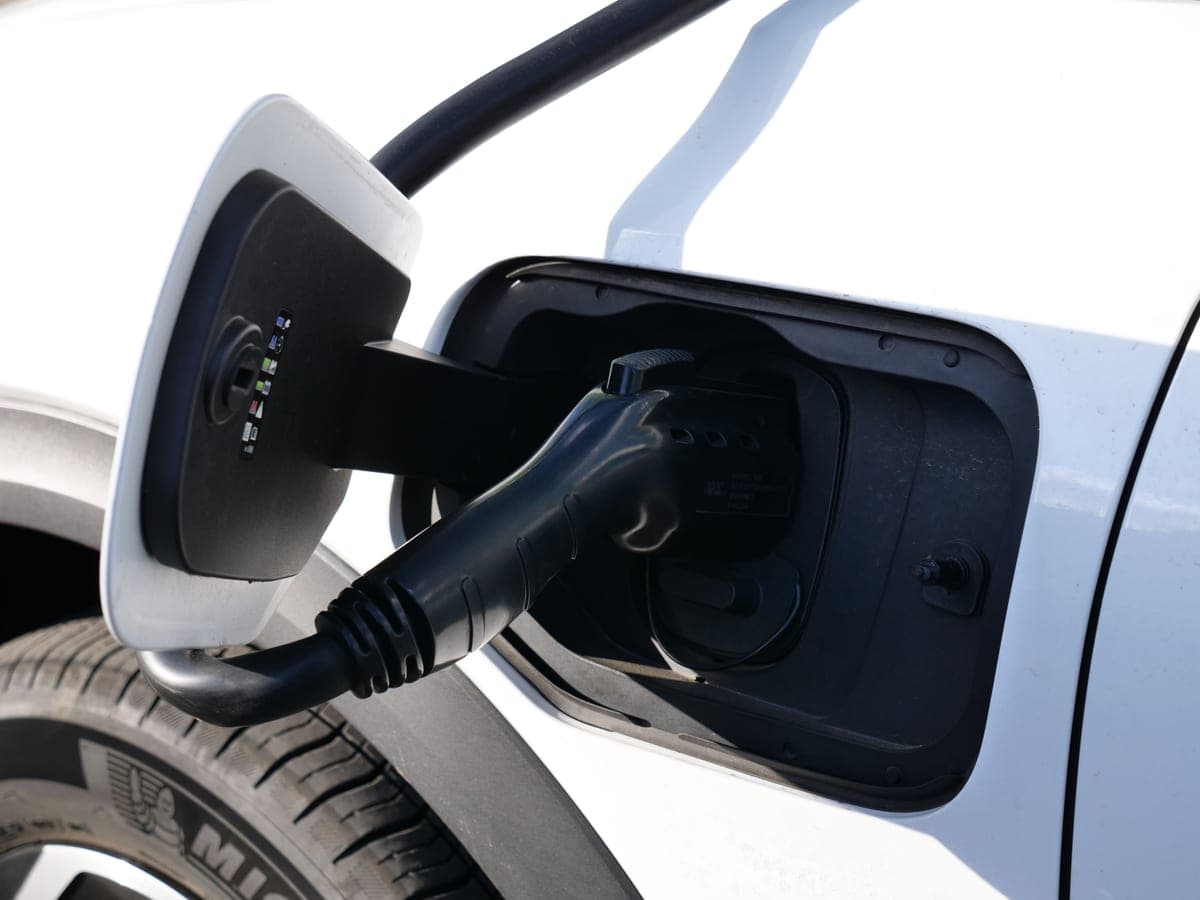
Four of the six suggestions Google offers for this comparison are variations on "can a Tesla wall connector charge other cars". The answer has two parts. A NACS-only Wall Connector can charge a J1772 car only with a NACS-to-J1772 adapter, which is a separate part you buy, store and lose. The Universal Wall Connector has that adapter integrated into the holster, which is the entire reason it exists and the entire reason it costs more.
The reverse question has a simpler answer. A J1772 charger like the Home Flex charges a Tesla using the adapter that came with the car -- the Department of Energy notes that all Tesla vehicles ship with one. That is why a plain J1772 charger has always been the more versatile buy for a mixed household, and why the Universal's advantage is convenience rather than capability. Best J1772 adapter covers the loose parts in both directions; adapters covers which ones you already own.
Side by side
| Tesla Universal Wall Connector | ChargePoint Home Flex | |
|---|---|---|
| Maximum output | 48 A / 11.5 kW at 240 V | 50 A / 12 kW at 240 V |
| Amperage settings | Not published | 16, 24, 32, 40, 48 or 50 A |
| Circuit required | 60 A | 60 A at 50 A output |
| Connector | NACS with an integrated J1772 adapter | SAE J1772 |
| Cable | 24 ft | 23 ft |
| Installation | Hardwired only | Hardwired or NEMA 14-50 |
| Enclosure | Rated for indoor and outdoor use | Rated for indoor and outdoor use |
| Certification | Listed to applicable UL standards | UL listed, ENERGY STAR |
| Warranty | 4 years | 3 years |
Adjustability is the Home Flex's real argument
The Home Flex publishes six amperage settings from 16 to 50 amps, which makes it the charger to buy when you do not yet know what your panel will allow -- or when you know it will allow less than you would like. Buy it, have the electrician install whatever circuit is sensible, and set the charger to match. The Universal publishes no settings range, so plan on it running at its rated 48 amps on a 60-amp circuit.
A charger draws its rated current continuously, so the breaker is 125% of it: 40 A needs 50 A, 48 A needs 60 A, 50 A needs a 60 A breaker too. Breaker and wire size.
How to set your EV charger's amps has the 80% rule and every charger's published range; how many amps do you need decides the target before you buy.
Install: the hardwire-only tax
Hardwired-only is a real constraint, not a detail. It rules out taking the charger with you when you move, it rules out using a NEMA 14-50 that is already on the wall, and under the 2026 National Electrical Code it means a disconnecting means is required, where a plug-in install can use the attachment plug as its disconnect. EV charger disconnect requirements covers the code language; taking your EV charger with you covers the moving case.
The counter-argument for hardwiring is real too: no plug and receptacle means one fewer connection to heat up, and 48 amps instead of the 40 a NEMA 14-50 caps you at. Hardwired vs plug-in argues both sides properly.
Speed, settled
| Vehicle | Universal, 11.5 kW | Home Flex, 12.0 kW |
|---|---|---|
| Cadillac Lyriq, 37 kWh/100 mi | about 31 mi/h | about 32 mi/h |
| GMC Sierra EV, 50 kWh/100 mi | about 23 mi/h | about 24 mi/h |
| GMC Hummer EV, 70 kWh/100 mi | about 16 mi/h | about 17 mi/h |
Which to buy
| Your situation | Buy |
|---|---|
| A Tesla and a non-Tesla, one charger, no loose adapter | Tesla Universal Wall Connector |
| You do not yet know your circuit size | ChargePoint Home Flex |
| There is already a NEMA 14-50 on the wall | ChargePoint Home Flex, plug-in version |
| You may move and want to take it | ChargePoint Home Flex, plug-in version |
| All the cars are Teslas | Neither; the NACS-only Wall Connector is cheaper |
| All the cars are J1772 | Home Flex, or anything in the 48-amp roundup |
| You want the longest warranty | Tesla Universal Wall Connector, at 4 years |
Both units, with live prices
The Home Flex first, because it is the better buy for more households. Live Amazon prices with the date they were read.
1. A two-car, two-connector garage
Tesla Universal Wall Connector
Tesla · J1772 + NACS · 48 A / 11.5 kW · 24 ft cable
The Wall Connector with a J1772 adapter built into the holster, so it charges a Tesla and a non-Tesla without anything loose to lose.
What is good
- Charges NACS and J1772 cars without a separate adapter to store
- Same 48 A output and four-year warranty as the Gen 3
- The adapter docks in the holster, so it cannot walk off
What is not
- Costs more than the NACS-only Gen 3
- Hardwired only
| Maximum output | 48 A / 11.5 kW at 240 V |
|---|---|
| Connector | NACS with an integrated J1772 adapter |
| Cable | 24 ft |
| Installation | Hardwired |
| Warranty | 4 years |
Skip this if: Skip it if both cars use the same connector. You are paying for an adapter you do not need.
Specifications above are the manufacturer’s published figures. Source: Tesla. We have not tested this unit — see how we pick.
2. Homes with an uncertain panel
ChargePoint Home Flex
ChargePoint · J1772 · 50 A / 12 kW · 23 ft cable
The most adjustable unit here. It can be set anywhere from 16 A to 50 A, which makes it the one to buy when you do not yet know what your panel will allow.
What is good
- Six selectable amperage settings from 16 A to 50 A
- Sold in both hardwired and NEMA 14-50 versions
- Rated for indoor or outdoor installation
- The app is mature and does not require a subscription
What is not
- 23 ft is a foot shorter than the longest cables in this group
- The 50 A setting needs a bigger circuit than most panels have spare
| Maximum output | 50 A / 12 kW at 240 V |
|---|---|
| Amperage settings | 16, 24, 32, 40, 48 or 50 A |
| Connector | SAE J1772 |
| Cable | 23 ft |
| Installation | Hardwired or NEMA 14-50 |
| Certification | UL listed, Energy Star |
| Warranty | 3 years |
Skip this if: Skip it if your circuit is already fixed and you just want the cheapest safe 40 A unit. You are paying for flexibility you will not use.
Specifications above are the manufacturer’s published figures. Source: ChargePoint, ChargePoint. We have not tested this unit — see how we pick.
FAQ
Questions people actually ask
Can a Tesla Wall Connector charge other cars?
Can a ChargePoint Home Flex charge a Tesla?
Which is faster, the Universal Wall Connector or the Home Flex?
Can either charger be plugged in instead of hardwired?
Is the Universal Wall Connector worth the extra money?
Which one is more adjustable?
Sources
Where these numbers come from
- Wall Connector support page — TeslaUniversal Wall Connector: 48 A / 11.5 kW at 240 V, NACS connector with an integrated J1772 adapter in the holster, 24 ft cable, hardwired, rated for indoor and outdoor use, listed to applicable UL standards, 4-year limited warranty.
- ChargePoint Home Flex specifications and ordering information — ChargePointMaximum 50 A / 12 kW at 240 V with amperage settings of 16, 24, 32, 40, 48 and 50 A, SAE J1772, 23 ft cable, UL listed and ENERGY STAR certified, 3-year limited warranty.
- ChargePoint Home Flex installation FAQ — ChargePointPublished installation options: hardwired and NEMA 14-50 plug-in versions.
- Electric Vehicle Charging Stations: AC Level 2 equipment — U.S. Department of Energy, Alternative Fuels Data CenterAC Level 2 adds roughly 25 miles of range per hour of charging and runs from 240 V residential or 208 V commercial service. All Tesla vehicles come with a J1772 adapter, which allows them to use non-Tesla Level 2 charging equipment. Cars sold with a native J3400 (NACS) port use that connector for all charging levels. Read 2026-10-17.
- Fuel economy of 2026 Cadillac and GMC vehicles — U.S. EPA and U.S. Department of Energy, fueleconomy.govPublished consumption ratings used in the range arithmetic here: Cadillac Lyriq 37 kWh/100 mi, GMC Sierra EV 50 kWh/100 mi, GMC Hummer EV 70 kWh/100 mi (2025). Read 2026-10-11.
- NEC Article 625: EV Charging Equipment — WireRefEV charging is a continuous load, so the branch circuit is sized at 125% of the charger's rated current -- a 48 A charger requires a 60 A circuit. Each EVSE requires a dedicated branch circuit unless an approved energy management system controls the load. Read 2026-10-17.
Read next
Related reading
- Tesla Wall Connector vs Universal Wall ConnectorTesla's two wall units: NACS-only against a built-in J1772 adapter and Powershare support.
- ChargePoint Home Flex vs Tesla Wall ConnectorSix amperage settings and J1772 against 48 A and NACS: which suits your car and your panel.
- Tesla Universal Wall Connector vs Emporia Pro48 A from both. The Universal solves two connectors in one garage; the Pro solves a panel with no room left.
- The best J1772 adaptersWhich J1772 adapter direction you need, which came free with the car, and the safety rules.
- Hardwired or plug-in: which EV charger install is right?NEMA 14-50 or hardwired: amperage limits, cost, portability and what inspectors prefer.