By vehicle
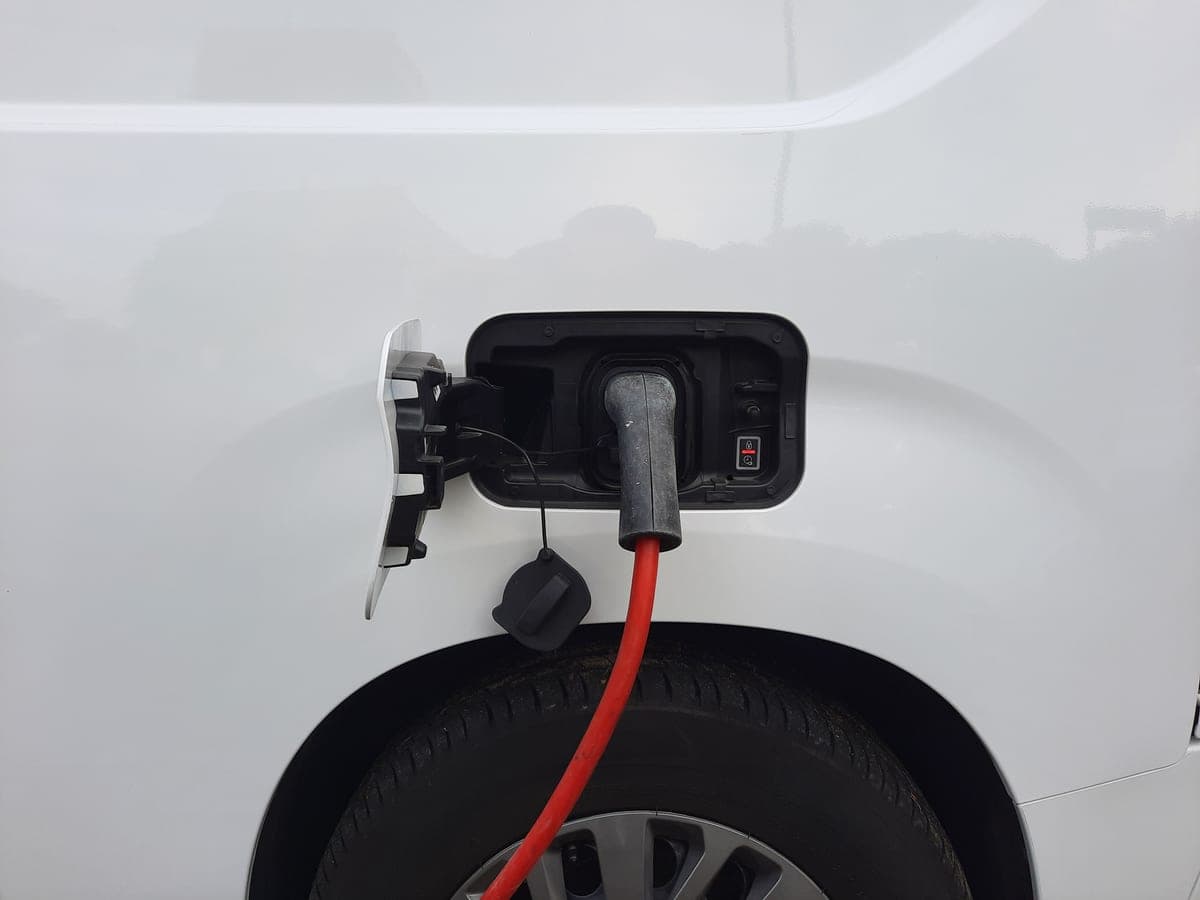
Home charging a Jeep 4xe
This is the rare EV page that tells you to spend less. A 4xe's battery is small and its onboard charger is modest, so the fast, expensive charger everyone recommends for an electric truck does nothing here.
By Sawyer V. · Published October 29, 2026
How this page is funded: we earn a commission if you buy through our Amazon links, at no extra cost to you. It does not change what we recommend, and we say plainly when the honest answer is to buy nothing. Full disclosure.
The verdict: buy a basic 40-amp Level 2 charger, have it put on a 50-amp circuit, and stop reading reviews. For a 4xe the difference between an entry-level charger and a top-of-the-range one is nothing at all, because both spend the night waiting on the car. If you have a dryer outlet where you park, use that instead and spend nothing on wiring. And if you park in a garage overnight and drive a normal commute, try the cord that came with the car for a fortnight before you buy anything -- on this battery the arithmetic says an overnight park is enough, and two weeks will tell you whether that holds for your driving.
The two 4xe models, by the EPA's figures
| Wrangler 4dr 4xe | Grand Cherokee 4xe | |
|---|---|---|
| Time to charge at 240 V | 2.4 hours | 3.4 hours |
| Electric-only range | 22 miles (all-electric 0-21) | 26 miles (all-electric 0-25) |
| Consumption on electricity | 68 kWh/100 mi | 58 kWh/100 mi |
| Combined MPGe | 49 MPGe | 56 MPGe |
| Gas-only economy | 20 MPG | 23 MPG |
| Total range | 370 miles | 470 miles |
| Electric motor | 100 kW AC induction | 100 kW AC induction |
Why a big charger is wasted money here
Work the arithmetic from the EPA's own numbers and the answer falls out. Electric range multiplied by consumption gives the energy the battery actually holds, and energy divided by the published charge time gives the rate the car accepts:
What a 4xe can actually take
Wrangler 4xe: 22 mi x 0.68 kWh/mi = about 15 kWh. 15 kWh / 2.4 h = about 6.2 kW.
Grand Cherokee 4xe: 26 mi x 0.58 kWh/mi = about 15 kWh. 15 kWh / 3.4 h = about 4.4 kW.
6.2 kW at 240 V is about 26 amps. 4.4 kW is about 18 amps.
A 48 A charger offers 11.5 kW. The car takes what it takes and the rest sits unused.
Those last two lines are the whole page. A charger offers power; the car's onboard charger decides how much of it to accept, and on a 4xe that ceiling is somewhere in the twenties of amps. Buying 48 amps for this car is like buying a wider driveway to make the car accelerate. How long to charge at home explains the general version of this, and 32A vs 40A vs 48A is the tier decision for cars where it does matter.
Try the cord first
This advice gets given to electric-car buyers and almost never lands, because 15 hours on a 120-volt outlet is not a plan for a 70 kWh battery. On a 4xe it is different, because the battery is about 15 kWh:
The 120-volt option
About 15 kWh of usable energy on either model.
A standard 120 V cordset draws roughly 1.4 kW at 12 A.
15 kWh / 1.4 kW = about 11 hours for a full charge from empty.
Parked from 7 pm to 7 am is 12 hours.
Eleven hours is a long night but it is a real one. Do not over-read it, though: a 20-mile day costs about 14 kWh on a Wrangler, which is most of the battery and close to ten hours on the cord, and about 12 kWh on a Grand Cherokee, which is nearer eight. Level 1 genuinely works for a 4xe, with little margin left over. The Department of Energy's general figure for Level 1 is about 5 miles of range per hour, which lines up. Level 1 chargers covers what the supplied cordset will and will not do, and the honest test is free: plug in for two weeks and see whether you ever start a morning short.
Two conditions, though. The outlet must be a proper grounded receptacle on a circuit that is not carrying much else -- never an extension cord or a power strip, which is a genuine fire risk rather than an inconvenience (why). And if you have a second car to charge, or you drive the electric range twice in a day, Level 1 stops being enough quickly.
The dryer-circuit route
If Level 1 is too slow and a new circuit feels like overkill, a 30-amp dryer outlet sits exactly in between -- and for this car it is not a compromise at all. A 30-amp circuit allows 24 amps of continuous draw, which is already at or above what a 4xe accepts, so a dryer circuit delivers the car's full charging rate.
That makes the 4xe one of the few vehicles where the dryer outlet is a complete answer rather than a stopgap. The mechanics matter, though: sharing the circuit needs a switch rather than a double adapter, and a plain 14-30 to 14-50 plug adapter is the one shortcut to avoid. NEMA 14-30 vs 14-50 lays out the decision and charging from a dryer outlet is the full how-to.
If you do install a charger
- Buy on price and build quality, not amperage. Any unit rated 32 A or more covers this car completely. Spend the difference on a better enclosure or a longer cable instead.
- A 40 A charger wants a 50 A circuit, because an EV is a continuous load and the breaker is 125% of the charger's rating. That is the normal, inexpensive install.
- Check the cable reaches with the Jeep parked the way you actually park it, not measured in a straight line. This is the most-regretted spec in the category.
- An outdoor enclosure rating matters if the charger goes on an exterior wall -- look for a published NEMA Type 4 rather than a vague weatherproof claim.
- Skip the features you are buying for a car you do not own. Load management, 19.2 kW output and access control are all solving problems a 4xe does not have.
The circuit follows the charger's rating, not the car: 40 A needs 50 A, 32 A needs 40 A, 24 A needs 30 A. Breaker and wire size has the table, and how to set your EV charger's amps covers turning a charger down if your panel is tight.
What the electric miles are worth
It is worth charging even though the range is short, and the EPA quantifies it on the Grand Cherokee 4xe: about 8.7 cents per mile for the first 26 miles on a full battery, against about 18.3 cents per mile once the battery is empty and the car runs as an ordinary hybrid. That is roughly half price for the first 26 miles of every day, which for a commuter is most of the driving.
It also means the thing that matters is charging OFTEN rather than charging FAST. A 4xe that gets plugged in every night captures nearly all of the saving available to it on any charger at all; a 4xe with an expensive charger that gets plugged in twice a week does not. Cost to charge at home shows the method with your own electricity rate, and time-of-use charging covers scheduling it into the cheap window.
The connector, briefly
A 4xe charges on AC through a J1772 inlet, which is the same connector the Department of Energy describes for both Level 1 and Level 2 equipment, so the supplied cordset and any ordinary Level 2 charger use the same port. The EPA publishes only a 240-volt charge time for these models and no DC fast-charging figure; this page makes no claim either way about DC, because home charging is the subject and nothing we can read settles it. Plug types explained covers the connector landscape, and plug-in hybrids is the general version of this page for other PHEVs.
What to buy for a 4xe
A short list on purpose. Two chargers that cover this car completely, and the accessory everybody forgets. Live Amazon prices with the date they were read.
1. Harsh weather and no app
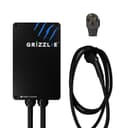
Grizzl-E Classic
United Chargers · J1772 · 40 A / 9.6 kW · 24 ft cable
A cast-aluminum box with no app, no account and no firmware to update. If you want a charger that behaves like an appliance, this is the one.
What is good
- Cast aluminum NEMA 4 / IP67 enclosure, built for outdoor mounting
- No app, no account, no network dependency
- Amperage is set with physical switches, not software
- Protections for over-current, over-voltage, ground fault and over-temperature
What is not
- 40 A ceiling, slower than the 48 A units if your panel can take more
- No scheduling, so off-peak charging has to be set in the car
- The cold-flexible 24 ft cable is only on the Extreme Edition
| Maximum output | 40 A / 9.6 kW at 240 V |
|---|---|
| Adjustable | 16, 24, 32 or 40 A |
| Connector | SAE J1772 |
| Cable | 24 ft on the Extreme Edition |
| Enclosure | Cast aluminum, NEMA 4 / IP67 |
| Certification | UL certified |
| Warranty | 3 years |
Skip this if: Skip it if you want scheduled charging or energy tracking in an app. The Classic deliberately has neither.
Specifications above are the manufacturer’s published figures. Source: United Chargers, InsideEVs. We have not tested this unit — see how we pick.
2. Grizzl-E toughness, with an app
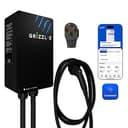
Grizzl-E Classic Connect
United Chargers · J1772 · 40 A / 9.6 kW · 25 ft cable
The next-generation Grizzl-E: 40 A on a NEMA 14-50, a 25 ft cable, a UL Type 4 indoor/outdoor rating -- and, unlike the Classic, Wi-Fi and the Grizzl-E Connect app. Sold with a J1772 or NACS cable.
What is good
- 25 ft cable, a foot longer than the Classic Extreme Edition's
- Wi-Fi app with schedules and charging statistics, which the Classic deliberately lacks
- UL/cUL listed, with a published file number
- Rated to run from -22 F to 122 F
What is not
- 40 A ceiling, with no hardwired 48 A version
- Sold with a NEMA 14-50 plug; the Classic's 6-50 option is not among the Connect listings we found
- The app needs 2.4 GHz Wi-Fi where the charger is mounted
| Maximum output | 40 A / 9.6 kW at 240 V (the maker lists 10 kW) |
|---|---|
| Adjustable | 16 A to 40 A |
| Connector | SAE J1772 or NACS, chosen at purchase |
| Cable | 25 ft (7.6 m) |
| Plug | NEMA 14-50 |
| Enclosure rating | UL Type 4, indoor and outdoor |
| Operating temperature | -22 F to 122 F |
| Size | 10.25 x 6.25 x 3.75 in |
| Connectivity | Wi-Fi (2.4 GHz) and the Grizzl-E Connect app |
| Certification | UL/cUL, file E510712 |
| Warranty | 3 years; 5-year warranty sold separately |
Skip this if: Skip it if you wanted a Grizzl-E precisely because it has no app -- the original Classic is still the no-software choice -- or if you want 48 A. The Classic Connect is a 40 A plug-in unit.
Specifications above are the manufacturer’s published figures. Source: United Chargers. We have not tested this unit — see how we pick.
3. J1772 connectors
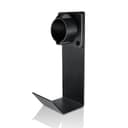
Lectron J1772 holster dock and J-hook
Lectron · J1772
A steel dock that latches a J1772 connector and a hook for the cable, rated by Lectron for indoor and outdoor use. Fits all J1772 connectors.
What is good
- Anti-corrosive steel rather than plastic
- Latches the connector so it stays put
- Hook keeps the cable off the ground
What is not
- J1772 only
- No holder for a portable's control box -- see the holder set
- Check your charger does not already have a holster
| Fits | All J1772 connectors |
|---|---|
| Material | Anti-corrosive steel |
| Use | Indoor or outdoor |
| In the box | Dock and J-hook, with mounting hardware |
Skip this if: Skip it if your connector is a Tesla (NACS) -- this dock is shaped for J1772.
Specifications above are the manufacturer’s published figures. Source: Lectron. We have not tested this unit — see how we pick.
FAQ
Questions people actually ask
What charger do I need for a Jeep Wrangler 4xe?
How long does a Jeep 4xe take to charge?
Can I charge a Jeep 4xe on a normal household outlet?
Is a 48-amp charger worth it for a 4xe?
Can I use my dryer outlet to charge a Jeep 4xe?
Is it worth charging a plug-in hybrid at all?
Does Jeep publish the 4xe's onboard charger rating?
Sources
Where these numbers come from
- 2026 Jeep Wrangler 4dr 4xe: fuel economy and charging — U.S. EPA and U.S. Department of Energy, fueleconomy.gov2.0 L 4-cylinder turbo, 8-speed automatic, plug-in hybrid. Combined 49 MPGe on electricity and 20 MPG on gas only. 68 kWh/100 mi. 22 miles on Elec + Gas; All Elec 0-21 mi; 370 miles total range. Electric Motor/Battery: 100 kW AC Induction. Time to Charge Battery: 2.4 hrs at 240V. "This vehicle did not use any gasoline for the first 22 miles in EPA tests. It may use gasoline depending on how you drive." Read 2026-10-29.
- 2026 Jeep Grand Cherokee 4xe: fuel economy and charging — U.S. EPA and U.S. Department of Energy, fueleconomy.gov2.0 L 4-cylinder turbo, 8-speed automatic, plug-in hybrid. Combined 56 MPGe on electricity and 23 MPG on gas only. 58 kWh/100 mi. 26 miles on Elec + Gas; All Elec 0-25 mi; 470 miles total range. Electric Motor/Battery: 100 kW AC Induction. Time to Charge Battery: 3.4 hrs at 240V. "When fully charged, you will pay about 8.7 cents per mile for the first 26 miles you drive ($2.26 for the electricity and $.00 for the gasoline). After the first 26 miles, the vehicle will function like a regular hybrid and consume only gasoline, costing about 18.3 cents/mile." Read 2026-10-29.
- Electric Vehicle Charging Stations: AC Level 1 and Level 2 equipment — U.S. Department of Energy, Alternative Fuels Data CenterAC Level 1 provides charging through a 120 V AC plug and adds approximately 5 miles of range per hour, assuming 1.9 kW; most EVs come with a portable Level 1 cordset. AC Level 2 offers charging through 240 V (typical in residential applications) or 208 V (typical in commercial applications), adds roughly 25 miles of range per hour, and uses the same J1772 connector as Level 1. Read 2026-10-17.
- NEC Article 625: EV Charging Equipment — WireRefEV charging is a continuous load, so the branch circuit is sized at 125% of the charger's rated current -- a 48 A charger requires a 60 A circuit. Each EVSE requires a dedicated branch circuit unless an approved energy management system controls the load. Read 2026-10-17.
- Grizzl-E Classic — United Chargers40 A / 9.6 kW at 240 V with adjustable settings of 16, 24, 32 or 40 A, SAE J1772, cast aluminum NEMA 4 / IP67 enclosure, NEMA 14-50 plug (also sold with NEMA 6-50), UL certified, no app and no network dependency, amperage set with physical switches, 3-year warranty.
- Grizzl-E Classic Connect — United Chargers40 A / 9.6 kW with adjustable current from 16 A to 40 A, J1772 or NACS chosen at purchase, 25 ft cable, NEMA 14-50 plug, UL Type 4 indoor and outdoor, -22 F to 122 F, Wi-Fi 2.4 GHz with the Grizzl-E Connect app, UL/cUL file E510712, 3-year warranty.
- Lectron EV charger nozzle holster dock and J-hook for J1772 — LectronWall-mounted J1772 connector holster dock with a cable J-hook, anti-corrosive steel, for indoor or outdoor mounting.
Read next
Related reading
- Do you need a Level 2 charger for a plug-in hybrid?Why most plug-in hybrids do not need a Level 2 charger, and the exceptions.
- NEMA 14-30 vs NEMA 14-5024 amps from the dryer outlet against 40 from a dedicated 50-amp circuit, converted into miles per night -- and why a plain 14-30 to 14-50 adapter is not safe.
- Level 1 charging: when the cable in your trunk is enoughHow fast Level 1 really is, and the math on whether it covers your daily driving.
- The cheapest home EV charger that is still a good ideaThe cheapest Level 2 chargers that are still properly certified, and the corners not to cut.
- Charging an EV from a dryer outletWhat a 30 A dryer circuit allows, why 24 A is the ceiling, and which listed splitters do it safely.