Head to head
NEMA 14-30 vs NEMA 14-50
One of these is already on your laundry-room wall and costs nothing. The other needs an electrician and gives you two thirds more charging. Here is how to decide, and the shortcut that is genuinely dangerous.
By Sawyer V. · Published October 26, 2026
How this page is funded: we earn a commission if you buy through our Amazon links, at no extra cost to you. It does not change what we recommend, and we say plainly when the honest answer is to buy nothing. Full disclosure.
The verdict: if there is a four-prong 14-30 dryer outlet where you park, use it first. It costs nothing, it is already on a correctly sized circuit, and 24 amps replaces around 50 kWh overnight -- more than a typical commute burns in three days. Pay for a dedicated 14-50 circuit when you can name the reason: a second EV, a big truck, a short dwell time at home, or a laundry room on the wrong side of the house. What you should not do is bridge the gap with a plug adapter, which is the single most-searched version of this question and the one answer that can start a fire.
The only number that really differs
Both receptacles are 240-volt, four-wire, grounded outlets. They differ in one way that matters: the circuit behind them. A 14-30 sits on a 30-amp breaker, a 14-50 on a 50-amp breaker, and an EV charger is a continuous load -- it pulls its full rated current for hours at a stretch -- so code sizes the circuit at 125% of the charger's rating. Read backwards, the charger gets 80% of the breaker.
What each outlet is allowed to give a charger
30 A breaker x 0.8 = 24 A continuous. 24 A x 240 V = 5.76 kW.
50 A breaker x 0.8 = 40 A continuous. 40 A x 240 V = 9.6 kW.
Difference: 1.67x the power, for one electrician visit.
Over a nine-hour night: about 52 kWh against about 86 kWh.
| NEMA 14-30 | NEMA 14-50 | |
|---|---|---|
| Breaker | 30 A | 50 A |
| Charging current allowed | 24 A | 40 A |
| Power at 240 V | 5.76 kW | 9.6 kW |
| Usually already in the house | Yes -- it is the dryer outlet | No, unless a range or RV hookup is nearby |
| Cost to add | Nothing, if one exists | An electrician visit, priced mostly by distance |
| Shares with an appliance | Yes, with a switch | No -- it is a dedicated circuit |
| Charger plug that fits | 14-30, or a 14-50 charger through a current-limiting switch | 14-50, which is what nearly every plug-in charger ships with |
What the difference buys you, in miles
Kilowatts are abstract. The number that decides this is how many miles each outlet puts back while you sleep, which depends on your car. Using the EPA's published consumption figures across an efficient SUV, a mainstream SUV and an electric truck:
| Vehicle | 14-30 (24 A, 5.8 kW) | 14-50 (40 A, 9.6 kW) |
|---|---|---|
| BMW iX3, 29 kWh/100 mi | about 20 mi/h -- 179 mi overnight | about 33 mi/h -- 298 mi overnight |
| Cadillac Lyriq, 37 kWh/100 mi | about 16 mi/h -- 140 mi overnight | about 26 mi/h -- 234 mi overnight |
| GMC Sierra EV, 50 kWh/100 mi | about 12 mi/h -- 104 mi overnight | about 19 mi/h -- 173 mi overnight |
Read the 14-30 column before you book anyone. A hundred and forty miles overnight, every night, covers the large majority of American driving with room to spare. The case for the 14-50 is not that the 14-30 is slow; it is that the 14-50 has headroom for the days you arrive empty and leave early. How long to charge at home lets you run your own numbers.
The adapter question, which is where people get hurt
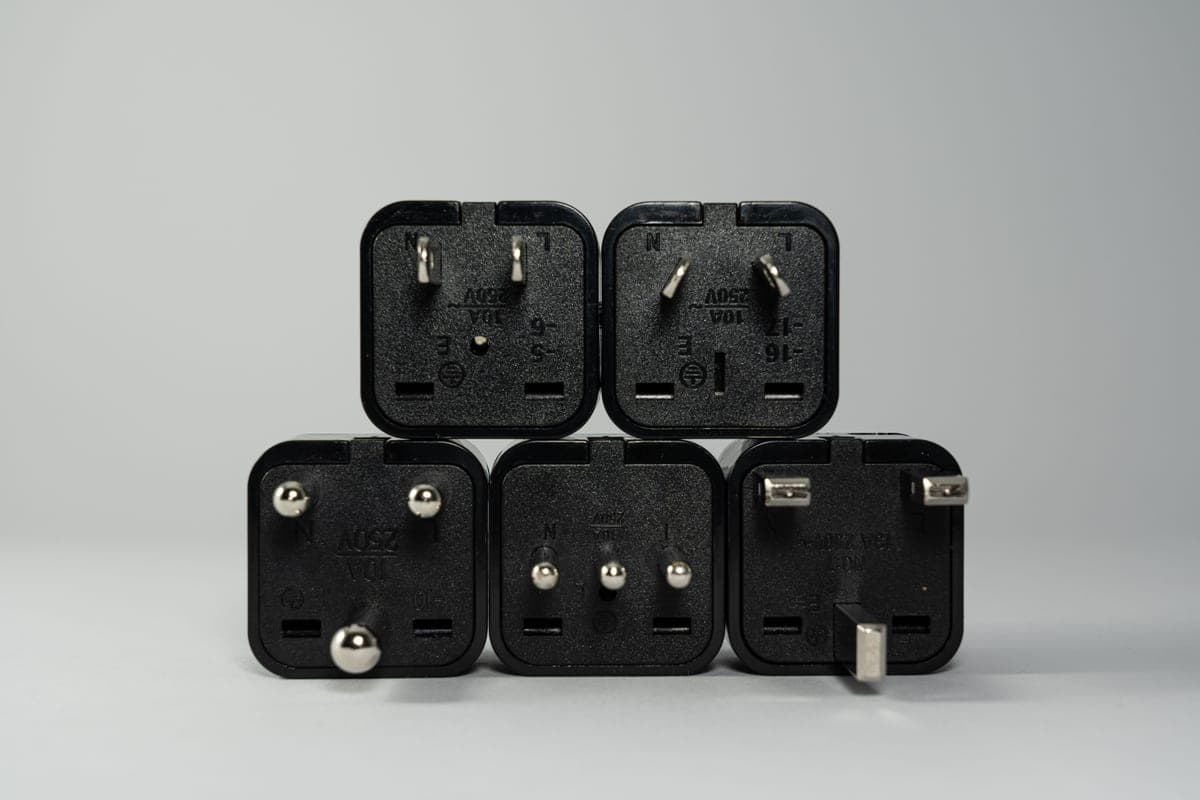
A large share of the searches that land on this comparison are looking for a 14-30 to 14-50 adapter, and often for one at a big-box store. The appeal is obvious: nearly every plug-in charger ships with a 14-50 plug, and the dryer outlet is a 14-30. A twelve-dollar pigtail appears to solve it.
It does not, and the reason is worth understanding rather than memorizing. A plug is also a declaration. When a charger sees a NEMA 14-50 socket it is entitled to assume a 50-amp circuit behind it and to offer 40 amps to the car. A dumb adapter changes the socket shape and tells the charger nothing. The charger asks for 40 amps, the 30-amp breaker is handed a 33% overload, and what happens next is either a nuisance trip or -- if the breaker is old, or the connection is loose, or the run is long -- heat in a wall you cannot see. This is the same reasoning that rules out household extension cords for charging: why.
The second route is simply to set the charger down. Any charger with a published 24-amp setting can be told to draw 24 amps and then plugged into the dryer circuit through the correct plug. That is a correct installation rather than a workaround. How to set your EV charger's amps lists every charger's published range and where the control lives.
Your charger has to cooperate
This is the part that catches people who buy the charger first. A unit with a fixed 40-amp output has no business on a 30-amp circuit under any arrangement, and plenty of popular chargers are exactly that. What you want for a dryer-circuit install is a published low setting:
- ChargePoint Home Flex publishes six settings -- 16, 24, 32, 40, 48 and 50 A. The 24 A step is the dryer-circuit setting, and the same unit goes to 40 A later if you add the bigger circuit. That dual-purpose quality is the real argument for it here.
- Grizzl-E Classic Connect publishes 16 A to 40 A with a NEMA 14-50 plug, so it suits either circuit -- turned down for the dryer outlet now, turned up if you upgrade.
- Anything fixed at 40 A or 48 A is a 14-50 purchase, full stop. Do not buy one expecting to run it on a dryer circuit.
A charger draws its rated current continuously, so the breaker is 125% of it -- which read the other way means the charger may use 80% of the breaker. A 30 A circuit gives 24 A; a 50 A circuit gives 40 A. Breaker and wire size.
The dryer still wants its outlet
Unless your laundry room has a spare 14-30, using the dryer outlet means sharing it, and sharing means a switch rather than a double adapter -- two 240-volt appliances must never be able to draw at once from one 30-amp circuit. The code position is stricter still: an EV charger wants a dedicated branch circuit unless an approved energy management system is controlling the load, which is what a switching device amounts to. Charging from a dryer outlet is the full how-to, best dryer outlet splitter ranks the switches, and does an EV charger need its own circuit covers the code question properly.
When to pay for the 14-50
- Two EVs, or one plus a plug-in hybrid. 24 amps shared across two cars stops being enough quickly, and a dedicated circuit is the first step toward handling both.
- An electric truck or a large SUV. At 50 kWh/100 mi a dryer circuit returns about 104 miles a night; that is a real constraint rather than a theoretical one.
- Short dwell time. If the car is home for six hours rather than twelve, the gap between 5.8 kW and 9.6 kW is the gap between leaving full and leaving adequate.
- The laundry room is in the wrong place. If the dryer outlet is nowhere near where you park, you are paying for a circuit either way -- so pay for the better one.
- You are already having electrical work done. Adding the circuit during a panel upgrade or a remodel costs a fraction of calling someone out for it alone.
What it costs is dominated by the run from your panel, not by the parts. What it costs to install a NEMA 14-50 outlet breaks the quote down, and electrical panel load calculation tells you first whether your service can even carry another 50-amp circuit. If it cannot, load management is the cheaper answer than a service upgrade: load management explained.
One thing not to economize on if you do go ahead: the receptacle. An EV circuit runs near its limit for hours every night, and the part that fails is a builder-grade 14-50 whose contacts heat and char. Best NEMA 14-50 outlet explains what actually fails and ranks the industrial-grade parts; if the outlet will live outdoors it also needs an extra-duty while-in-use cover, which is its own page.
Which to choose
| Your situation | The answer |
|---|---|
| A 14-30 dryer outlet where you park, one commuter car | Use the 14-30, with a switch and an adjustable charger |
| No 240 V outlet anywhere near the car | Install a 14-50; you are paying for a circuit either way |
| Two EVs | 14-50, and read the load-management page |
| Electric truck or a long daily drive | 14-50 -- 104 miles a night is the constraint |
| Charger already bought, fixed at 40 or 48 A | 14-50. That charger cannot use a dryer circuit |
| Renting, and reluctant to pay for wiring | Use the 14-30; it leaves the house exactly as you found it |
| Panel has no spare capacity for 50 A | Stay on the 14-30, or look at load management |
What to buy for either route
The switch that makes a dryer outlet safe for a 14-50 charger, two chargers whose published settings suit both circuits, and the receptacle for an upgrade. Live Amazon prices with the date they were read.
1. A 14-30 dryer outlet and a charger with a 14-50 plug
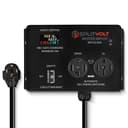
Splitvolt Splitter Switch (NEMA 14-30 to 14-50)
Splitvolt · NEMA 14-50 · 24 A / 5.8 kW
The one most people need: it plugs into a four-prong 14-30 dryer outlet and gives the charger a NEMA 14-50 socket, which is the plug nearly every plug-in EV charger ships with. Still 24 A, because the dryer circuit is still 30 A.
What is good
- A 14-50 EV socket, which is the plug most plug-in chargers already have
- Fits the four-prong 14-30 dryer outlet modern circuits use
- Automated switching, full-color metering display and an easy-reset 24 A breaker
- cETLus listed with the Intertek file number published
- No new circuit, so no panel upgrade
What is not
- A 14-50 socket that still only delivers 24 A -- the outlet looks faster than it is
- The dryer and the charger take turns; they cannot run together
- Indoor use only
- 1-year warranty
| Rating | 240 V ~ 60 Hz, 24 A AC maximum load |
|---|---|
| Wall plug | NEMA 14-30 male, on a 4 ft pigtail |
| Dryer socket | NEMA 14-30 female |
| EV socket | NEMA 14-50 female |
| Switching | Automated between the dryer and EV sockets |
| Display | Full-color screen: real-time kWh, amps, volts and status |
| Protection | Integrated 24 A circuit breaker with easy reset |
| Manual override | Optional manual power-off switch |
| Circuit | Standard 30 A dryer circuits; 24 A max for the NEC safe charging rate |
| Mounting | Integrated wall-mount screw holes |
| Use | Indoor use only |
| Size and weight | 12 x 8.5 x 4 in, 6.7 lb |
| Certification | cETLus, Intertek 5021938, UL 60730-1 / CSA E60730-1 |
| Warranty | 1 year limited |
| SKU | SPS-C2-032-30A |
Skip this if: Skip it if your dryer outlet is the older three-prong 10-30, or if your panel has room for a dedicated circuit -- a real 14-50 circuit charges at 40 A instead of 24 A.
Specifications above are the manufacturer’s published figures. Source: Splitvolt. We have not tested this unit — see how we pick.
2. Homes with an uncertain panel
ChargePoint Home Flex
ChargePoint · J1772 · 50 A / 12 kW · 23 ft cable
The most adjustable unit here. It can be set anywhere from 16 A to 50 A, which makes it the one to buy when you do not yet know what your panel will allow.
What is good
- Six selectable amperage settings from 16 A to 50 A
- Sold in both hardwired and NEMA 14-50 versions
- Rated for indoor or outdoor installation
- The app is mature and does not require a subscription
What is not
- 23 ft is a foot shorter than the longest cables in this group
- The 50 A setting needs a bigger circuit than most panels have spare
| Maximum output | 50 A / 12 kW at 240 V |
|---|---|
| Amperage settings | 16, 24, 32, 40, 48 or 50 A |
| Connector | SAE J1772 |
| Cable | 23 ft |
| Installation | Hardwired or NEMA 14-50 |
| Certification | UL listed, Energy Star |
| Warranty | 3 years |
Skip this if: Skip it if your circuit is already fixed and you just want the cheapest safe 40 A unit. You are paying for flexibility you will not use.
Specifications above are the manufacturer’s published figures. Source: ChargePoint, ChargePoint. We have not tested this unit — see how we pick.
3. Grizzl-E toughness, with an app
Grizzl-E Classic Connect
United Chargers · J1772 · 40 A / 9.6 kW · 25 ft cable
The next-generation Grizzl-E: 40 A on a NEMA 14-50, a 25 ft cable, a UL Type 4 indoor/outdoor rating -- and, unlike the Classic, Wi-Fi and the Grizzl-E Connect app. Sold with a J1772 or NACS cable.
What is good
- 25 ft cable, a foot longer than the Classic Extreme Edition's
- Wi-Fi app with schedules and charging statistics, which the Classic deliberately lacks
- UL/cUL listed, with a published file number
- Rated to run from -22 F to 122 F
What is not
- 40 A ceiling, with no hardwired 48 A version
- Sold with a NEMA 14-50 plug; the Classic's 6-50 option is not among the Connect listings we found
- The app needs 2.4 GHz Wi-Fi where the charger is mounted
| Maximum output | 40 A / 9.6 kW at 240 V (the maker lists 10 kW) |
|---|---|
| Adjustable | 16 A to 40 A |
| Connector | SAE J1772 or NACS, chosen at purchase |
| Cable | 25 ft (7.6 m) |
| Plug | NEMA 14-50 |
| Enclosure rating | UL Type 4, indoor and outdoor |
| Operating temperature | -22 F to 122 F |
| Size | 10.25 x 6.25 x 3.75 in |
| Connectivity | Wi-Fi (2.4 GHz) and the Grizzl-E Connect app |
| Certification | UL/cUL, file E510712 |
| Warranty | 3 years; 5-year warranty sold separately |
Skip this if: Skip it if you wanted a Grizzl-E precisely because it has no app -- the original Classic is still the no-software choice -- or if you want 48 A. The Classic Connect is a 40 A plug-in unit.
Specifications above are the manufacturer’s published figures. Source: United Chargers. We have not tested this unit — see how we pick.
4. The receptacle to specify
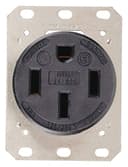
Hubbell HBL9450A NEMA 14-50 receptacle
Hubbell Wiring Device-Kellems · NEMA 14-50 · 50 A / 12 kW
The industrial-grade 14-50 electricians specify when they know the circuit will feed an EV charger every night. Full-size brass contacts and a clamping terminal, not the stab-and-hope design of a builder-grade outlet.
What is good
- Industrial grade, with the clamping terminal design that keeps a high-current connection tight
- Accepts 10 through 4 AWG, so it fits whatever conductor your run needs
- UL listed and CSA certified, with a published file number you can look up
- Weather-resistant rated, which matters for a garage or an outdoor box
What is not
- Costs several times a builder-grade 14-50, which is the entire point
- Installation is licensed electrical work -- this is not a part you fit yourself
- No cover plate included on the single pack
| Rating | 50 A, 125/250 V, 12,500 W maximum |
|---|---|
| Configuration | NEMA 14-50R, 3-pole, 4-wire grounding |
| Wire range | 10 to 4 AWG |
| Grade | Industrial |
| Certification | UL listed (file E2186), CSA certified |
| Standard | NEMA WD-6 compliant |
Skip this if: Skip it only if your charger is being hardwired -- then you do not need a receptacle at all, and hardwiring is the more durable answer.
Specifications above are the manufacturer’s published figures. Source: Hubbell Wiring Device-Kellems. We have not tested this unit — see how we pick.
FAQ
Questions people actually ask
What is the difference between NEMA 14-30 and NEMA 14-50?
Can I use a 14-30 to 14-50 adapter for EV charging?
How many miles per hour does a dryer outlet add?
Is a 14-30 dryer outlet enough for an EV?
Do I need a special charger to use a dryer outlet?
Can I plug an EV charger and a dryer into the same outlet?
Should I upgrade my 14-30 to a 14-50?
Sources
Where these numbers come from
- NEC Article 625: EV Charging Equipment — WireRef625.41 Continuous Load Rating: EV charging is classified as a continuous load because the EVSE draws its maximum rated current for 3 or more hours during a typical charge session, so the branch circuit is sized at 125% of the rated current -- a 48 A charger requires a 60 A circuit. 625.42 Branch Circuit Requirements: each EVSE requires a dedicated branch circuit unless an approved energy management system controls the load. Read 2026-10-17.
- Electric Vehicle Charging Stations: AC Level 2 equipment — U.S. Department of Energy, Alternative Fuels Data CenterAC Level 2 equipment offers charging through 240 V (typical in residential applications) or 208 V (typical in commercial applications) and adds roughly 25 miles of range per hour of charging; Level 1 at 120 V adds about 5 miles per hour, assuming 1.9 kW. Most residential Level 2 chargers operate at up to 30 A delivering 7.2 kW and require a dedicated 40 A circuit to comply with National Electrical Code Article 625. Read 2026-10-17.
- Fuel economy of 2026 Cadillac and GMC vehicles — U.S. EPA and U.S. Department of Energy, fueleconomy.govPublished consumption ratings used in the arithmetic here: Cadillac Lyriq 37 kWh/100 mi, GMC Sierra EV 50 kWh/100 mi. Read 2026-10-11.
- Fuel economy of 2026-2027 BMW vehicles — U.S. EPA and U.S. Department of Energy, fueleconomy.gov2027 BMW iX3 50 xDrive, 20 inch summer tires: 118 MPGe, 29 kWh/100 mi, 434 miles total range. Used here as the efficient end of the range. Read 2026-10-22.
- Splitvolt Safety Certified Splitter Switch, NEMA 14-30 to 14-50 — Splitvolt240 V ~ 60 Hz, 24 A AC maximum load. Wall plug NEMA 14-30 male on a 4 ft pigtail; dryer socket NEMA 14-30 female; EV socket NEMA 14-50 female. Automated switching between the dryer and EV sockets, full-color screen showing real-time kWh, amps, volts and status, integrated 24 A circuit breaker with easy reset, optional manual power-off switch. For standard 30 A dryer circuits, 24 A maximum for the NEC safe charging rate. Indoor use only. 12 x 8.5 x 4 in, 6.7 lb. cETLus, Intertek 5021938, UL 60730-1 / CSA E60730-1. 1-year limited warranty. SKU SPS-C2-032-30A.
- ChargePoint Home Flex data sheet — ChargePointMaximum 50 A / 12 kW at 240 V with amperage settings of 16, 24, 32, 40, 48 and 50 A, SAE J1772, 23 ft cable, hardwired and NEMA 14-50 versions, UL listed and ENERGY STAR certified.
- Grizzl-E Classic Connect — United Chargers40 A / 9.6 kW with adjustable current from 16 A to 40 A, J1772 or NACS chosen at purchase, 25 ft cable, NEMA 14-50 plug, UL Type 4 indoor and outdoor, -22 F to 122 F, Wi-Fi 2.4 GHz with the Grizzl-E Connect app, UL/cUL file E510712, 3-year warranty.
- Hubbell HBL9450A, 50 A industrial-grade NEMA 14-50R receptacle — Hubbell Wiring Device-Kellems50 A, 125/250 V, NEMA 14-50R, 3-pole, 4-wire grounding, industrial grade.
Read next
Related reading
- Charging an EV from a dryer outletWhat a 30 A dryer circuit allows, why 24 A is the ceiling, and which listed splitters do it safely.
- The best dryer outlet splitters for EV chargingCharge from your dryer outlet instead of adding a circuit, and the 24-amp limit that comes with it.
- What it costs to install a NEMA 14-50 outletWhat drives the price of a 240 V outlet for charging, and the part not to cheap out on.
- How to set your EV charger's ampsPublished amperage ranges for every charger on this site, the 80% rule, and where each maker puts the setting.
- The best NEMA 14-50 outlet for EV chargingWhich NEMA 14-50 receptacle to specify, and why the cheap one is a false economy.