48-amp tier
DEWALT 48 A vs Wallbox Pulsar Plus
Same output, same cable length, same wall. One has a screen on the front; the other is barely eight inches square and tells you more about itself.
By Sawyer V. · Published October 7, 2026
How this page is funded: we earn a commission if you buy through our Amazon links, at no extra cost to you. It does not change what we recommend, and we say plainly when the honest answer is to buy nothing. Full disclosure.
The verdict: the Wallbox Pulsar Plus is the better-documented charger and the one to buy if your wall is awkward or your winters are real. The DEWALT is the one to buy if you want to read the charger's status without reaching for a phone, and it is a sensible purchase for anyone who already trusts the brand -- but it is the pricier unit and it publishes less about itself than its rival does.
Side by side
| DEWALT DXPAEV048 | Wallbox Pulsar Plus | |
|---|---|---|
| Maximum output | 48 A / 11.5 kW | 48 A / 11.5 kW at 240 V |
| Adjustable range | 12 A to 48 A | 6 A to 48 A, in steps |
| Connector | SAE J1772 | SAE J1772 |
| Cable | 25 ft, UL certified, protective cage | 25 ft |
| Installation | Hardwired only | Hardwired at 48 A |
| Body size | Not published | 7.8 x 7.9 x 3.9 in without the cable |
| Enclosure | IP66, described as a NEMA 4X type | NEMA Type 4 |
| Operating temperature | Not published | -22 F to 104 F |
| Display | LCD screen on the unit | Status light; detail in the app |
| Connectivity | Bluetooth and Wi-Fi, free app | Wi-Fi and Bluetooth, app setup |
| Certification | CSA, standard not named | UL 2594, UL 2231 |
| Warranty | 3 years, with 24/7 support | 3 years |
Speed: there is no difference
Both units, same arithmetic
48 A x 240 V = 11,520 W, which is 11.5 kW.
The breaker is 125% of a continuous load, so both need a 60 A circuit.
At 30 kWh per 100 miles, 11.5 / 30 x 100 = about 38 miles of range per hour.
DEWALT advertises up to 46 miles per hour, which implies a more efficient car -- the same 11.5 kW either way.
That last line is worth pausing on. DEWALT's "up to 46 miles of range per hour" and a rival's lower claim are usually the same charger power applied to different assumed cars. The charger supplies kilowatts; the car converts them into miles. 32A vs 40A vs 48A does this arithmetic for the whole tier.
Where they genuinely differ
Size, and whether it fits
The Pulsar Plus is the smallest 48 A unit on this site, under eight inches square and 4.4 lb without the cable. That is not vanity: it is the difference between mounting beside a door frame and not. DEWALT does not publish dimensions for its 48 A unit, which makes it the harder one to plan around if your wall is constrained. Where to mount an EV charger covers measuring the space first.
Cold weather
Wallbox publishes -22 F to 104 F. DEWALT publishes no operating temperature range for this model at all. If you are in a climate where a garage reaches well below freezing, a published low-temperature rating is the specification to insist on. Best EV charger for cold weather ranks on exactly that.
The screen
The DEWALT's LCD is a real advantage and an underrated one. A charger that shows its own state means a stuck session or a fault is visible from the doorway rather than after loading an app, logging in and waiting for a cloud round trip. It also means the unit stays legible if the maker's app ever goes away -- which, as the JuiceBox shutdown demonstrated, is not a hypothetical.
What each maker publishes
Wallbox names UL 2594 and UL 2231. DEWALT says CSA certified without naming the standard or a file number, where Grizzl-E and Lectron both publish theirs. DEWALT also claims "over 10 technologically advanced safety features including overvoltage, overcurrent, overheat, overcharge and surge protection" -- a claim with no published rating behind it, which is the usual state of affairs and the reason do EV chargers have surge protection exists.
Who should buy which
| If this is you | Buy | Why |
|---|---|---|
| Tight or awkward wall space | Wallbox | Under 8 in square, 4.4 lb body |
| Cold garage, real winters | Wallbox | Published -22 F rating; DEWALT publishes none |
| You want status without a phone | DEWALT | LCD on the unit |
| You want the lowest published current floor | Wallbox | 6 A steps against DEWALT's 12 A |
| Certification detail matters to you | Wallbox | Names UL 2594 and UL 2231 |
| You want 24/7 phone support | DEWALT | 3-year warranty with 24/7 technical support |
| You need a plug-in charger | Neither | Both are hardwired at 48 A. See plug-in picks |
Both units
The DEWALT with its screen, and the Wallbox with its footprint. Prices are live from Amazon and carry the date they were read.
1. A familiar brand, hardwired
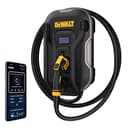
DEWALT 48 A EV Charger (DXPAEV048)
DEWALT · J1772 · 48 A / 11.5 kW · 25 ft cable
A 48 A hardwired charger with a 25 ft cable, an LCD screen and an app, from a brand most garages already trust. Adjustable from 12 A, IP66, CSA certified, three-year warranty.
What is good
- 48 A / 11.5 kW, the top tier a normal 60 A home circuit supports
- Adjustable from 12 A, a wider floor than most chargers offer
- 25 ft cable with a protective cage and an anti-slip handle
- An LCD screen on the unit, so basic status does not depend on a phone
- Scheduling and energy monitoring in a free app, with no subscription
- A three-year warranty backed by 24/7 technical support, and a national install partner
What is not
- Hardwired only -- DEWALT's plug-in version is the separate 40 A model
- DEWALT publishes no operating temperature range for it
- CSA certified, but DEWALT does not name the standard or publish a file number the way Grizzl-E and Lectron do
- No ENERGY STAR certification listed, unlike several rivals at this price
- J1772 only, so a NACS car needs an adapter on every charge
- Costs more than the 48 A chargers most first-time buyers end up with
| Maximum output | 48 A / 11.5 kW |
|---|---|
| Adjustable | 12 A to 48 A |
| Connector | SAE J1772 (DEWALT notes a Tesla adapter is sold separately) |
| Cable | 25 ft, UL certified, with a protective cage and anti-slip handle |
| Installation | Hardwired; mounting bracket and hardware included |
| Enclosure | IP66, described as a NEMA 4X type enclosure |
| Display | LCD screen on the unit |
| Connectivity | Bluetooth and Wi-Fi, through the free DEWALT EV Charger app |
| App features | Start and stop charging, energy monitoring, off-peak scheduling |
| Certification | CSA certified for indoor and outdoor use |
| Maker's range claim | Up to 46 miles of range per hour |
| Warranty | 3-year limited, with 24/7 technical support |
Skip this if: Skip it if you want a plug-in unit -- this one is hardwired, and DEWALT's plug-in version is the 40 A model. Skip it too if a published temperature range matters to you; DEWALT does not list one.
Specifications above are the manufacturer’s published figures. Source: DEWALT. We have not tested this unit — see how we pick.
2. Tight wall space
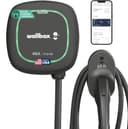
Wallbox Pulsar Plus
Wallbox · J1772 · 48 A / 11.5 kW · 25 ft cable
The smallest 48 A unit here at roughly 7.8 by 7.9 inches, which matters more than it sounds when the only free wall is beside a door.
What is good
- Smallest body of the 48 A units, under 8 inches square
- Current configurable in steps from 6 A to 48 A
- NEMA Type 4 enclosure, rated down to -22 F
- Weighs 4.4 lb without the cable, so mounting is simple
What is not
- Hardwired only at 48 A, with no plug-in version at full output
- Setup runs through the app, which some owners find fussy
| Maximum output | 48 A / 11.5 kW at 240 V |
|---|---|
| Configurable current | 6 A to 48 A |
| Connector | SAE J1772 |
| Cable | 25 ft |
| Body size | 7.8 x 7.9 x 3.9 inches without the cable |
| Operating temperature | -22 F to 104 F |
| Certification | UL 2594, UL 2231 |
| Warranty | 3 years |
Skip this if: Skip it if you want a plug-in unit you can take with you. The 48 A Pulsar Plus is hardwired.
Specifications above are the manufacturer’s published figures. Source: Wallbox, Wallbox. We have not tested this unit — see how we pick.
FAQ
Questions people actually ask
Is the DEWALT EV charger faster than the Wallbox Pulsar Plus?
Which is better for a cold garage?
Does either charger have a screen?
Can I plug either of these in rather than hardwire it?
Sources
Where these numbers come from
- DEWALT Electric Vehicle (EV) 240V Level 2 Charger up to 48 Amps, DXPAEV048 — DEWALTUp to 48 A / 11.5 kW, up to 46 miles of range per hour, adjustable 12 to 48 A, 25 ft UL certified cable with protective cage and anti-slip handle, LCD screen, Bluetooth and Wi-Fi app with scheduling and energy monitoring, IP66 described as a NEMA 4X type enclosure, CSA certified for indoor and outdoor use, hardwired with mounting hardware included, 3-year limited warranty with 24/7 technical support. No operating temperature range published. Read 2026-10-05.
- Wallbox Pulsar Plus datasheet — Wallbox48 A / 11.5 kW at 240 V, configurable 6 to 48 A, SAE J1772, 25 ft cable, body 7.8 x 7.9 x 3.9 in without the cable, operating range -22 F to 104 F, UL 2594 and UL 2231, 3-year warranty. Read via the product record.
- Electric Vehicle Charging Infrastructure: AC Level 2 equipment — U.S. Department of Energy, Alternative Fuels Data CenterAC Level 2 runs at 240 V in homes, delivers 2.9 to 19.2 kW, and adds roughly 25 miles of range per hour of charging. Read 2026-10-07.
Read next
Related reading
- DEWALT 48 A EV charger review48 A hardwired with a 25 ft cable, an LCD screen and an app. What DEWALT publishes, and what it omits.
- Wallbox Pulsar Plus48 A in a 7.8-inch body, configurable 6-48 A, NEMA 4, rated to -22 F. Hardwired only.
- The best 48-amp EV chargersThe fastest home tier: 48-amp picks, the 60-amp circuit they need, and who should skip it.
- The best hardwired EV chargersHardwired chargers compared: why they reach 48 A, and which unit suits which garage.
- 32 A vs 40 A vs 48 A: how many amps do you actually need?What each amperage tier delivers in miles per hour, and the circuit each one requires.