By vehicle
Home charging a Volvo EX60
Volvo's other electric SUVs take a J1772 charger straight into a CCS inlet. The EX60 does not -- Volvo builds a NACS port into it. That changes which charger to order, and it is worth getting right before the car arrives.
By Sawyer V. · Published November 2, 2026
How this page is funded: we earn a commission if you buy through our Amazon links, at no extra cost to you. It does not change what we recommend, and we say plainly when the honest answer is to buy nothing. Full disclosure.
The verdict: buy a 48-amp Level 2 charger and order it with the NACS connector. That matches what the car can actually take, needs a 60-amp circuit your electrician will find unremarkable, and leaves nothing dangling off the cable. If a J1772 charger is already on your wall from a previous car, do not replace it -- add a J1772-to-NACS adapter instead and spend the difference on nothing at all. The only reason to go below 48 amps is a panel that cannot feed a 60-amp circuit, and that is a load-calculation question rather than a car question.
The connector, and why this Volvo is different
Volvo's other electric SUVs -- the EX90, EX40 and EC40 -- carry a CCS inlet, which is the J1772 socket with two DC pins below it. A J1772 home charger plugs straight into the top half of that, which is why the Volvo page tells those owners to buy any good J1772 unit and stop worrying. Volvo supplies a NACS-to-CCS adapter for Supercharger access on those cars.
The EX60 arrives with the port the other way round. Volvo states that a NACS charging port is built in, and markets it as access to more than 120,000 US charging points including over 29,000 NACS fast chargers on the Tesla Supercharger network, with Plug & Charge. For road trips that is unambiguously good. For your garage it means the charger you were about to buy -- or the one already on the wall -- may be the wrong connector.
| What you have | Works on an EX60? | What you need |
|---|---|---|
| A NACS wall charger | Yes, directly | Nothing |
| A Tesla Wall Connector at home | Yes, directly | Nothing -- it is a NACS connector |
| A J1772 wall charger | Not on its own | A J1772-to-NACS AC adapter |
| A charger sold in either connector | Yes, if you order the NACS version | Choose NACS at checkout |
| A public J1772 Level 2 station | Not on its own | The same AC adapter |
| A Tesla Supercharger | Yes, natively | Nothing -- this is the point of the NACS port |
Why 48 amps is the right size here
This is the opposite conclusion from our Jeep 4xe page, and the arithmetic shows why. Volvo publishes the battery capacity for each powertrain and the EPA publishes the time to charge at 240 volts. Divide one by the other and you get the rate the car accepts:
What the EX60 can take on AC
P6: 83.0 kWh battery / 8 hrs at 240 V = about 10.4 kW.
P10 AWD: 95.0 kWh battery / 9 hrs at 240 V = about 10.6 kW.
10.5 kW at 240 V is about 44 amps.
A 48 A charger offers 11.5 kW -- the first common tier above that number.
So 48 amps is matched to the car rather than wasted on it, and 40 amps leaves a little on the table. That is a genuinely different answer from most of the cars on this site, and it comes from the battery being large: 83 to 117 kWh depending on powertrain, against about 15 kWh in a plug-in hybrid.
What that looks like overnight
| Charger | Power at 240 V | P6, 29 kWh/100 mi | P10 AWD, 30 kWh/100 mi |
|---|---|---|---|
| 32 A | 7.7 kW | about 27 mi/h | about 26 mi/h |
| 40 A | 9.6 kW | about 33 mi/h | about 32 mi/h |
| 48 A | 11.5 kW | about 40 mi/h | about 38 mi/h |
The practical reading: on a 48-amp charger an EX60 gains roughly 40 miles an hour, so a nine-hour night covers more than 300 miles -- a full battery from empty, which matches the EPA's 8-to-9-hour figure. Even at 32 amps you are replacing around 240 miles overnight, which is more than almost anyone drives in a day. How long to charge at home lets you run your own numbers.
And skip the 120-volt cord as a plan. The Department of Energy puts Level 1 at roughly 5 miles of range per hour; on an 83 kWh battery that is days rather than hours. Level 1 chargers covers the cases where the supplied cordset is genuinely enough, and a large electric SUV is not one of them.
The two honest routes
You are installing a charger from scratch
Order a 48-amp unit with the NACS connector. United Chargers sells the Ultimate 48 in J1772 or NACS, chosen at purchase, at 48 A and 11.5 kW on a 25-foot cable in a cast-aluminum UL Type 4 case -- that connector choice is the whole decision and it costs nothing extra to get right. The circuit is the normal one: a 48-amp charger is a continuous load, so it needs a 60-amp breaker.
If your garage also has a J1772 car in it, look at a dual-connector unit instead of buying twice. Tesla's Universal Wall Connector is NACS with a J1772 adapter docked in the holster, published at the same 48 A and 11.5 kW with a four-year warranty. Tesla Wall Connector vs Universal covers which of Tesla's two units is which.
You already have a J1772 charger on the wall
Keep it. A J1772-to-NACS AC adapter sits between your existing connector and the EX60's port; the one on the buy rows below is rated 80 A at 240 V with a UL 2252 certification and built-in temperature monitoring, which is far more headroom than a home circuit will ever ask of it. Replacing a working wall charger to change a connector shape is the expensive answer to a cheap problem.
The same logic applies in reverse if you move into a house with a Tesla Wall Connector already fitted: that is a NACS connector, so an EX60 plugs straight into it with nothing in between. Best J1772 adapter and EV charging adapters cover both directions properly.
Sizing the circuit, and when to go smaller
- 48 A needs a 60 A breaker, because an EV is a continuous load and the circuit is sized at 125% of the charger's rating. On a 200-amp service that is usually unremarkable.
- 40 A needs a 50 A breaker, and costs you about seven miles per hour against the 48-amp unit. A reasonable trade if your panel is tight.
- Run a load calculation before you order, not after. If the answer is that 60 amps is not available, the fix is a smaller setting or load management rather than a different car.
- Measure the cable run with the car parked the way you actually park it. This is the most-regretted spec in the category and no amount of amperage compensates for it.
- Check the delivery date. Volvo expects the P10 AWD from Fall 2026 and the P6 and P12 in 2027, so there may be no rush -- but electricians book out, and the quote is free.
Breaker and wire size has the table, electrical panel load calculation is the method, and how to set your EV charger's amps covers turning a charger down if the panel is the constraint.
What the fast-charging numbers mean at home
Nothing, and it is worth saying so because the EX60's headline figures are striking. Volvo publishes 800-volt architecture as standard, charging at a 350 kW station in 16 minutes from 10 to 80% on the P6 and 400 kW stations on the P10 and P12, with up to 173 miles added in ten minutes at peak. Those are DC fast-charging numbers, and no home charger goes anywhere near them -- the Department of Energy describes Level 2 as 240-volt equipment adding roughly 25 miles of range per hour.
The two systems are separate and the home one is the one you use most nights. DC fast charging explained covers why you cannot have it at home and why you would not want to pay for it if you could. One Volvo recommendation does carry over, though: the company suggests topping up to 90% rather than 100% for daily use to help long-term battery health, which is a setting in the car rather than anything you buy.
What to buy for an EX60
A 48-amp unit ordered in NACS, a dual-connector unit for a mixed garage, the adapter that rescues a J1772 charger you already own, and a cheaper 40-amp option. Live Amazon prices with the date they were read.
1. Ultimate build quality on a 60 A circuit
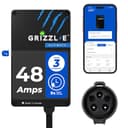
Grizzl-E Ultimate 48A
United Chargers · J1772 + NACS · 48 A / 11.5 kW · 25 ft cable
The Ultimate's hardware at the amperage most houses can feed: 48 A and 11.5 kW, hardwired, Wi-Fi and OCPP, in the same cast-aluminum Type 4 case. The catch is what United Chargers publishes about dialing it down -- the adjustable steps stop at 40 A.
What is good
- 48 A on a 60 A circuit, which a normal 200 A panel can usually spare
- Same cast-aluminum UL Type 4 case and -22 F rating as the 80 A Ultimate
- 25 ft cable, the long end of the range
- Wi-Fi, a mobile app and OCPP, so it is not locked to one vendor's cloud
- Offered with either a J1772 or a NACS connector
What is not
- Hardwire only -- there is no plug-in version of the Ultimate
- United Chargers publishes adjustable steps of 40/32/24/16 A, so the published step list does not include 48 A itself
- No ENERGY STAR certification listed, unlike the 80 A Ultimate
- A J1772 unit needs an adapter on every charge if you drive a NACS car
- Costs more than the 40 A Grizzl-E Classic for speed many owners will not use
| Maximum output | 48 A / 11.5 kW |
|---|---|
| Adjustable current | 40 A, 32 A, 24 A, 16 A (as published) |
| Connector | J1772 or NACS, chosen at purchase |
| Cable | 25 ft (7.6 m) |
| Installation | Hardwire only |
| Enclosure | Aluminum, UL Type 4 indoor/outdoor rating |
| Operating temperature | -30 C to +50 C (-22 F to 122 F) |
| Connectivity | Wi-Fi (2.4 GHz), mobile app, OCPP |
| Certification | UL, file E510712 |
| Weight | 11.00 kg / 24.25 lb, shipped |
| Enclosure size | 10.25 x 6.25 x 3.75 in |
| Country of origin | Canada, per United Chargers |
| Model number | GRS-077-W-HW-25N48-A-GB |
| Warranty | 3 years, or 5 years |
Skip this if: Skip it if your car accepts more than 11.5 kW and your panel can carry a 100 A circuit -- that is what the 80 A model is for. Skip it too if you want a plug-in unit; this is hardwire only.
Specifications above are the manufacturer’s published figures. Source: United Chargers. We have not tested this unit — see how we pick.
2. A two-car, two-connector garage
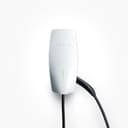
Tesla Universal Wall Connector
Tesla · J1772 + NACS · 48 A / 11.5 kW · 24 ft cable
The Wall Connector with a J1772 adapter built into the holster, so it charges a Tesla and a non-Tesla without anything loose to lose.
What is good
- Charges NACS and J1772 cars without a separate adapter to store
- Same 48 A output and four-year warranty as the Gen 3
- The adapter docks in the holster, so it cannot walk off
What is not
- Costs more than the NACS-only Gen 3
- Hardwired only
| Maximum output | 48 A / 11.5 kW at 240 V |
|---|---|
| Connector | NACS with an integrated J1772 adapter |
| Cable | 24 ft |
| Installation | Hardwired |
| Warranty | 4 years |
Skip this if: Skip it if both cars use the same connector. You are paying for an adapter you do not need.
Specifications above are the manufacturer’s published figures. Source: Tesla. We have not tested this unit — see how we pick.
3. NACS car, J1772 charger
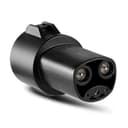
Lectron J1772 to Tesla (NACS) adapter
Lectron · J1772 to NACS · 80 A / 19.2 kW
Lets a Tesla or any NACS-port car charge from a J1772 charger. Rated to 80 A, certified to UL 2252, with temperature monitoring built into the body.
What is good
- Certified to UL 2252, which is the standard written for exactly this device
- Rated well above any home circuit at 80 A, so it is never the limiting part
- Temperature monitoring in the body, the failure mode that matters on an adapter
- Works on any J1772 Level 1 or Level 2 charger
What is not
- Most owners already have one in the car and do not need to buy anything
- AC only -- it is not a DC fast-charging adapter
- One more loose item to keep track of, unless it lives clipped to the cable
| Direction | J1772 charger to a NACS (Tesla) port |
|---|---|
| Maximum current | 80 A |
| Voltage | 240 V AC |
| Certification | UL 2252 |
| Safety | Built-in temperature monitoring |
| Use | AC charging (Level 1 and Level 2) |
Skip this if: Skip it if your car came with one. Every Tesla ships with a J1772 adapter, and cars sold with a native NACS port ship with one too -- check the trunk before buying.
Specifications above are the manufacturer’s published figures. Source: Lectron. We have not tested this unit — see how we pick.
4. Grizzl-E toughness, with an app
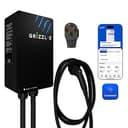
Grizzl-E Classic Connect
United Chargers · J1772 · 40 A / 9.6 kW · 25 ft cable
The next-generation Grizzl-E: 40 A on a NEMA 14-50, a 25 ft cable, a UL Type 4 indoor/outdoor rating -- and, unlike the Classic, Wi-Fi and the Grizzl-E Connect app. Sold with a J1772 or NACS cable.
What is good
- 25 ft cable, a foot longer than the Classic Extreme Edition's
- Wi-Fi app with schedules and charging statistics, which the Classic deliberately lacks
- UL/cUL listed, with a published file number
- Rated to run from -22 F to 122 F
What is not
- 40 A ceiling, with no hardwired 48 A version
- Sold with a NEMA 14-50 plug; the Classic's 6-50 option is not among the Connect listings we found
- The app needs 2.4 GHz Wi-Fi where the charger is mounted
| Maximum output | 40 A / 9.6 kW at 240 V (the maker lists 10 kW) |
|---|---|
| Adjustable | 16 A to 40 A |
| Connector | SAE J1772 or NACS, chosen at purchase |
| Cable | 25 ft (7.6 m) |
| Plug | NEMA 14-50 |
| Enclosure rating | UL Type 4, indoor and outdoor |
| Operating temperature | -22 F to 122 F |
| Size | 10.25 x 6.25 x 3.75 in |
| Connectivity | Wi-Fi (2.4 GHz) and the Grizzl-E Connect app |
| Certification | UL/cUL, file E510712 |
| Warranty | 3 years; 5-year warranty sold separately |
Skip this if: Skip it if you wanted a Grizzl-E precisely because it has no app -- the original Classic is still the no-software choice -- or if you want 48 A. The Classic Connect is a 40 A plug-in unit.
Specifications above are the manufacturer’s published figures. Source: United Chargers. We have not tested this unit — see how we pick.
FAQ
Questions people actually ask
Does the Volvo EX60 have a NACS port?
What size home charger does a Volvo EX60 need?
Can a Volvo EX60 use a J1772 charger?
How long does a Volvo EX60 take to charge at home?
Can an EX60 charge from a Tesla Wall Connector?
Does the EX60 come with a J1772 adapter?
Is the EX60's 800-volt fast charging relevant to home charging?
Sources
Where these numbers come from
- Volvo EX60 fully electric SUV — Volvo Cars USA"A NACS charging port is built in." Access to more than 120,000 charging points in the US, including 29,000+ NACS fast chargers on the Tesla Supercharger network with a native NACS charging port, with Plug & Charge functionality. Standard 800-volt technology on all three powertrains. P6 Electric: 83.0 kWh battery, 350 kW charging station, 16 minutes 10-80%, EPA-estimated range up to 307 mi with 20 inch wheels, customer deliveries expected to start in 2027. P10 AWD Electric: 95.0 kWh battery, 400 kW charging station, 16 minutes, EPA-estimated range up to 330 mi with 20 inch wheels, deliveries expected to start in Fall 2026. P12 AWD Electric: 117.0 kWh battery, 400 kW charging station, 19 minutes, estimated range up to 400 mi, deliveries expected in 2027, with EPA estimates to be released later. At peak, adds 173 miles in 10 minutes. Volvo recommends topping up to 90% for daily use to help maintain long-term battery health. No AC onboard charger rating is published on this page. Read 2026-11-02.
- 2027 Volvo EX60 P6 electric: fuel economy and charging — U.S. EPA and U.S. Department of Energy, fueleconomy.govCombined 118 MPGe, 125 city, 110 highway. 29 kWh/100 mi. 307 miles total range. Electric Motor/Battery: 275 kW PMSM. Time to Charge Battery: 8 hrs at 240V. Saves $8,250 in fuel costs over 5 years compared with the average new vehicle. Read 2026-11-02.
- 2027 Volvo EX60 P10 AWD electric: fuel economy and charging — U.S. EPA and U.S. Department of Energy, fueleconomy.govCombined 110 MPGe, 118 city, 102 highway. 30 kWh/100 mi. 330 miles total range. Electric Motor/Battery: 200 and 275 kW PMSM. Time to Charge Battery: 9 hrs at 240V. Saves $8,000 in fuel costs over 5 years compared with the average new vehicle. Read 2026-11-02.
- Electric Vehicle Charging Stations: AC Level 2 equipment — U.S. Department of Energy, Alternative Fuels Data CenterAC Level 2 equipment offers charging through 240 V (typical in residential applications) or 208 V (typical in commercial applications) and adds roughly 25 miles of range per hour of charging; Level 1 at 120 V adds about 5 miles per hour, assuming 1.9 kW. SAE is standardizing the J3400 connector based on Tesla's NACS design, which works for all charging levels. Read 2026-10-17.
- NEC Article 625: EV Charging Equipment — WireRefEV charging is a continuous load, so the branch circuit is sized at 125% of the charger's rated current -- a 48 A charger requires a 60 A circuit. Each EVSE requires a dedicated branch circuit unless an approved energy management system controls the load. Read 2026-10-17.
- Grizzl-E Ultimate 48 — United Chargers48 A / 11.5 kW, hardwire only, connector J1772 and NACS chosen at purchase, 25 ft cable, cast aluminum UL Type 4 indoor/outdoor enclosure, OCPP, UL E510712, Wi-Fi 2.4 GHz and mobile app, published adjustable steps 40/32/24/16 A, -22 F to 122 F. Read 2026-10-11.
- Wall Connector support page — TeslaUniversal Wall Connector: 48 A / 11.5 kW at 240 V, NACS connector with an integrated J1772 adapter in the holster, 24 ft cable, hardwired, rated for indoor and outdoor use, 4-year limited warranty.
- Lectron J1772 to Tesla (NACS) EV Adapter, UL 2252 certified, 240 V, 80 A — LectronJ1772 charger to a NACS (Tesla) port, maximum 80 A at 240 V AC, UL 2252 certified, built-in temperature monitoring, for AC charging at Level 1 and Level 2.
- Grizzl-E Classic Connect — United Chargers40 A / 9.6 kW with adjustable current from 16 A to 40 A, J1772 or NACS chosen at purchase, 25 ft cable, NEMA 14-50 plug, UL Type 4 indoor and outdoor, -22 F to 122 F, Wi-Fi 2.4 GHz with the Grizzl-E Connect app, UL/cUL file E510712, 3-year warranty.
Read next
Related reading
- The best home charger for a Volvo EVWhy a J1772 charger fits the EX90, EX40 and EC40 at home, and what the adapter is for.
- Home charging a BMW iX3The first BMW with a NACS port: why the included CCS adapter does nothing at home, and the two ways to charge an iX3 on a 240 V circuit.
- NACS home charging, explained without the hypeWhich cars have native NACS ports and what it means for the charger you buy today.
- The best NACS home chargersEvery home charger sold with a NACS connector, ranked, plus when a J1772 unit is still the better buy.
- The best J1772 adaptersWhich J1772 adapter direction you need, which came free with the car, and the safety rules.