Same maker
Grizzl-E Classic vs Ultimate 48A
Eight amps separate these two on paper. What actually separates them is that one plugs into an outlet and the other is wired into your wall, and that decides the price of the install as much as the price of the box.
By Sawyer V. · Published November 5, 2026
How this page is funded: we earn a commission if you buy through our Amazon links, at no extra cost to you. It does not change what we recommend, and we say plainly when the honest answer is to buy nothing. Full disclosure.
The verdict: for most houses, buy the Classic. It is the cheaper box, it goes on the smaller circuit, it plugs in rather than being wired in, and the 40 amps it delivers fills any normal car overnight with hours to spare. Step up to the Ultimate 48 for three specific reasons and no others: you want a NACS connector, you want app scheduling and OCPP, or you genuinely need the extra speed because the car is large and the nights are short. If none of those is true you are paying more for the box and more for the install to charge a car that is asleep either way.
Side by side
| Grizzl-E Classic | Grizzl-E Ultimate 48A | |
|---|---|---|
| Maximum output | 40 A / 9.6 kW at 240 V | 48 A / 11.5 kW |
| Circuit required | 50 A | 60 A |
| Installation | NEMA 14-50 plug (also sold with NEMA 6-50) | Hardwire only |
| Connector | SAE J1772 | J1772 or NACS, chosen at purchase |
| Adjustable current | 16, 24, 32 or 40 A | 40, 32, 24, 16 A as published |
| How you set it | Physical switches on the unit | In the Grizzl-E Connect app |
| Connectivity | None -- no app, no account, no network | Wi-Fi 2.4 GHz, mobile app, OCPP |
| Cable | 24 ft on the Extreme Edition | 25 ft (7.6 m) |
| Enclosure | Cast aluminum, NEMA 4 / IP67 | Aluminum, UL Type 4 indoor/outdoor |
| Operating temperature | Not published for the Classic | -30 C to +50 C (-22 F to 122 F) |
| Certification | UL certified | UL, file E510712 |
| Warranty | 3 years | 3 years, or 5 years |
What eight amps is actually worth
40 A against 48 A
40 A x 240 V = 9.6 kW. 48 A x 240 V = 11.5 kW.
At 37 kWh/100 mi: about 26 mi/h against about 31 mi/h.
Over a nine-hour night: about 234 miles against about 280.
Both numbers are larger than almost anyone's daily driving.
| Vehicle | Classic, 9.6 kW | Ultimate 48, 11.5 kW |
|---|---|---|
| Cadillac Lyriq, 37 kWh/100 mi | about 26 mi/h | about 31 mi/h |
| GMC Sierra EV, 50 kWh/100 mi | about 19 mi/h | about 23 mi/h |
Five miles an hour is the honest size of the speed difference on a mainstream EV. It matters if you drive a large truck, if the car is only home for six hours, or if two cars share the charger. It does not matter if the car sits in the garage from six at night until seven in the morning, which is the normal case. 32A vs 40A vs 48A covers the tier decision in general, and how long to charge at home lets you run your own numbers.
The difference that costs real money
The Classic plugs into a NEMA 14-50. The Ultimate 48 is hardwire-only -- United Chargers publishes no plug-in version at this amperage. That is normally framed as a convenience question, and in 2026 it became a cost question as well.
Under the 2026 National Electrical Code, section 625.43 was reorganized and the old thresholds were removed: all permanently connected EV supply equipment now needs a disconnecting means in a readily accessible location. For cord- and plug-connected equipment, the attachment plug is permitted to serve as that disconnecting means up to 60 amperes. So a hardwired Ultimate may need a device, an enclosure and the labor to fit it, while a plugged-in Classic brings its own disconnect in the form of the plug.
The plug cuts the other way too, in the Classic's favor: a plugged-in charger comes off the wall and moves house with you, and it can be swapped without an electrician if it ever fails. The counter-argument for hardwiring is real as well -- one fewer connection to heat up, and no dependence on the quality of a receptacle. Hardwired vs plug-in argues both sides properly, and best NEMA 14-50 outlet covers the receptacle that decides whether the plug-in route is safe.
The connector, which may decide it for you
The Classic is SAE J1772 only. The Ultimate 48 is sold in J1772 or NACS, chosen at purchase. For a J1772 car today that is no difference at all. For a household whose next car has a native NACS port -- and that list is growing -- it is the whole decision, because ordering the NACS version removes an adapter from your daily routine permanently.
Cars already arriving with a native NACS inlet include the BMW iX3, the Volvo EX60 and 2027 Chevrolet and GMC models, which GM's adapter range covers. If you expect one of those in the next few years and you are hardwiring anyway, the Ultimate's connector choice is worth more than its eight extra amps. Best NACS EV charger ranks the category.
App against no app
This is a preference rather than a specification, and the two units sit at opposite ends of it deliberately. The Classic has no app, no account and no firmware; its amperage is set with physical switches, which means nothing about it can be changed, broken or discontinued by a software update. The Ultimate adds Wi-Fi on 2.4 GHz, the Grizzl-E Connect app and OCPP.
OCPP is the part worth understanding, because it is not marketing. It means the charger is not locked to one company's cloud, which is a genuine consideration on a site that has watched a charger brand switch its servers off -- see what happened to JuiceBox owners. Against that, the thing most people want an app for is scheduling, and every car on sale can schedule its own charging. Do you need a smart EV charger argues both sides, and best EV charger without an app is the deliberate opposite case.
What about the Classic Connect?
Fair question, because it sits between these two: the Classic Connect is the 40-amp Classic with Wi-Fi and the Grizzl-E Connect app added, still on a NEMA 14-50 plug, and it is also sold in J1772 or NACS. If what pulls you toward the Ultimate is the app and the connector choice rather than the amperage, the Classic Connect gets you both on the cheaper circuit and keeps the plug. Grizzl-E Classic vs Classic Connect is that comparison in full.
And if you are looking at the Ultimate because you want the fastest thing United Chargers makes, the 80-amp Ultimate exists and is a different conversation entirely -- it wants a 100-amp circuit most houses cannot spare. Grizzl-E Ultimate 48A vs 80A settles that one.
Cold, cable and the box itself
On build quality these two are close enough that it should not decide anything. Both are aluminum, both are rated for outdoor use -- the Classic as NEMA 4 / IP67, the Ultimate as UL Type 4 -- and both carry a 3-year warranty, with a 5-year option on the Ultimate. Cable length is nearly identical: 25 ft on the Ultimate, 24 ft on the Classic's Extreme Edition. Note which Classic that is, because the long cold-flexible cable is the Extreme Edition's, not every Classic's. Best long-cable EV chargers lists the whole field if reach is your constraint.
Cold is the one place the published data actually separates them, and only because of what is missing. United Chargers rates the Ultimate 48 from -30 C to +50 C (-22 F to 122 F). It publishes no equivalent range for the Classic. That is an absence of data, not evidence the Classic is worse -- the Extreme Edition is sold specifically on cold-weather cable flexibility -- but if you are buying for a Minnesota driveway, the Ultimate is the one with a number you can hold the maker to. Best cold weather EV chargers covers what to look for.
What neither of them does
- Neither manages a shared circuit. If you want two cars on one breaker, neither of these is the answer -- that needs power-sharing hardware. Best EV charger for two EVs covers the options.
- Neither is ENERGY STAR listed as far as we can find. United Chargers publishes no ENERGY STAR certification for the Ultimate 48, which matters only where a utility rebate requires it. Check your utility's list before you buy either one.
- Neither lets you change connector later. The Ultimate's J1772-or-NACS choice is made at purchase. The Classic is J1772 for life. An adapter is the fallback in both cases.
- Neither does the paperwork for you. The federal 30C credit and utility rebates are your own filing either way. EV charger tax credit and rebates explains what to keep.
Which to buy
| Your situation | Buy |
|---|---|
| You want the simplest possible appliance | Classic |
| There is already a NEMA 14-50 where you park | Classic -- no electrician at all |
| You rent, or expect to move | Classic; it unplugs and comes with you |
| Your panel cannot spare a 60 A circuit | Classic, on a 50 A circuit |
| Your next car has a NACS port | Ultimate 48, ordered in NACS |
| You want scheduling, statistics and OCPP | Ultimate 48, or the cheaper Classic Connect |
| Large truck, short nights, or two cars sharing | Ultimate 48 for the extra 5 miles per hour |
| You want United Chargers' fastest unit | Neither; see the 48A vs 80A page |
Both units, with live prices
The Classic first, because it is the right answer for more houses. Live Amazon prices with the date they were read.
1. Harsh weather and no app
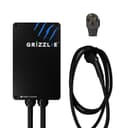
Grizzl-E Classic
United Chargers · J1772 · 40 A / 9.6 kW · 24 ft cable
A cast-aluminum box with no app, no account and no firmware to update. If you want a charger that behaves like an appliance, this is the one.
What is good
- Cast aluminum NEMA 4 / IP67 enclosure, built for outdoor mounting
- No app, no account, no network dependency
- Amperage is set with physical switches, not software
- Protections for over-current, over-voltage, ground fault and over-temperature
What is not
- 40 A ceiling, slower than the 48 A units if your panel can take more
- No scheduling, so off-peak charging has to be set in the car
- The cold-flexible 24 ft cable is only on the Extreme Edition
| Maximum output | 40 A / 9.6 kW at 240 V |
|---|---|
| Adjustable | 16, 24, 32 or 40 A |
| Connector | SAE J1772 |
| Cable | 24 ft on the Extreme Edition |
| Enclosure | Cast aluminum, NEMA 4 / IP67 |
| Certification | UL certified |
| Warranty | 3 years |
Skip this if: Skip it if you want scheduled charging or energy tracking in an app. The Classic deliberately has neither.
Specifications above are the manufacturer’s published figures. Source: United Chargers, InsideEVs. We have not tested this unit — see how we pick.
2. Ultimate build quality on a 60 A circuit
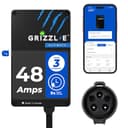
Grizzl-E Ultimate 48A
United Chargers · J1772 + NACS · 48 A / 11.5 kW · 25 ft cable
The Ultimate's hardware at the amperage most houses can feed: 48 A and 11.5 kW, hardwired, Wi-Fi and OCPP, in the same cast-aluminum Type 4 case. The catch is what United Chargers publishes about dialing it down -- the adjustable steps stop at 40 A.
What is good
- 48 A on a 60 A circuit, which a normal 200 A panel can usually spare
- Same cast-aluminum UL Type 4 case and -22 F rating as the 80 A Ultimate
- 25 ft cable, the long end of the range
- Wi-Fi, a mobile app and OCPP, so it is not locked to one vendor's cloud
- Offered with either a J1772 or a NACS connector
What is not
- Hardwire only -- there is no plug-in version of the Ultimate
- United Chargers publishes adjustable steps of 40/32/24/16 A, so the published step list does not include 48 A itself
- No ENERGY STAR certification listed, unlike the 80 A Ultimate
- A J1772 unit needs an adapter on every charge if you drive a NACS car
- Costs more than the 40 A Grizzl-E Classic for speed many owners will not use
| Maximum output | 48 A / 11.5 kW |
|---|---|
| Adjustable current | 40 A, 32 A, 24 A, 16 A (as published) |
| Connector | J1772 or NACS, chosen at purchase |
| Cable | 25 ft (7.6 m) |
| Installation | Hardwire only |
| Enclosure | Aluminum, UL Type 4 indoor/outdoor rating |
| Operating temperature | -30 C to +50 C (-22 F to 122 F) |
| Connectivity | Wi-Fi (2.4 GHz), mobile app, OCPP |
| Certification | UL, file E510712 |
| Weight | 11.00 kg / 24.25 lb, shipped |
| Enclosure size | 10.25 x 6.25 x 3.75 in |
| Country of origin | Canada, per United Chargers |
| Model number | GRS-077-W-HW-25N48-A-GB |
| Warranty | 3 years, or 5 years |
Skip this if: Skip it if your car accepts more than 11.5 kW and your panel can carry a 100 A circuit -- that is what the 80 A model is for. Skip it too if you want a plug-in unit; this is hardwire only.
Specifications above are the manufacturer’s published figures. Source: United Chargers. We have not tested this unit — see how we pick.
FAQ
Questions people actually ask
Is the Grizzl-E Ultimate worth it over the Classic?
What is the difference between the Grizzl-E Classic and the Ultimate 48A?
Does the Grizzl-E Ultimate need a bigger circuit?
Can the Grizzl-E Ultimate 48 be plugged in instead of hardwired?
Which Grizzl-E comes with a NACS connector?
Why does the Ultimate 48 list 40 amps as its highest adjustable setting?
Does hardwiring cost more than plugging in?
Sources
Where these numbers come from
- Grizzl-E Classic — United Chargers40 A / 9.6 kW at 240 V with adjustable settings of 16, 24, 32 or 40 A, SAE J1772, cast aluminum NEMA 4 / IP67 enclosure, NEMA 14-50 plug (also sold with NEMA 6-50), UL certified, no app and no network dependency, amperage set with physical switches, protections for over-current, over-voltage, ground fault and over-temperature, 24 ft cable on the Extreme Edition, 3-year warranty.
- Grizzl-E Ultimate 48 — United ChargersMax power 48 A / 11.5 kW, hardwire only, adjustable current published as 40A/32A/24A/16A, connector J1772 and NACS chosen at purchase, 25 ft (7.6 m) cable, aluminum UL Type 4 indoor/outdoor enclosure, OCPP, UL file E510712, Wi-Fi 2.4 GHz and mobile app, -30 C to +50 C (-22 F to 122 F), 11.00 kg / 24.25 lbs, enclosure 10.25 x 6.25 x 3.75 in, origin Canada, model GRS-077-W-HW-25N48-A-GB, 3-year warranty with a 5-year option. No ENERGY STAR listing. Read 2026-10-11.
- NEC Article 625: EV Charging Equipment — WireRefEV charging is a continuous load, so the branch circuit is sized at 125% of the charger's rated current -- a 48 A charger requires a 60 A circuit. Each EVSE requires a dedicated branch circuit unless an approved energy management system controls the load. Read 2026-10-17.
- 625.43 EVSE Disconnecting Means -- 2026 NEC code change summary — Electrical License Renewal (NEC continuing-education content)In the 2026 NEC, section 625.43 was reorganized and the previous thresholds of more than 60 amperes or more than 150 volts to ground were removed; 625.43(C) requires all permanently connected EVSE to have a disconnecting means in a readily accessible location, with a plaque or directory at the equipment if it is remote. For cord- and plug-connected EVSE the attachment plug is permitted to serve as the disconnecting means for units rated not exceeding 60 amperes or not exceeding 150 volts to ground, lockable open per 110.25. Read 2026-10-17.
- Electric Vehicle Charging Stations: AC Level 2 equipment — U.S. Department of Energy, Alternative Fuels Data CenterAC Level 2 equipment offers charging through 240 V (typical in residential applications) or 208 V (typical in commercial applications) and adds roughly 25 miles of range per hour of charging. Level 2 uses the same J1772 connector as Level 1; SAE is standardizing the J3400 connector based on Tesla's NACS design. Read 2026-10-17.
- Fuel economy of 2026 Cadillac and GMC vehicles — U.S. EPA and U.S. Department of Energy, fueleconomy.govPublished consumption ratings used in the range arithmetic here: Cadillac Lyriq 37 kWh/100 mi, GMC Sierra EV 50 kWh/100 mi. Read 2026-10-11.
Read next
Related reading
- Grizzl-E Classic vs Classic ConnectBoth are 40 A Grizzl-Es on a 14-50. The Connect adds Wi-Fi, an app and a foot of cable.
- Grizzl-E Ultimate 48A vs 80AThe 48 A and 80 A Ultimates compared on circuit, output, adjustable steps, ENERGY STAR and weight.
- 32 A vs 40 A vs 48 A: how many amps do you actually need?What each amperage tier delivers in miles per hour, and the circuit each one requires.
- Hardwired or plug-in: which EV charger install is right?NEMA 14-50 or hardwired: amperage limits, cost, portability and what inspectors prefer.
- EV charger disconnect requirementsThe 2023 rule, the 2026 rewrite that dropped the 60-amp threshold, and why a plug-in install sidesteps the whole question.